 Pin It
 There's something almost magical about breaking eggs into a blender and watching them transform into silky, cloud-like batter. I discovered these crepes by accident one morning when I had no flour but plenty of eggs and an impulsive need to eat something wrapped and satisfying. The first one stuck to the pan like my life depended on rescuing it, but by the third attempt, I understood the rhythm—hot pan, quick pour, gentle tilt. Now they're my go-to when I want something that feels fancy but takes less time than making toast.
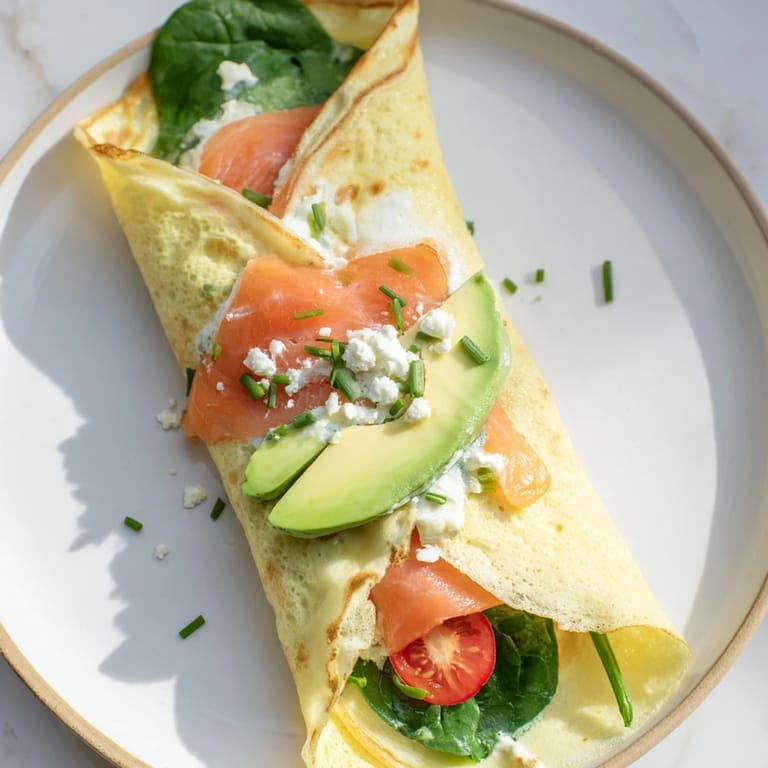
I made these for my sister on a Sunday when she was staying over, and she wrapped hers so tightly it looked like an edible burrito. She filled it with smoked salmon, avocado, and everything she could find in my fridge, and I remember her eyes lighting up at how delicate but sturdy the crepe held together. That's when I realized these weren't just a quick breakfast—they were the kind of food that makes people slow down and actually enjoy what they're eating.
Ingredients
- Eggs (4 large): The backbone of this whole thing—they need to be at room temperature if you want them to blend into actual silk rather than staying lumpy and stubborn.
- Water or milk (2 tablespoons): This loosens the batter so it spreads thin; use whatever you have on hand, dairy or not.
- Salt and black pepper (a pinch each): These tiny amounts do heavy lifting in flavor, so don't skip them or your crepe will taste hollow.
- Olive oil or butter (1 teaspoon for cooking): Just enough to keep things from sticking without making them greasy—more than that and you'll taste only the oil.
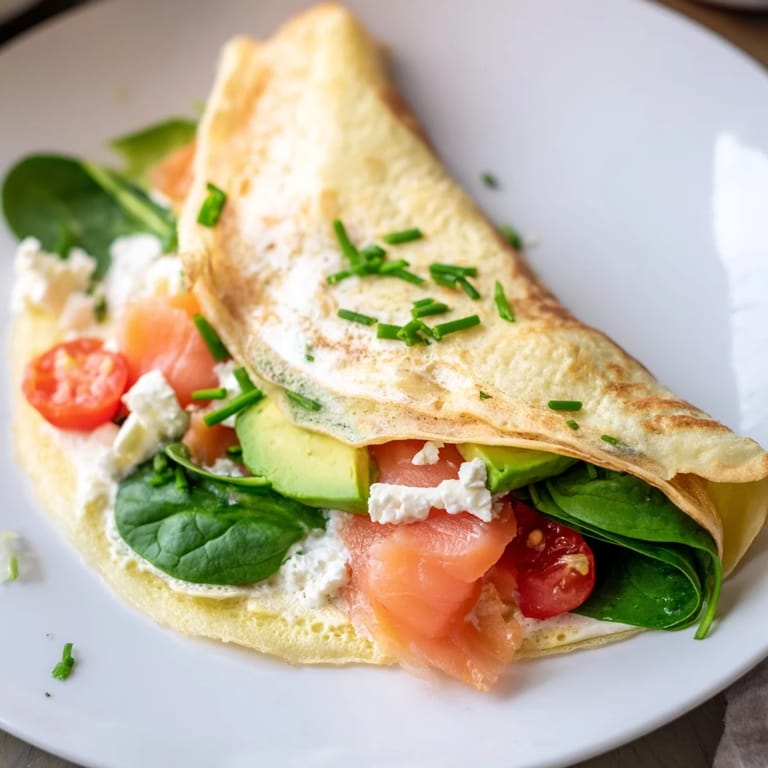
- Fillings (spinach, salmon, feta, tomato, avocado, fresh herbs): Pick what calls to you; the crepe is forgiving enough to hold whatever story you want to tell with breakfast.
Tired of Takeout? 🥡
Get 10 meals you can make faster than delivery arrives. Seriously.
One email. No spam. Unsubscribe anytime.
Instructions
- Blend the batter:
- Crack your eggs into the blender with the liquid, salt, and pepper. Blend on high for thirty to forty-five seconds until it looks like billowing clouds—this is where the magic happens, and you'll hear the pitch of the blender change when it's truly frothy.
- Heat your pan:
- Set a non-stick skillet to medium heat and let it warm for a full minute. Brush it so lightly with oil or butter that it looks almost dry; too much and the crepe slides around like it's on ice.
- Pour and tilt:
- Pour half your batter in and immediately tilt the pan in all directions so it spreads into a thin, even layer. It should sizzle just slightly, and you want to work fast here because the batter sets quickly.
- First side:
- Cook for about ninety seconds until the edges look set and pull away from the pan easily. If you peek underneath, the bottom should be barely golden and firm enough to handle the flip.
- Flip with confidence:
- Use your spatula to slide it out in one motion, flip it in the air or on the pan (whichever keeps your heart from racing), and cook the other side for just thirty seconds. This side never needs as long because the crepe is already mostly cooked.
- Second crepe:
- Repeat with the remaining batter, making sure your pan stays at the same temperature; if it's too hot, the second one cooks faster and might brown before it sets.
- Fill and fold:
- Lay your crepe flat, arrange fillings in a line down the center, then fold or roll it however your hands want to move. Serve it warm while it's still flexible and willing to cooperate.
 Pin It
 I'll never forget the moment my three-year-old niece decided these were her favorite breakfast food because she could wrap them herself and feel like a chef. Watching her concentrate so hard on keeping the fillings from falling out, then taking a bite with the kind of pride that only a small person perfecting a new skill can have—that's when I understood why this simple recipe stuck with me.
Sweet vs. Savory: The Beautiful Duality
The same batter works for breakfast, lunch, or dessert depending entirely on what you decide to slide inside. One morning I filled them with berries and a drizzle of honey, and by evening I'd made three more with ham, cheese, and spinach. This flexibility means you can make them once and feed different people different dreams, which is a gift in any kitchen.
Why These Aren't Like Regular Crepes
There's no flour, no resting time, no temperamental batter that needs to sit overnight. The blender does the work of mixing air into the eggs, which is what gives them their delicate structure. You're not fighting the dough or waiting for fermentation; you're just moving fast and trusting that this works because it absolutely does.
Making Them Your Own
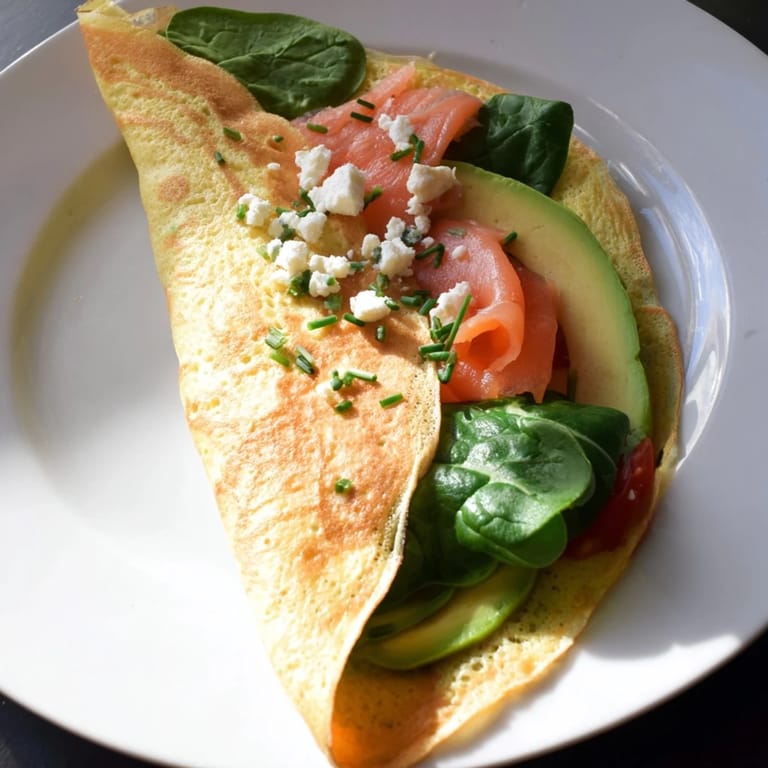
The magic of these crepes lives in how you finish them. Some mornings I keep it clean and simple with just a scatter of fresh chives and a slice of smoked salmon. Other times I get reckless and throw in everything—roasted vegetables, different cheeses, hot sauce, herbs I'm curious about. They hold it all.
- Toast your pan longer than you think if you want deeper color and flavor; thirty extra seconds changes everything.
- If your first crepe tears, don't panic—it becomes a base for scrambled toppings or gets tucked into the second one for extra body.
- Make them ahead and reheat them gently in a dry pan for thirty seconds if your morning is already running away from you.
 Pin It
 These crepes turned into the breakfast I make when I want to feel capable and generous at the same time. Make them for yourself on a quiet morning, or make them for people you love and watch them discover something new in their kitchen.
Your Questions Answered
- → How do I achieve a frothy texture for the egg crepe?
Blend the eggs with water or milk on high speed for 30–45 seconds until very frothy, which helps create a light, delicate texture.
- → What oil is best for cooking the crepes?
Use olive oil or butter brushed lightly on a non-stick skillet to prevent sticking and ensure even cooking.
- → Can I customize the filling options?
Yes, fillings can vary from savory items like spinach, smoked salmon, and feta to sweet options like berries and honey for a versatile wrap.
- → How thin should the egg layer be when cooking?
Pour the egg mixture to cover the skillet bottom with a thin, even layer, cooking until edges lift easily and the bottom is set.
- → Are these crepe wraps suitable for special diets?
They can be gluten-free and low carb, and dairy-free depending on the choice of ingredients and fillings.
- → Can I prepare these crepes ahead of time?
For best texture, serve immediately after cooking. However, crepes can be made in advance and gently reheated before filling.