 Pin It
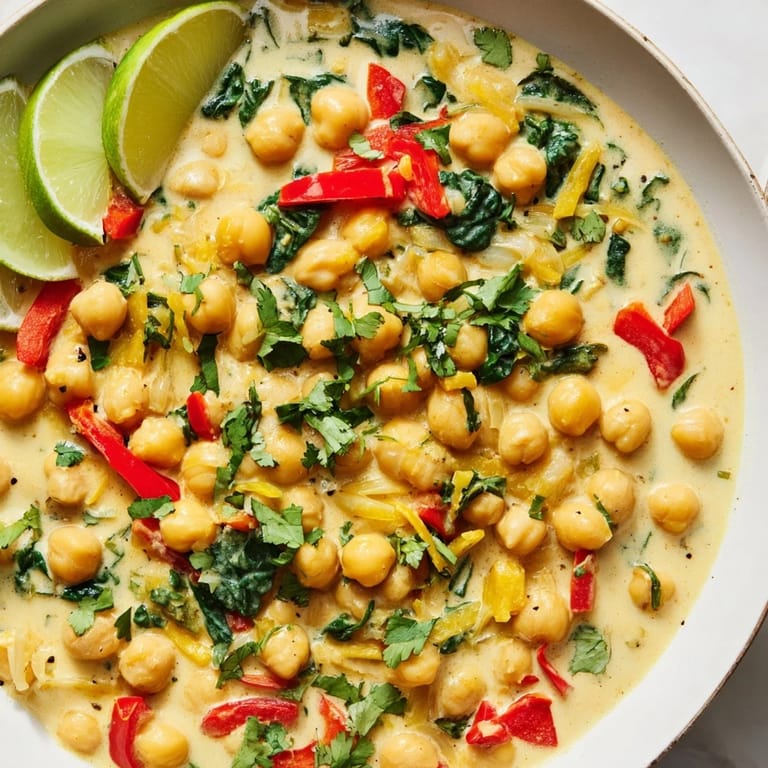
 There's something about the smell of curry powder hitting hot oil that immediately signals comfort is on the way. I discovered this one-pot wonder on a Tuesday evening when I had exactly thirty-five minutes before friends were arriving, a nearly empty fridge, and the kind of exhaustion that only calls for something warm and deeply satisfying. Coconut milk and chickpeas became my unlikely heroes that night, transforming into something so genuine and nourishing that I've made it countless times since.
I'll never forget watching my partner's face light up when they tasted this for the first time. They'd been skeptical about plant-based dinners, and then suddenly they were asking for seconds and insisting I write down exactly what went into the pot. That moment taught me that good food doesn't need meat to be memorable.
Ingredients
- Yellow onion: The foundation of everything good—diced and sautéed until translucent, it becomes sweet and mellow, holding all the oil and spices that follow.
- Garlic and ginger: These two create an aromatic base that makes the whole kitchen smell like something special is happening.
- Red bell pepper: Adds both color and a subtle sweetness that balances the earthiness of the spices.
- Baby spinach or kale: Wilts down to almost nothing but adds nutrients and a quiet leafy depth to every spoonful.
- Carrot: Optional but worth including for natural sweetness and texture.
- Chickpeas: Two cans of them, drained and rinsed—they're your protein and they soak up every drop of that coconut-curry sauce.
- Coconut milk: Full-fat tastes richer, but light works beautifully too if that's what you have on hand.
- Vegetable broth: Keeps everything from getting too thick and reminds you this is a curry, not a stew.
- Diced tomatoes: One can adds a subtle acidity that brightens everything and prevents the curry from tasting one-note.
- Curry powder, cumin, turmeric, and smoked paprika: Toast these spices together for just a minute and they bloom into something fragrant and alive.
- Chili flakes: Optional, but even a half teaspoon adds a gentle warmth that sneaks up on you.
- Coconut oil or olive oil: Either works, though coconut oil echoes the milk's flavor in a way that feels intentional.
- Fresh cilantro and lime: Serve these alongside—they're the final note that makes everything sing.
Tired of Takeout? 🥡
Get 10 meals you can make faster than delivery arrives. Seriously.
One email. No spam. Unsubscribe anytime.
Instructions
- Heat the oil and start with onion:
- Set a large pot to medium heat and let the coconut oil warm until it shimmers slightly. Add your diced onion and let it cook for three to four minutes, stirring occasionally, until the pieces turn translucent and soft at the edges.
- Build the aromatics:
- Stir in the minced garlic, grated ginger, and diced red bell pepper. You'll know it's working when the kitchen fills with that unmistakable aromatic cloud—cook for about two minutes.
- Toast the spices:
- This is the crucial moment: add all the dry spices at once and stir constantly for about one minute. You're waking them up, allowing them to release their essential oils into the hot oil before liquid hits the pan.
- Bring everything together:
- Pour in the diced tomatoes, coconut milk, vegetable broth, and drained chickpeas. Add the carrot if you're using it, stir everything well, and let it come to a simmer.
- Let it simmer low and slow:
- Reduce the heat to low, cover the pot, and let it bubble gently for about fifteen minutes, stirring occasionally. The flavors meld and deepen during this quiet time.
- Finish with spinach:
- Remove the lid, stir in your chopped spinach, and let it cook uncovered for just two to three minutes until wilted. This is also when you can adjust the consistency—if it's too thin, let it simmer longer; if it's too thick, add a splash of broth.
- Taste and adjust:
- Before serving, taste a spoonful. Does it need more salt? A squeeze of lime? This is your chance to make it exactly right for your palate.
 Pin It
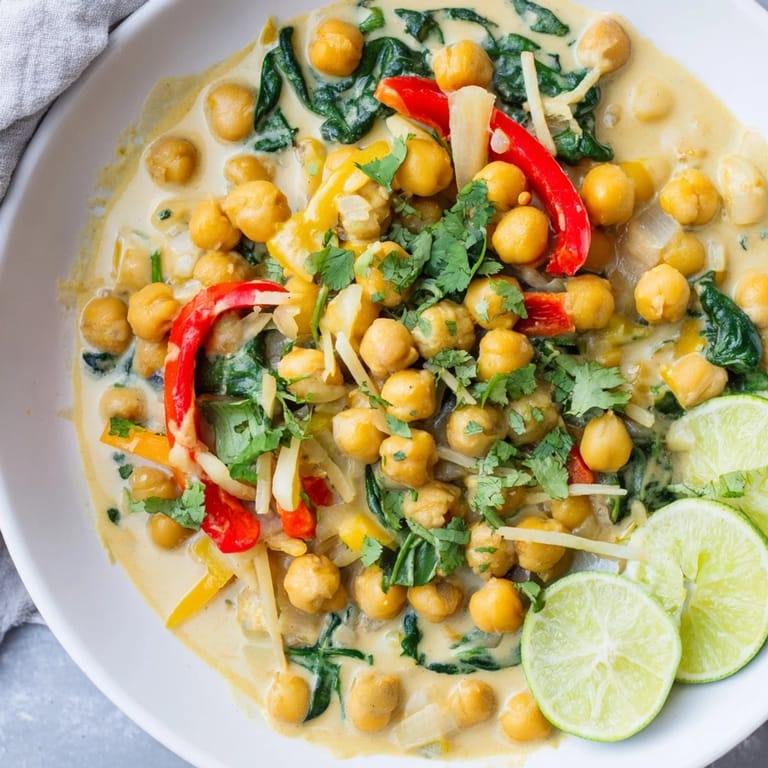
 This curry has become my go-to when I need to feed people something that feels special but requires almost no stress. There's a quiet confidence in serving a one-pot meal that's both nourishing and genuinely delicious.
Why This Works as One Pot
The magic of cooking everything together is that each ingredient seasons the next. The onions soften into the oil, the spices bloom in that oiled base, and then the liquid carries everything into the chickpeas and vegetables. Nothing gets lost, and the flavors build on each other rather than staying isolated. It's efficient cooking that doesn't feel rushed.
Making It Your Own
The structure of this curry is flexible enough to bend with what you have. Out of spinach? Use whatever greens you can find. No red bell pepper? A regular onion does fine. Some people swear by adding a tablespoon of peanut butter for richness, or a splash of coconut milk mixed with lime juice as a final drizzle. I've made it with crispy fried onions on top, with cubed tofu stirred in at the end, with extra heat from fresh chilies. Once you understand the basic framework, you can play.
Serving and Storage
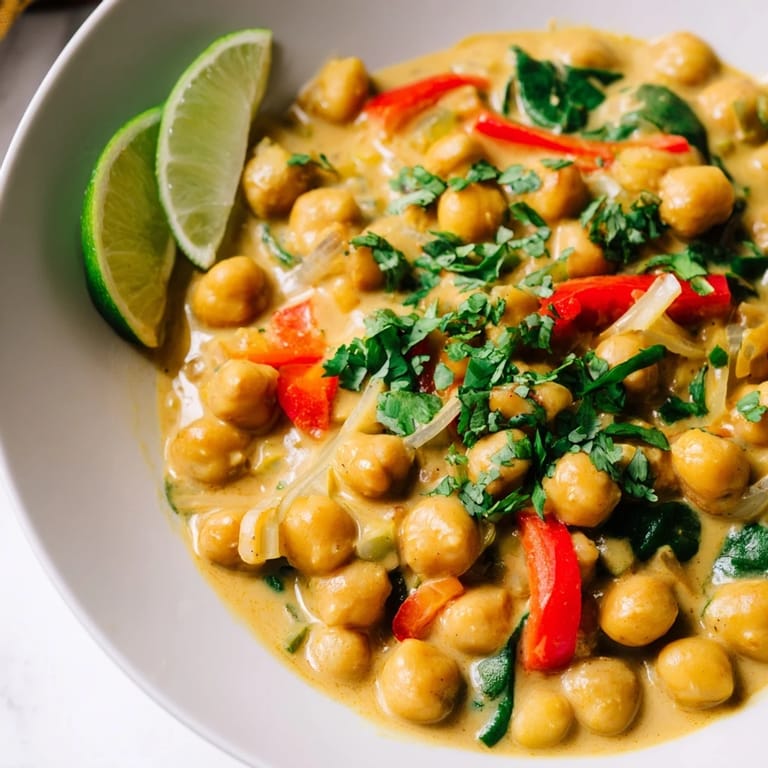
Serve this curry hot, with fresh cilantro and lime wedges on the side so everyone can adjust the brightness to their taste. It pairs beautifully with jasmine rice or basmati, or alongside warm naan if you want something softer. The curry actually tastes even better the next day, after the spices have had time to settle and deepen. It keeps in the fridge for four days and freezes well for up to three months.
- Squeeze lime juice over each bowl right before eating—it's the secret that makes everything pop.
- Serve with rice or naan, or enjoy it on its own if you prefer something lighter.
- Leftovers reheat gently on the stove with a splash of broth to restore the sauce's consistency.
 Pin It
 This is the kind of meal that reminds you why cooking matters—not because it's complicated, but because it fills the kitchen with warmth and your people with something real and good.
Your Questions Answered
- → Can I substitute spinach with other greens?
Yes, kale or Swiss chard work well as alternatives and can be added during the final simmer to wilt gently.
- → How can I adjust the spice level?
Omit or reduce chili flakes for milder heat or increase them if you prefer a spicier dish.
- → What oil is best for sautéing the vegetables?
Coconut oil or olive oil are ideal choices; both add a subtle flavor and handle sautéing well.
- → Can this dish be made ahead and reheated?
Yes, it stores well in the refrigerator and flavors deepen after resting. Reheat gently to preserve texture.
- → What can I serve alongside this dish?
Steamed rice, jasmine or basmati, or warm naan bread complement the dish and help balance the flavors.
- → Is it possible to add extra protein?
Cubed tofu or tempeh can be incorporated to boost protein content, added during the simmering stage.