 Pin It
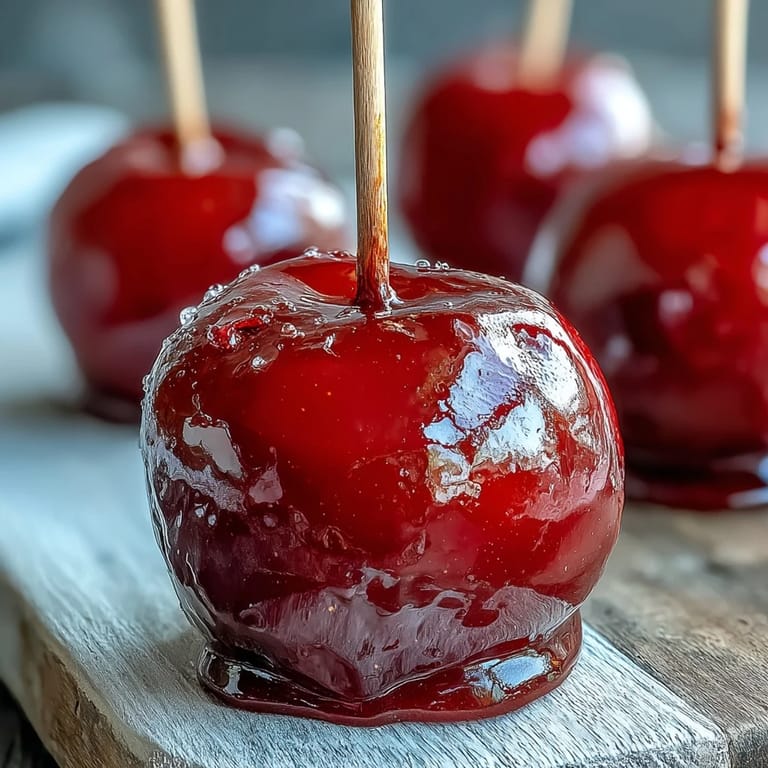
 My neighbor pulled up to our porch one October afternoon with a bag of candy apples from the farmer's market, and the moment I bit into that crispy red shell, I understood why people go crazy for them. The candy cracked between my teeth, flooding my mouth with that pure sugar sweetness before giving way to the tart, juicy apple beneath. I spent the rest of that week trying to recreate them in my own kitchen, learning the hard way that patience and a reliable thermometer are everything when you're working with boiling sugar.
I made a batch for my daughter's school carnival booth last year, and watching her hand them out with pride while kids' faces lit up was pure magic. One parent asked for the recipe on the spot, and I realized these simple apples had somehow become the thing everyone remembered about that whole day.
Ingredients
- Apples: Granny Smith gives you that perfect tart punch against the sweetness, but Gala or Honeycrisp work beautifully too—just make sure they're firm and completely dry before you dip them.
- Granulated sugar: This is your base, and it needs to be white and fine for that glassy finish.
- Light corn syrup: The secret to keeping that candy shell shiny and preventing it from becoming grainy—don't skip it thinking you can substitute honey.
- Water: Acts as the medium to dissolve everything into that liquid candy state.
- Red food coloring: Gel works better than liquid because it doesn't add extra moisture, but either will get you there.
- Wooden sticks: They need to be sturdy enough to hold the weight of the apple and the hot candy without bending.
- Nonstick cooking spray or parchment paper: Your apples will thank you when they slide right off the sheet instead of sticking.
Tired of Takeout? 🥡
Get 10 meals you can make faster than delivery arrives. Seriously.
One email. No spam. Unsubscribe anytime.
Instructions
- Set your stage:
- Line your baking sheet with parchment paper or give it a light spray of nonstick coating—this is your safety net so nothing sticks.
- Stick the apples:
- Push a wooden stick firmly into the stem end of each apple, making sure it's secure enough that it won't wiggle free when you're dipping. This is your handle in just a moment.
- Build your candy base:
- In a heavy saucepan, combine the sugar, corn syrup, and water, stirring just until everything is moistened together. You want this mixture to come together without lumps before the heat does its work.
- Bring it to a boil:
- Set the burner to medium-high and let it come to a rolling boil, but here's the key—once it's boiling, don't stir anymore. Stirring invites crystallization, which ruins that glossy finish you're after.
- Watch the temperature climb:
- Clip your candy thermometer to the side of the pan and keep watching. You're aiming for 300°F, the hard crack stage, which takes about 15 to 20 minutes depending on your stove.
- Add your color:
- The moment you hit 300°F, pull the pan off the heat and quickly stir in the red food coloring until it's evenly distributed. Work fast because this syrup stays hot and thick.
- The dip:
- Tilt the pan and dip each apple into the hot candy, turning it to coat every side evenly. Let the excess drip back into the pan for a few seconds before setting it on your prepared sheet—go fast but be careful, because this stuff can seriously burn.
- Let them set:
- Leave them at room temperature for about 15 minutes while the candy shell hardens into that satisfying crunch. Resist the urge to move them or touch them while they're setting.
 Pin It
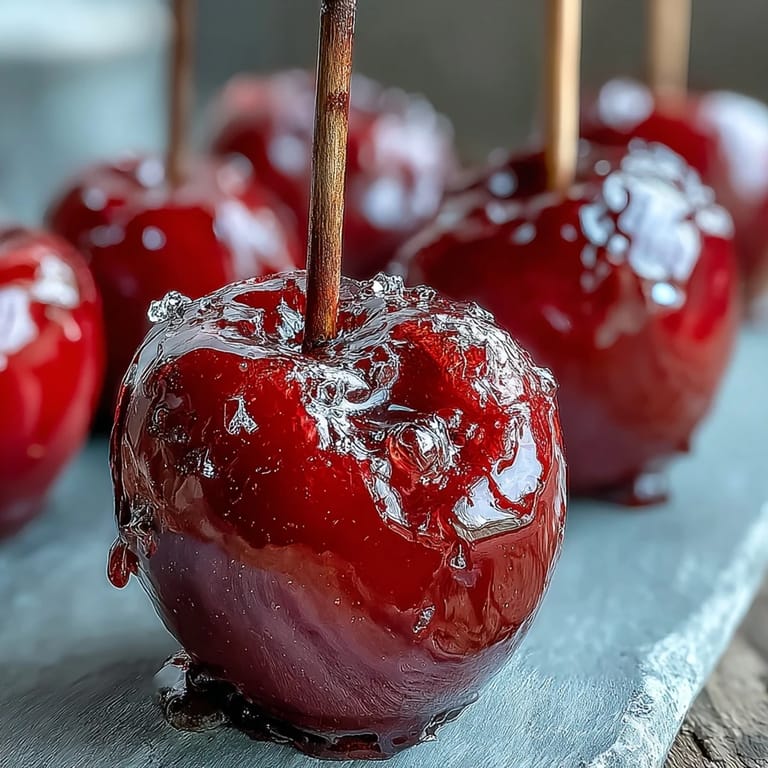
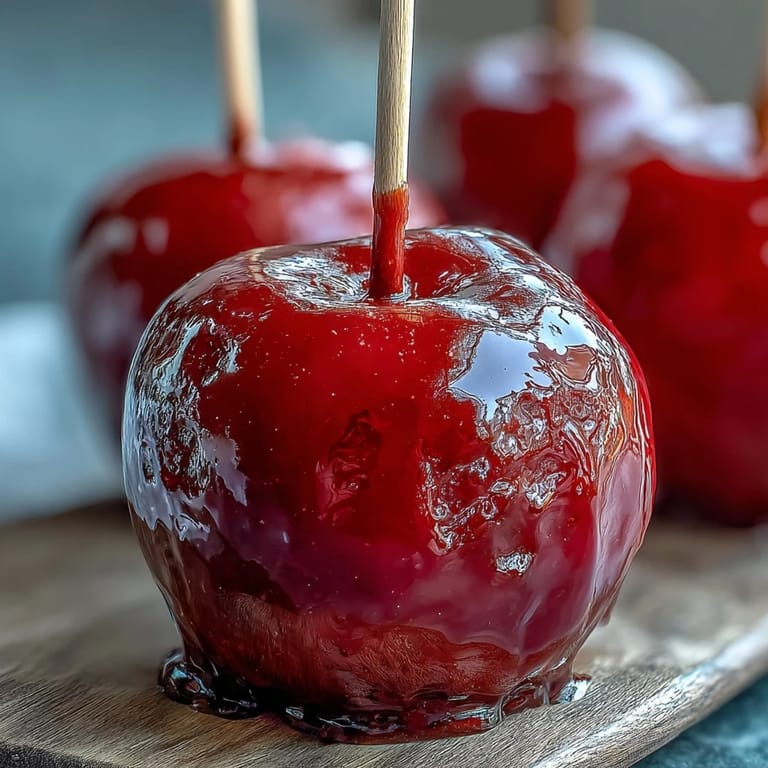
 There's something almost magical about the moment when you pull an apple out of that glossy red bath and it emerges transformed into something that looks like it belongs in a storybook. My nephew refused to eat his the first time I made them for him—he just wanted to look at it, turn it in the light, and watch how it gleamed.
The Science of the Hard Crack Stage
When sugar reaches 300°F, the water has cooked away and you've got pure sugar with a tiny bit of corn syrup holding it together. At this temperature, the sugar is brittle enough to shatter when you bite it, but it's still glossy and beautiful—go even slightly higher and it starts to color and taste bitter. I learned this the hard way by overshooting the temperature and ending up with apples that tasted more like caramel than candy.
Timing and Storage Secrets
These apples are best eaten within a few hours of making them while the candy shell is at its crunchiest. If they sit overnight, the apple's moisture starts migrating outward and softening that beautiful shell, which honestly still tastes fine but loses some of its charm. I've kept them in an airtight container on the counter for up to 24 hours with decent results, but fresh is always the move.
Flavor Riffs and Decorating Ideas
Once you've mastered the basic red candy apple, the variations are endless. I've done green ones with lime juice added to the syrup, gold ones for fancy events, and even purple ones that absolutely stunned people at a Halloween party. The real magic happens when you're willing to play—right before the candy fully hardens, you can roll your apple in crushed nuts, colorful sprinkles, or even edible glitter.
- Dip the warm candy shell in finely chopped pistachios, almonds, or walnuts for texture and elegance.
- Add 1/4 teaspoon of vanilla or 1/8 teaspoon of cinnamon to the syrup for subtle flavor depth.
- If the candy thickens too much while you're dipping, set the pan back over low heat for 30 seconds to loosen it up again.
 Pin It
 These candy apples have become my go-to when I want to make someone smile without fussing over something complicated. There's real joy in handing someone a treat that looks like a jewel and tastes like pure happiness.
Your Questions Answered
- → What type of apples are best for coating?
Firm apples like Granny Smith or Gala hold up well and provide a nice contrast between tart flesh and sweet coating.
- → How do I know when the candy syrup is ready?
Boil the mixture until it reaches 300°F (149°C), known as the hard crack stage, to ensure a crisp shell.
- → Can I add flavors or decorations to the candy coating?
Yes, roll freshly coated apples in chopped nuts or sprinkles before the candy hardens for added texture and taste.
- → How should I prepare the apples before coating?
Wash and dry apples thoroughly, then firmly insert wooden sticks into their stems for easy dipping.
- → What safety tips should I follow when making candy coating?
Be cautious handling hot syrup to avoid burns. If syrup thickens while dipping, gently reheat over low heat.