 Pin It
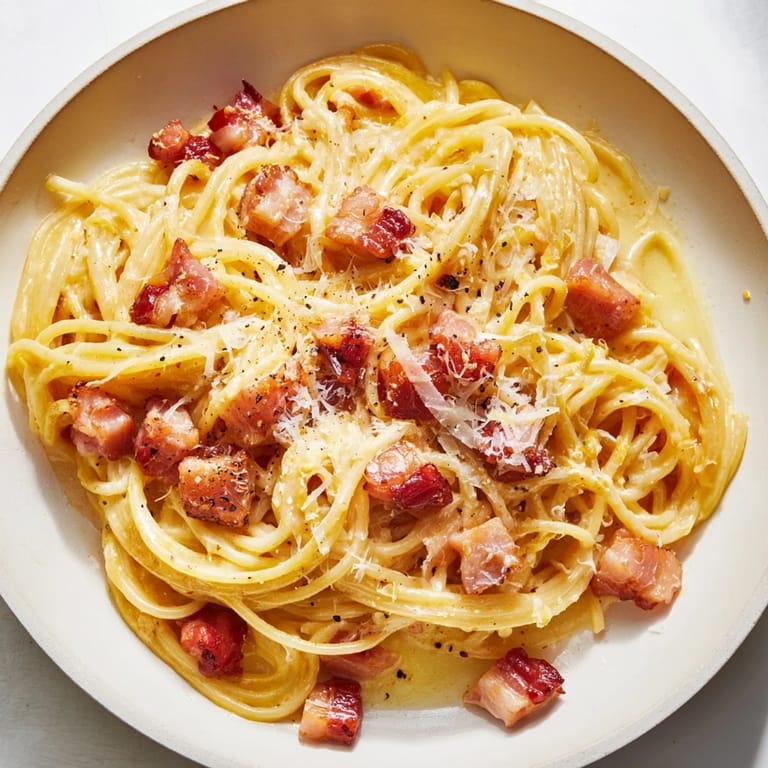
 There's something about carbonara that stops time in the kitchen. I discovered this express version on a weeknight when I had fifteen minutes and a fridge that felt half-empty, and somehow it turned into the most satisfying dinner. The beauty of it is pure simplicity: pasta, eggs, bacon, cheese, and the magic that happens when you toss them together with just the right timing. No cream, no fuss, just Roman tradition made quick enough for a Tuesday night when hunger isn't willing to wait.
I made this for a friend who was skeptical that carbonara could be both quick and genuinely good, and watching her face when she took that first bite was worth every second of prep. She kept saying it tasted like the real thing, and I realized that's exactly what it is—just stripped down to its essential, delicious self.
Ingredients
- Spaghetti (200 g): The dried kind keeps in your pantry forever, and it grabs the sauce beautifully when you toss it hot.
- Eggs (2 large): These become your sauce, so use the freshest ones you can find; temperature matters more than you'd think.
- Parmesan cheese (40 g, freshly grated): Grate it yourself right before cooking—pre-grated cheese has anti-caking agents that make the sauce grainy instead of silky.
- Black pepper (1/4 tsp, freshly ground): This isn't just seasoning; it's a key player in the flavor, so don't skip the fresh grind.
- Bacon (100 g, diced): Pancetta is the Roman way, but good bacon works just as well and often tastes even better to modern palates.
- Pasta water (80 ml reserved): This starchy liquid is what transforms the eggs into sauce, so don't drain it all away without thinking.
- Extra Parmesan and black pepper for serving: A generous hand with these finishers turns a good bowl into an unforgettable one.
Tired of Takeout? 🥡
Get 10 meals you can make faster than delivery arrives. Seriously.
One email. No spam. Unsubscribe anytime.
Instructions
- Start the water and pasta:
- Get a pot of salted water boiling first—it should taste like the sea. Drop in your spaghetti and let it cook until just tender, checking the package timing and tasting a minute or two before it claims to be done.
- Prep the egg mixture:
- While the pasta bubbles away, whisk together your eggs, grated Parmesan, and black pepper in a bowl until everything is combined and the cheese is evenly distributed. Set it aside and don't second-guess yourself.
- Crisp the bacon:
- In a large skillet over medium heat, let the bacon pieces sizzle and pop until they're golden and crispy around the edges, which usually takes about three to four minutes. Remove the skillet from heat—this is important, and you'll understand why in a moment.
- The magic toss:
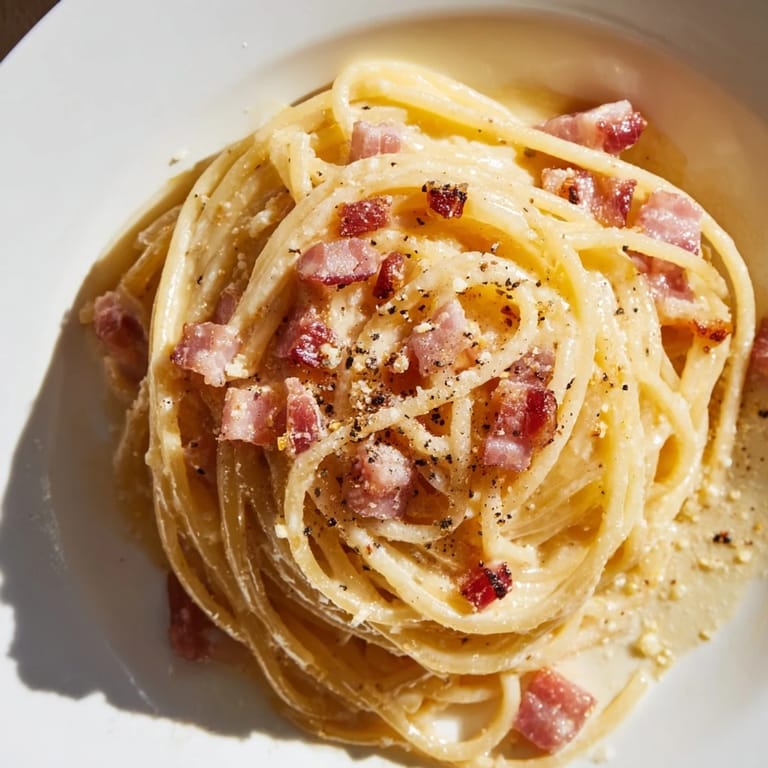
- Drain your pasta, but save that starchy water first. Add the hot pasta directly to the skillet with the bacon, which is now off the heat, then immediately pour in the egg mixture. Toss vigorously and quickly, adding pasta water a splash at a time until the eggs emulsify into a silky, creamy coating that clings to every strand.
- Serve without delay:
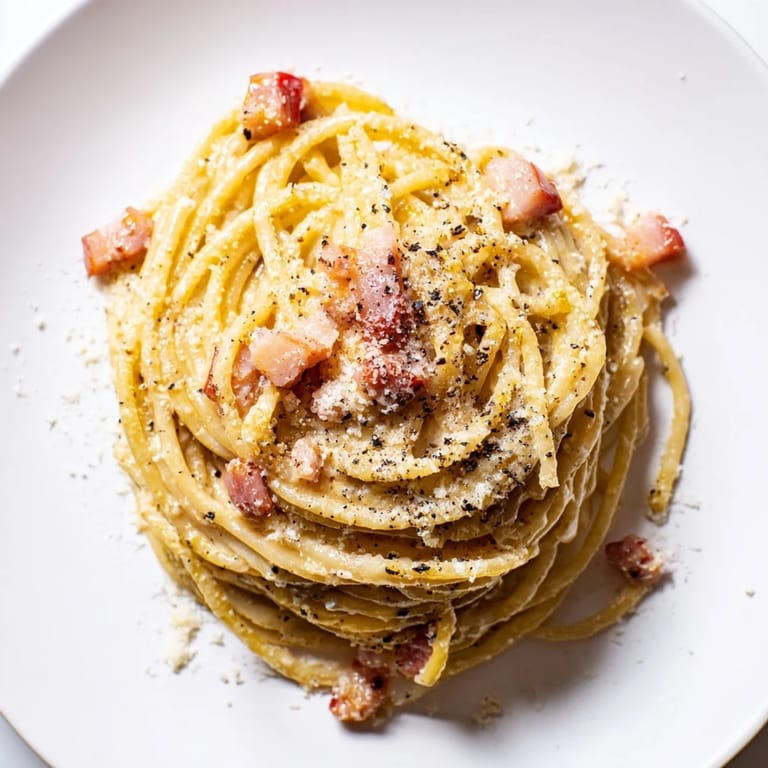
- Plate it up immediately, topped with extra Parmesan and a crack of fresh black pepper. Speed here is your friend.
 Pin It
 The first time I nailed this dish, I understood why it's been made the same way in Rome for decades. It's not complicated; it's just honest, and there's something deeply satisfying about that.
The Secret to Silky Sauce
The real trick isn't any special ingredient or technique—it's understanding that your pasta is still cooking even after you drain it, and that heat combined with the starchy water and eggs creates an emulsion, not scrambled eggs. The skillet off the heat is your safety net, and the pasta water is your control knob for the sauce consistency. I learned this the hard way by overcooking the eggs once, and now I move fast and trust the process.
Why This Version Works
Express doesn't mean shortcuts; it means honoring the dish by not overcomplicating it. Some recipes add cream or garlic or cook the eggs differently, and those are fine, but the original Roman way—just eggs, cheese, pasta water, and pork—is actually the quickest and most elegant version you can make. Once you taste how good simple done right can be, you'll understand why every other version feels like it's trying too hard.
Small Moves That Matter
Freshly grated cheese, freshly ground pepper, hot pasta, cold pan—these aren't fancy details, they're the difference between forgettable and unforgettable. I've noticed that when I cut corners on any of these, the dish tastes noticeably less refined, and I never want to serve something that doesn't shine. The whole meal takes twenty minutes anyway, so there's no reason not to do it all the way.
- If you want more depth, add a minced garlic clove to the bacon while it crisps, then remove it before tossing the pasta.
- Pecorino Romano brings a sharper, more traditional Roman flavor if you ever want to switch it up.
- Cook your pasta about a minute earlier than the package suggests; it'll finish cooking in the pan with the sauce.
 Pin It
 This is the kind of meal that reminds you cooking doesn't need to be complicated to be wonderful. Twenty minutes from hunger to satisfaction, every single time.
Your Questions Answered
- → How do I prevent the eggs from scrambling?
Remove the skillet from the heat before adding the egg mixture and toss quickly, adding reserved pasta water gradually to create a smooth sauce.
- → Can I substitute the bacon with another ingredient?
Pancetta is a traditional alternative. For different flavors, try guanciale or smoked ham, keeping the texture crispy.
- → What type of cheese works best in this dish?
Freshly grated Parmesan is ideal, but Pecorino Romano offers a sharper, more authentic taste.
- → Is it necessary to reserve some pasta water?
Yes, it helps to loosen the sauce and achieve a creamy, silky consistency that coats the spaghetti evenly.
- → Can garlic be added for extra flavor?
Yes, adding a minced clove to the bacon while frying enhances aroma, but remove it before combining with the pasta to keep the texture smooth.