 Pin It
 One rainy afternoon, I opened my fridge to find a half-empty tub of cottage cheese and a restless craving for warm bread. I wasn't in the mood to wait for yeast or trek to the store, so I stirred the cottage cheese into flour with an egg and a splash of oil. Twenty minutes later, I was tearing into a golden, pillowy flatbread that tasted like I'd put in far more effort than I actually had. It's been my secret weapon ever since.
I first made these for a casual Friday dinner when friends dropped by unexpectedly. I panicked for a moment, then remembered I had cottage cheese and flour, so I whipped up a batch while we chatted in the kitchen. Everyone grabbed a warm flatbread straight from the skillet, slathered it with hummus, and declared it better than any store-bought pita. That night, this simple dough became my go-to for spontaneous gatherings.
Ingredients
- All-purpose flour: The backbone of the dough, provides structure while staying soft and pliable when combined with cottage cheese.
- Baking powder: Gives a gentle lift and creates those lovely bubbles that form as the flatbread cooks.
- Fine salt: Balances the mild tang of the cheese and enhances every other flavor in the dough.
- Garlic powder: Optional but wonderful, it adds a quiet savory note that makes the flatbread feel more complete.
- Full-fat cottage cheese: The star ingredient, lending moisture, protein, and a subtle creamy tang that keeps the bread tender.
- Large egg: Binds everything together and adds richness, helping the dough hold its shape during cooking.
- Olive oil: For the dough and the skillet, it contributes flavor and prevents sticking while encouraging golden browning.
- Fresh chopped herbs: Parsley or chives add bright, fresh flavor, though you can skip them if you prefer a neutral base.
- Water: A small amount may be needed if your dough feels too dry, just add it slowly until the dough comes together.
Tired of Takeout? 🥡
Get 10 meals you can make faster than delivery arrives. Seriously.
One email. No spam. Unsubscribe anytime.
Instructions
- Whisk the dry ingredients:
- Combine flour, baking powder, salt, and garlic powder in a medium bowl until evenly distributed. This ensures every bite has balanced seasoning.
- Mix the wet ingredients:
- In a separate bowl, blend the drained cottage cheese, egg, olive oil, and herbs with a fork until the curds break down and the mixture looks fairly smooth. A few small lumps are fine.
- Form the dough:
- Pour the wet mixture into the dry ingredients and stir gently with a spatula until a shaggy dough forms. If it feels crumbly, add water one teaspoon at a time until it holds together into a soft, slightly sticky ball.
- Knead gently:
- Turn the dough onto a lightly floured surface and fold it over itself six to eight times, just enough to bring it into a smooth, cohesive ball. Overworking will make the flatbreads tough, so keep it brief.
- Rest the dough:
- Cover the dough with a clean kitchen towel or plastic wrap and let it rest at room temperature for ten minutes. This relaxes the gluten and makes rolling much easier.
- Divide and shape:
- Cut the dough into four equal portions and roll each into a smooth ball. Flatten each ball with a rolling pin or your hands into a round about one quarter inch thick, dusting lightly with flour as needed to prevent sticking.
- Heat the skillet:
- Warm a large nonstick or cast-iron skillet over medium heat and brush lightly with olive oil. The pan should be hot enough that a drop of water sizzles gently.
- Cook the flatbreads:
- Place one rolled flatbread in the hot skillet and cook for two to three minutes until bubbles form and the underside turns golden brown. Flip and cook another one to two minutes until golden and cooked through, adjusting the heat if needed.
- Keep warm:
- Transfer the cooked flatbread to a plate and cover with a clean towel to keep it warm and soft. Repeat with the remaining dough, adding more oil to the skillet if necessary.
- Serve:
- Serve the flatbreads warm as wraps, alongside dips, or as a quick pizza base topped with your favorite ingredients.
 Pin It
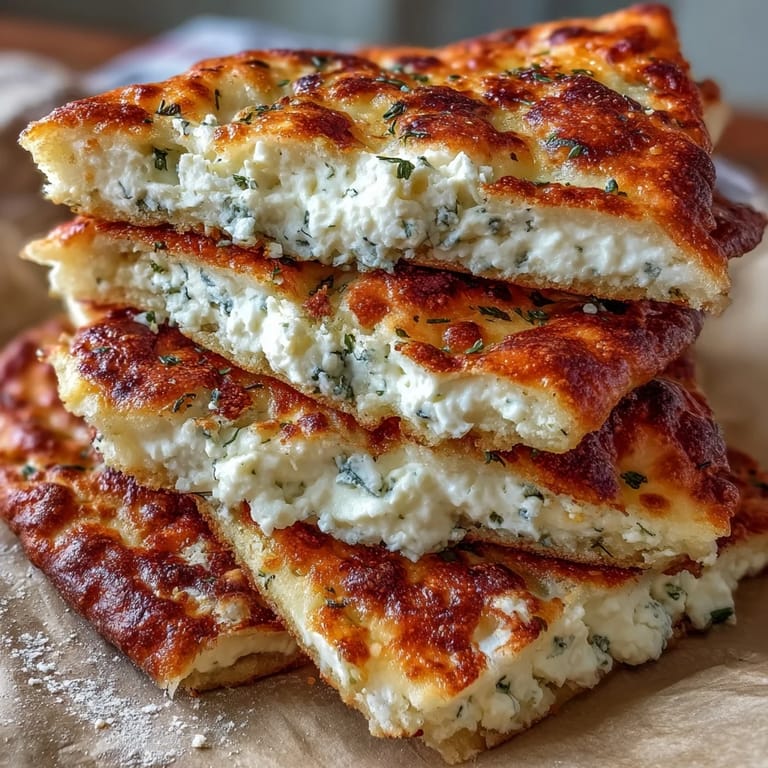
 One evening, I made a double batch and my neighbor wandered over while I was stacking them on a plate. She grabbed one, tore off a piece, and paused mid-chew to ask what made them so soft. When I told her it was cottage cheese, she laughed in disbelief and took three more home. That moment reminded me how a humble ingredient can surprise and delight in the simplest ways.
Storing and Reheating
I always make extra because these flatbreads keep beautifully in the fridge for up to three days or in the freezer for a month. Stack them with parchment paper between each one to prevent sticking, then seal them in an airtight container or zip-top bag. When you're ready to eat, reheat them in a dry skillet over medium heat for about thirty seconds per side, or wrap in a damp paper towel and microwave for fifteen to twenty seconds. Either method brings back that just-cooked softness without drying them out.
Flavor Variations
After making the basic version a dozen times, I started experimenting with mix-ins and never looked back. Finely chopped spinach, sun-dried tomatoes, or even a pinch of red pepper flakes stirred into the dough can completely change the character of the flatbread. I've also swapped the herbs for za'atar or added a handful of grated parmesan for a savory, cheesy twist. Each variation feels like a new discovery, and the dough is forgiving enough to handle almost anything you throw at it.
Serving Suggestions
These flatbreads are endlessly versatile, and I've served them in more ways than I can count. Use them as wraps for grilled chicken, roasted vegetables, or falafel, tear them into pieces for dipping into hummus or tzatziki, or top them with marinara, cheese, and pepperoni for a quick skillet pizza. I've even cut them into wedges and brushed them with garlic butter for a side that rivals any restaurant breadbasket. The possibilities feel limitless once you have a warm stack on hand.
- Spread with labneh and sprinkle with fresh herbs for a simple snack.
- Use as a base for breakfast wraps filled with scrambled eggs and avocado.
- Serve alongside soups or stews to soak up every last bit of broth.
 Pin It
 Every time I pull a warm flatbread from the skillet, I'm reminded that the best recipes are often the ones born from what you already have. I hope this one finds a place in your kitchen, too.
Your Questions Answered
- → Can I make the dough ahead of time?
Yes, prepare the dough and refrigerate it for up to 24 hours before rolling and cooking. Let it come to room temperature for about 15 minutes before proceeding.
- → What makes these flatbreads fluffy?
The combination of baking powder and cottage cheese creates air pockets that bubble up during cooking, while the egg adds structure and tenderness to the dough.
- → Can I freeze these flatbreads?
Absolutely. Once cooled, stack them with parchment paper between each round and freeze in an airtight bag for up to one month. Reheat in a warm skillet.
- → Why does the dough need to rest?
Resting allows the flour to hydrate fully and the gluten to relax, making the dough easier to roll out and resulting in softer, more tender cooked flatbreads.
- → What can I use instead of cottage cheese?
Ricotta or Greek yogurt work well as substitutes, though you may need to adjust the water content slightly to achieve the right dough consistency.
- → Can I cook these without oil?
Yes, use a dry nonstick skillet or brush the pan lightly with water instead. The flatbreads will still cook through, though they won't develop quite as much golden color.