 Pin It
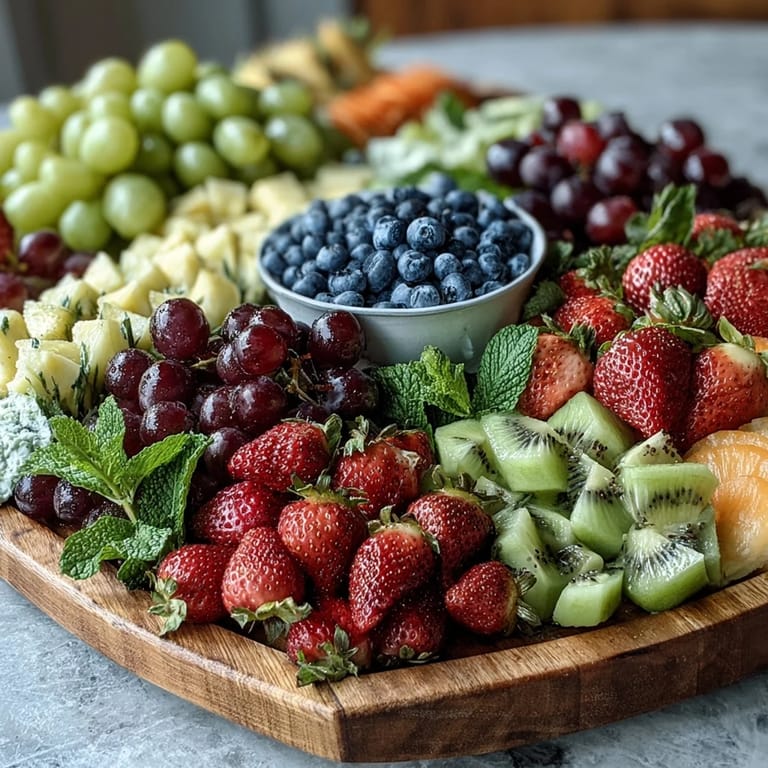
 My cousin texted me three weeks before her graduation asking if I could bring something "Instagram-worthy" to her party. I stood in the produce section that Saturday morning, surrounded by families doing their weekend shopping, and suddenly felt the weight of that challenge—until I spotted a pyramid of jewel-toned berries and thought: what if I didn't just bring food, but created an edible work of art? That fruit table became the moment everyone gathered around first, before the speeches, before the cake, before anything else. It taught me that sometimes the simplest ingredients, arranged with intention, become the most memorable part of a celebration.
I'll never forget watching my uncle's eyes light up when he saw the finished table—he said it looked like someone had painted a rainbow and made it edible. His ten-year-old daughter immediately started pointing out her favorite flowers, and that's when I realized this wasn't just decoration; it was an experience. The way people lingered around it, picking and chatting instead of just grabbing and going, changed how I think about serving food at celebrations.
Ingredients
- Seedless green and red grapes (3 cups each): These are your anchors—they're forgiving, naturally sweet, and the green-to-red contrast creates instant visual rhythm without you having to think too hard about color theory.
- Strawberries (2 cups, hulled and halved): The red here is non-negotiable for that gradient effect, and halving them instead of leaving them whole makes them less likely to roll off the arrangement.
- Pineapple (2 cups, bite-sized): Fresh pineapple brings a tropical brightness and a natural sweetness that makes people smile before they even taste it.
- Watermelon and cantaloupe (2 cups each): Melon ballers are your best friend here—those little spheres look intentional and fancy without requiring any real skill.
- Blueberries and raspberries (2 cups each): These delicate berries fill gaps and add jewel-tone depth; I always keep them separate from wetter fruits to prevent staining.
- Kiwis and oranges: The kiwi's green interior and orange segments break up the palette with unexpected colors that somehow make the whole thing feel more curated.
- Edible flowers (1 cup): This is non-negotiable—pesticide-free, food-grade flowers are what transform "nice fruit arrangement" into "wait, are those flowers edible?" Make absolutely certain they're certified safe.
- Fresh mint leaves: A quiet player that bridges the flowers and fruit, adding a whisper of green and a hint of freshness without demanding attention.
- Lemon slices (optional): These add a pop of sunshine yellow and a subtle tartness, though I skip them if my arrangement is already crowded.
Tired of Takeout? 🥡
Get 10 meals you can make faster than delivery arrives. Seriously.
One email. No spam. Unsubscribe anytime.
Instructions
- Wash everything thoroughly and dry completely:
- Use cold water and handle edible flowers especially gently—pat them dry with paper towels so they maintain their delicate structure. Wet fruit will slide around on your board like it's ice skating, so don't skip this step even though it feels tedious.
- Cut fruits strategically by size and texture:
- Larger fruits like watermelon and cantaloupe go to the melon baller; strawberries get halved so they show their beautiful interior; kiwis slice thin so you see those vibrant green circles. Think about how each cut reveals color and shape—this is where your fruit starts telling a visual story.
- Choose your canvas and start building sections:
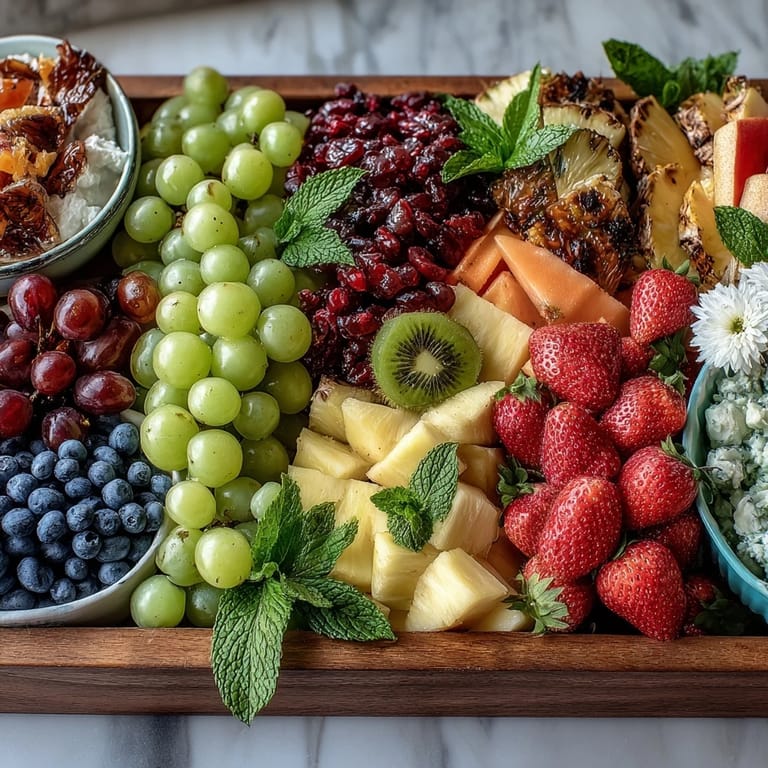
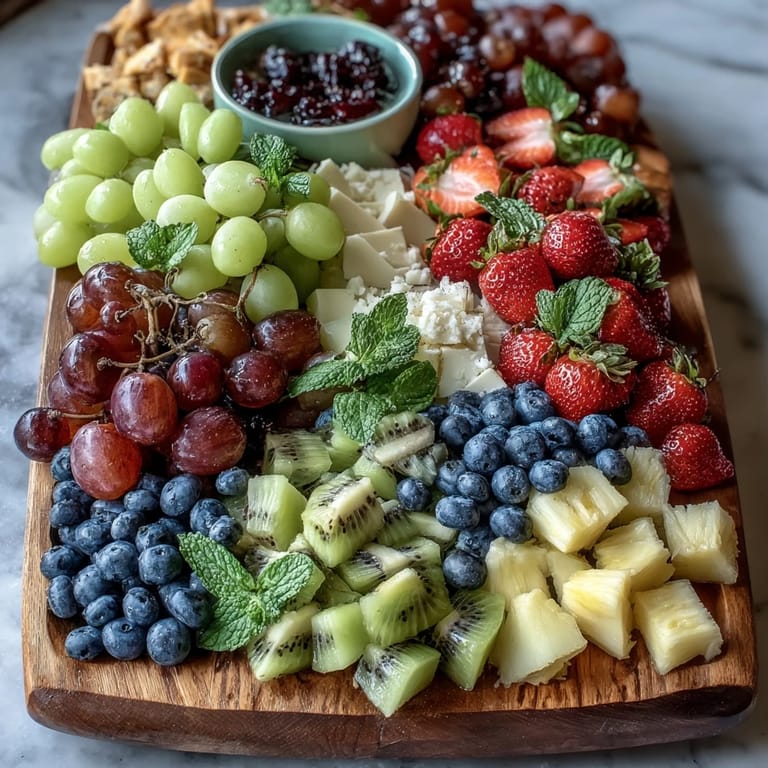
- A large clean table, wooden board, or even a white sheet creates your backdrop. Begin with your anchor fruits (grapes, melon balls) in loose sections, overlapping them slightly like you're painting with fruit instead of brushes.
- Layer in mid-tone fruits and fill the gaps:
- Add pineapple, strawberries, and berries to create depth and flow between your sections. Step back occasionally—seriously, take a few steps back—to see if there are any flat spots that need color or texture.
- Tuck flowers and mint between the fruit with intention:
- Don't scatter them randomly; nestle them into gaps where they'll be noticed and protected from getting crushed. The flowers are your punctuation marks, so treat them like something special.
- Chill and arrange as close to serving as possible:
- Cover loosely with plastic wrap if it's sitting for more than an hour, but ideally you want to set this out fifteen minutes before guests arrive so the fruit is crisp and the flowers haven't wilted.
 Pin It
 After that graduation party, I started getting requests to bring my "flower fruit thing" to every summer gathering. What struck me was that no one called it a salad or a side dish—they called it the fruit table, like it had become its own entity, a destination rather than just food. That's when I understood that celebration food doesn't have to be complicated; it just has to feel intentional and make people feel welcomed.
The Secret Behind Color Psychology
There's a reason this table stops people in their tracks, and it's not just that fruit is delicious. The human brain responds to color saturation and variety in ways that feel almost magical—when you've got deep reds next to bright yellows next to soft pastels, your eyes don't know where to rest, so they keep exploring. I've learned to think of this arrangement like a color wheel, building warm tones on one side and cool tones on the other, then letting the middle sections blend them together. The edible flowers are my cheat code for breaking up mono-colored sections and drawing the eye exactly where I want it to go.
Timing and Freshness
The window between perfect and slightly tired is narrower with a fruit display than with almost any other dish. Cut pineapple oxidizes and browns if it sits too long; berries release juice and stain everything nearby; even kiwi can brown at the cut edges if you're not careful. My strategy now is to prep everything except the most delicate fruits (raspberries, edible flowers) up to two hours ahead, then do a final assembly about thirty minutes before guests arrive. This way the fruit tastes as good as it looks, and you're not frantically arranging while people are already showing up.
Seasonal Swaps and Variations
The beauty of a fruit table is that you're not locked into these exact fruits—you're locked into the concept of color, contrast, and celebration. In summer, I go heavier on melons and berries; in spring, I add fresh cherries and apricots; in late summer, I sometimes swap in mango or fresh figs if I spot them at the farmer's market. The edible flowers change seasonally too—in spring I hunt for pansies and violas, in summer I find nasturtiums and marigolds, and I'm always looking for what's in season, pesticide-free, and actually edible.
- Mango, papaya, and fresh cherries work beautifully when fruits listed above aren't in season.
- Different edible flowers offer different visual impact—smaller delicate blooms feel romantic, larger flowers feel bold and modern.
- If you're adding an optional dip, honey-yogurt or coconut dip pairs better with some fruit combinations than others (stone fruits and berries love honey; tropical fruits love coconut).
 Pin It
 Every time I set up a fruit table now, I think about that graduation party and how something so simple became the thing people remembered. It's a reminder that the best dishes are often the ones where you let good ingredients shine instead of trying to overcomplicate them.
Your Questions Answered
- → Which fruits work best for a fruit table?
Choose a colorful variety such as grapes, strawberries, melons, berries, kiwi, and oranges to offer diverse flavors and visual appeal.
- → How should edible flowers be handled?
Use only pesticide-free, food-grade edible flowers. Wash gently and pat dry before arranging to maintain freshness and safety.
- → What is the best way to arrange the fruit?
Arrange fruits in overlapping sections or patterns to create a vibrant, layered display. Tuck edible flowers and mint leaves between clusters for pops of color.
- → How can I keep the fruit fresh before serving?
Prepare the display shortly before the event and keep it chilled until serving time to maintain freshness and prevent wilting.
- → Are there any suggested garnishes to enhance flavor?
Fresh mint leaves and lemon slices add brightness and subtle aroma, enhancing the natural flavors of the fruit.