 Pin It
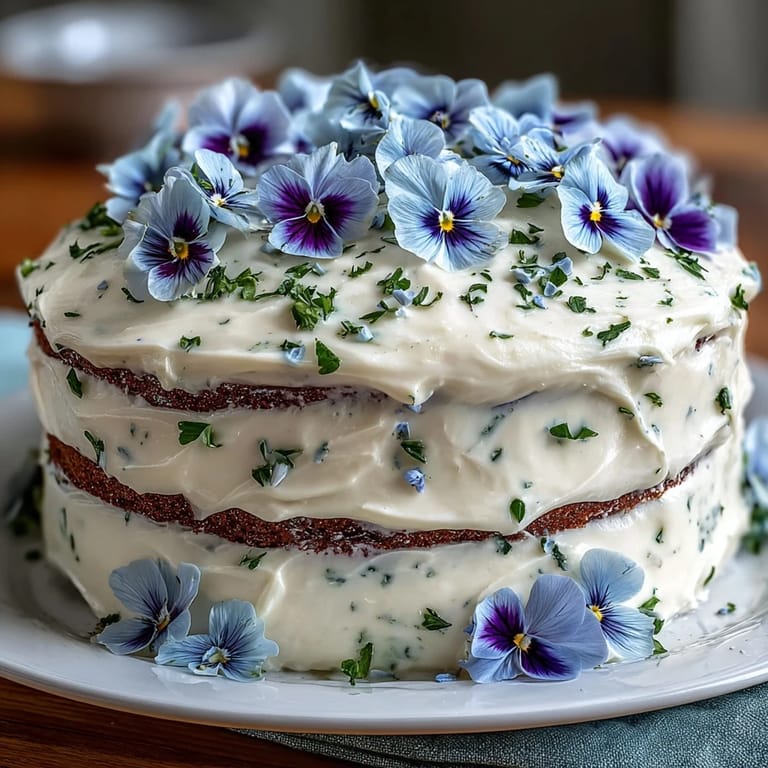
 My cousin's graduation party was supposed to be understated until her mom mentioned wanting something that felt celebratory without being over-the-top. I found myself standing in the kitchen at midnight, sketching cake designs on napkins and thinking about how a simple vanilla sponge could become something worthy of such a big moment. The idea of gold leaf and edible flowers struck me as exactly right—elegant, a little luxurious, and somehow capturing that feeling of achievement. That cake ended up being the conversation piece of the whole afternoon, with guests asking how I'd managed to make it look so refined.
I'll never forget the moment a guest at that graduation party turned to me and said, "You made this yourself?" with genuine disbelief. Her voice had that pitch people use when they've just realized someone they know can do something they thought required professional equipment and training. Watching people take photos of each slice before eating it, seeing the gold leaf catch the light on their forks—that's when I understood why cake decorating matters. It's not vanity; it's saying someone's achievement deserves something beautiful.
Ingredients
- All-purpose flour (2 1/2 cups): This is your foundation, and measuring by weight rather than volume matters more here than in many recipes since we're after a sturdy crumb that supports layers and frosting.
- Baking powder (2 1/2 tsp): Fresh baking powder is crucial; old baking powder produces flat, dense cakes that can't support decorative elements.
- Salt (1/2 tsp): It seems modest, but salt balances sweetness and deepens vanilla flavor in ways you won't consciously notice until it's missing.
- Unsalted butter (1 cup plus 1 1/2 cups): Room temperature butter creams smoothly and incorporates air, while the buttercream butter needs to be perfectly soft or you'll end up with a grainy, separated mess.
- Granulated sugar (2 cups plus 1 1/4 cups): In the cake batter, it creates lift and tenderness; in the buttercream, it must fully dissolve over heat for that signature silky texture.
- Eggs (4 plus 5 whites): Room temperature eggs emulsify properly with butter, preventing a curdled batter; the egg whites for buttercream must be pasteurized or brought to 160°F for food safety.
- Vanilla extract (1 tbsp plus 2 tsp): Use real vanilla extract, not imitation—the difference becomes obvious once buttercream is your canvas.
- Whole milk (1 cup): It keeps the crumb moist without making it dense, and milk proteins help create a tender structure.
- Edible flowers and gold leaf: These make or break the visual impact, so source them from reputable suppliers who grow them specifically for consumption, never from florists who use pesticides.
Tired of Takeout? 🥡
Get 10 meals you can make faster than delivery arrives. Seriously.
One email. No spam. Unsubscribe anytime.
Instructions
- Prepare your workspace:
- Preheat your oven to 350°F and grease three 8-inch round pans, lining them with parchment—this prevents sticking and lets cakes release cleanly. Having all ingredients at room temperature before you start prevents the batter from breaking and ensures even baking.
- Mix the dry ingredients:
- Whisk flour, baking powder, and salt in a separate bowl; this distributes the leavening evenly and prevents dense pockets in the cake. Set it aside so you're not fumbling with measurements during the creaming stage.
- Cream butter and sugar:
- Beat them together for a full three minutes until the mixture is pale, fluffy, and noticeably lighter in color—this incorporates air that helps the cake rise. If you rush this step, you'll taste a denser cake that doesn't hold layers as gracefully.
- Add eggs gradually:
- Add one egg at a time, beating well between additions to emulsify the fat and prevent curdling. This steady approach creates a homogenous batter that bakes evenly.
- Alternate wet and dry ingredients:
- Start with flour, then milk, then flour again, mixing just until each addition disappears—overmixing develops gluten and toughens the cake. The milk loosens the batter slightly between flour additions so you avoid tough streaks.
- Divide and bake:
- Pour batter evenly among the three pans and smooth the tops, then bake for 28–32 minutes until a toothpick comes out clean. You'll know they're done when the cakes spring back when you press the centers lightly.
- Cool with patience:
- Let cakes rest in pans for ten minutes—this lets them set slightly so they release without crumbling—then turn them out onto wire racks to cool completely. Decorating warm cakes melts the buttercream, so this waiting period is non-negotiable.
- Make the Swiss meringue buttercream:
- Combine egg whites and sugar in a heatproof bowl over simmering water, whisking constantly until the sugar dissolves and the temperature reaches 160°F for food safety. You'll feel the mixture change from grainy to smooth, and it should take about five minutes.
- Whip to peaks:
- Transfer the mixture to a stand mixer and beat on high until stiff peaks form and the bowl cools to room temperature, roughly eight to ten minutes. This creates the fluffy, cloud-like texture that distinguishes Swiss meringue from other buttercreams.
- Add butter carefully:
- Reduce the mixer speed to medium and add butter a few cubes at a time, mixing after each addition until smooth and emulsified. If the buttercream looks broken or grainy, it means the temperature or mixing speed is off—slow down, add a moment in the fridge, and try again.
- Season and assemble:
- Mix in vanilla extract and a pinch of salt, then place your first cake layer on a serving plate and spread with buttercream. Stack and fill the remaining layers, then give everything a thin crumb coat, chill it for twenty minutes, and finish with a final smooth layer.
- Apply gold leaf:
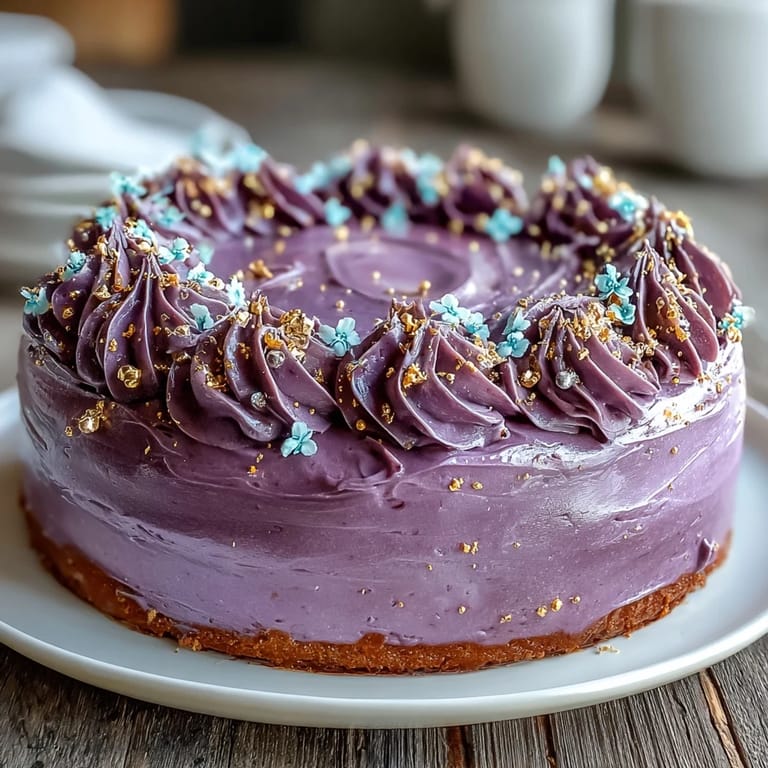
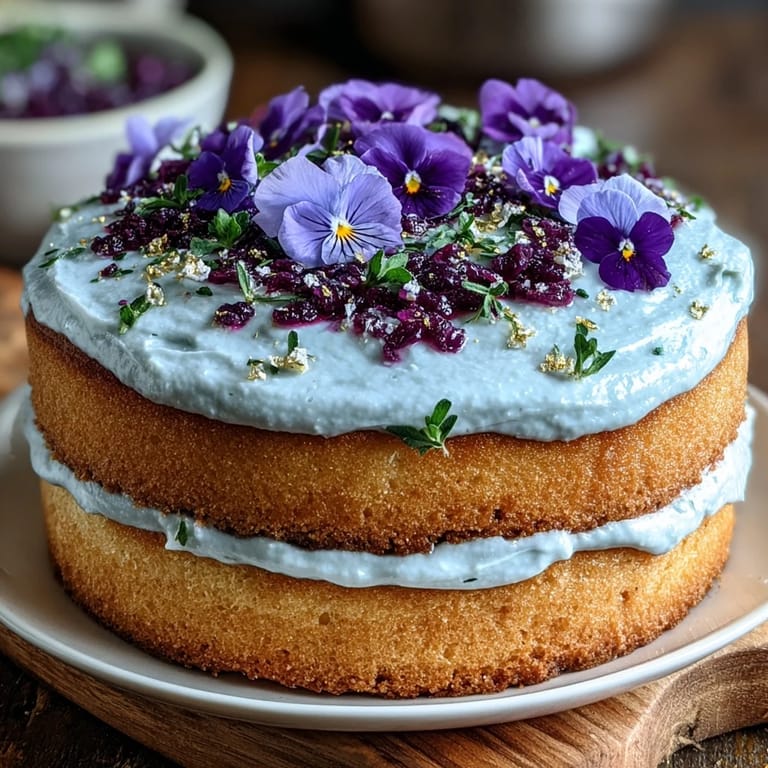
- Use a food-safe paintbrush to gently press edible gold leaf onto sections of the frosting—it adheres to the moist buttercream without any adhesive. Less is often more; even small patches of gold catch light beautifully.
- Add edible flowers:
- Arrange fresh edible flowers on top and around the cake just before serving, placing them where they'll be stable and visible. If you add them hours ahead, they may wilt or slide, so this is a final touch.
 Pin It
 The moment that stays with me isn't actually from the party itself—it's the night before, when I was fussing over whether the gold leaf looked too much or the flowers too arranged. My partner walked in, looked at the cake I'd been staring at for twenty minutes, and simply said, "It's beautiful. Stop worrying." Sometimes the cake you make for someone becomes proof that you care enough to try something that scares you a little.
Why Room Temperature Matters More Than You Think
I learned this lesson the hard way when I grabbed eggs straight from the fridge for an earlier cake attempt and ended up with a batter that looked separated and curdled. Room temperature ingredients emulsify smoothly, creating a stable batter that rises evenly and bakes with a tender, fine crumb. Cold ingredients don't disperse evenly through the fat, creating pockets of unmixed flour and fat that produce a dense, uneven texture that struggles to hold layers and frosting. Now I take eggs and butter out thirty minutes before I start, and the difference in the finished cake is unmissable.
The Swiss Meringue Moment
Swiss meringue buttercream intimidates people because it involves heating egg whites, but honestly, that heating step is why it's superior—it eliminates food safety concerns and creates a silkier, less cloyingly sweet frosting than American buttercream. The tricky moment comes after you add the butter; the mixture can look frightingly broken and separated, with little beads of butter floating in a pale mixture. This isn't failure; it's just the emulsification process catching up with you. Keep the mixer running at medium speed, and within a minute or two, it transforms into luxurious, pipeable frosting that tastes like sweetened clouds.
Decorating Tricks That Took Three Cakes to Learn
The first cake I decorated with gold leaf, I pressed it on too firmly and created streaky, broken patches that caught every light in a way that screamed amateur. The second time, I barely touched it and it wouldn't adhere at all. The third time, I realized the buttercream needed to be just moist enough to grip the leaf without being so soft that it collapsed under pressure—a cool room and a gentle hand with the paintbrush changed everything. Apply gold leaf to a frosted cake at room temperature once the buttercream has set for a few hours but isn't bone-hard, and use a soft-bristled paintbrush to press gently and let the delicate leaf settle naturally.
- Edible flowers wilt if they're placed too far ahead of serving, so add them in the final hour or even minutes before guests arrive.
- A gold ribbon wrapped around the base of the cake adds polish without requiring advanced decorating skills.
- If your edible flowers are slightly moist from washing, pat them dry gently and let them air-dry completely before placing them on the frosting.
 Pin It
 This cake is for moments that matter—celebrations of hard work, proof that someone believed in you enough to bake something beautiful. The gold leaf and flowers aren't frivolous; they're saying what words sometimes can't.
Your Questions Answered
- → How do I ensure the sponge cake stays moist?
Use room temperature ingredients and avoid overmixing the batter. Baking at the right temperature and not overbaking helps keep the sponge moist.
- → What is the best way to apply the gold leaf?
Use a food-safe paintbrush to gently place gold leaf onto the chilled cake surface, handling it carefully to prevent tearing.
- → Can I substitute the vanilla flavor in the sponge?
Absolutely. You can replace vanilla extract with almond or citrus extracts for a different aroma while maintaining balance.
- → How should I store the cake after decorating?
Keep it refrigerated in an airtight container to preserve freshness, but bring to room temperature before serving for best texture and taste.
- → Are there alternatives to Swiss meringue buttercream?
Yes, buttercream variations like American or Italian can be used, though Swiss meringue offers a smoother, less sweet finish ideal for delicate decoration.