 Pin It
 Last spring, I was experimenting with my sourdough starter when I realized it had been sitting neglected for weeks, and I felt oddly guilty about it. That same morning, my neighbor dropped off a basket of blueberries from her garden, and something clicked—why not channel both into one loaf? The combination of tangy starter, bright lemon, and juicy berries turned out to be exactly what I needed to fall in love with baking again.
I brought one of these loaves to a book club gathering, and someone asked for the recipe before they'd even finished their first slice. Watching people tear into warm slices, still steaming from the cooling rack, felt like I'd finally figured out something important about feeding the people I care about.
Ingredients
- Bread flour (350 g): Use bread flour instead of all-purpose for better structure and chew; it gives you that honest sourdough texture.
- Active sourdough starter (75 g): This is your flavor engine—make sure it's bubbly and fed before you start, or you'll miss out on that signature tang.
- Granulated sugar (60 g): Don't skip this; it feeds the starter and helps with browning, creating that golden crust you're after.
- Egg (1 large): Adds richness and helps bind everything together, plus it creates a shine when you brush it on top.
- Whole milk, lukewarm (120 ml): Warm milk helps the dough rise faster and creates a softer crumb than water alone would.
- Unsalted butter, softened (60 g): Add it in pieces after the initial mix so it blends smoothly without tearing the gluten strands.
- Fine sea salt (1 tsp): Salt strengthens the gluten and balances the sweetness, so don't reduce it.
- Lemon zest (1 large lemon): Add this to the dry ingredients so the oils distribute evenly throughout the dough.
- Fresh or frozen blueberries (200 g): Frozen ones actually work better here because they're firmer and won't bleed color as much during mixing.
- Lemon juice (1 tbsp): This keeps the blueberry filling bright and prevents it from tasting one-dimensional.
- Cornstarch (1 tbsp): Thickens the blueberry filling so it doesn't make your bread soggy—this is the secret that changed everything for me.
- All-purpose flour for crumble (50 g): Use all-purpose here, not bread flour; it creates a lighter, more delicate topping.
- Cold unsalted butter, cubed (30 g): Keep it cold so the crumble stays separate and crunchy instead of melting into the dough.
- Light brown sugar (30 g): Brown sugar adds a subtle molasses note that complements the lemon beautifully.
Tired of Takeout? 🥡
Get 10 meals you can make faster than delivery arrives. Seriously.
One email. No spam. Unsubscribe anytime.
Instructions
- Build your dough base:
- Combine bread flour, sugar, salt, and lemon zest in your mixer bowl. The zest will seem dry at first, but it's already releasing its oils. Add sourdough starter, egg, and warm milk, mixing until everything comes together into a shaggy, slightly sticky dough that looks like it needs help.
- Develop the dough:
- With the mixer running on low, add softened butter one piece at a time, waiting for each addition to mostly incorporate before adding the next. This patience matters—rushing this step means grainy, broken dough. Once all the butter is in, increase the speed slightly and mix until the dough is smooth, elastic, and slightly tacky, about 8 to 10 minutes total.
- First rise:
- Place the dough in a lightly greased bowl, cover it loosely with a damp kitchen towel, and set it somewhere warm—a turned-off oven with the light on, a sunny windowsill, anywhere around 75 to 78 degrees feels right. You're waiting for it to roughly double in size, which usually takes about 2 hours. Press your finger gently into the dough; if the indent springs back halfway, you're close.
- Prepare the blueberry swirl:
- While the dough rises, combine fresh or frozen blueberries, sugar, and lemon juice in a saucepan over medium heat. Stir occasionally as the berries burst and release their juice, which takes about 5 minutes. Once they're broken down and jammy, sprinkle cornstarch over everything and stir constantly for 2 to 3 minutes until the mixture thickens into something that coats the back of a spoon. The cornstarch is what keeps your bread from becoming soggy—don't skip it. Cool this completely before using; warm filling will make the dough sticky and difficult to work with.
- Make the crumble topping:
- In a separate bowl, whisk together all-purpose flour, brown sugar, and a pinch of salt. Cut in the cold, cubed butter using your fingertips or a pastry cutter, working until the mixture resembles coarse breadcrumbs with some pea-sized pieces of butter still visible. Cover and refrigerate this mixture until you're ready to top your loaf; cold crumble bakes up crunchier and more defined.
- Shape and swirl:
- Once your dough has doubled, turn it out onto a lightly floured surface. Gently punch it down—not aggressively, just enough to release excess gas. Roll it into a rectangle roughly 10 by 14 inches; it should be about 1/4 inch thick and fairly even. Spread the cooled blueberry mixture over the dough, leaving a 1-inch border on all sides so filling doesn't squeeze out during rolling.
- Roll it up:
- Starting from one of the short ends, roll the dough tightly toward you, using a bench scraper to help keep tension as you go. Once it's rolled, pinch the seam closed and place it seam-side down in a greased 9 by 5-inch loaf pan. The seam facing down keeps the swirl intact and gives you that beautiful spiral when you slice it.
- Second rise:
- Cover the loaf pan loosely and let it rise in a warm spot again, this time until the dough is puffy and rises about 1 inch above the rim of the pan. This usually takes about 1 hour, but it can be faster or slower depending on your kitchen's temperature. You'll know it's ready when it feels airy and springs back slowly when you poke it gently.
- Top and bake:
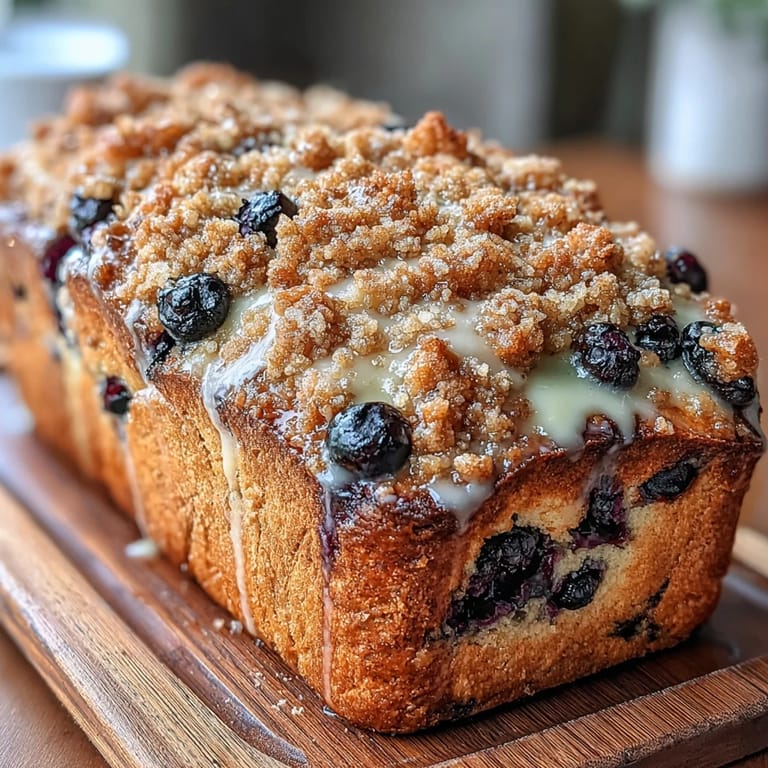
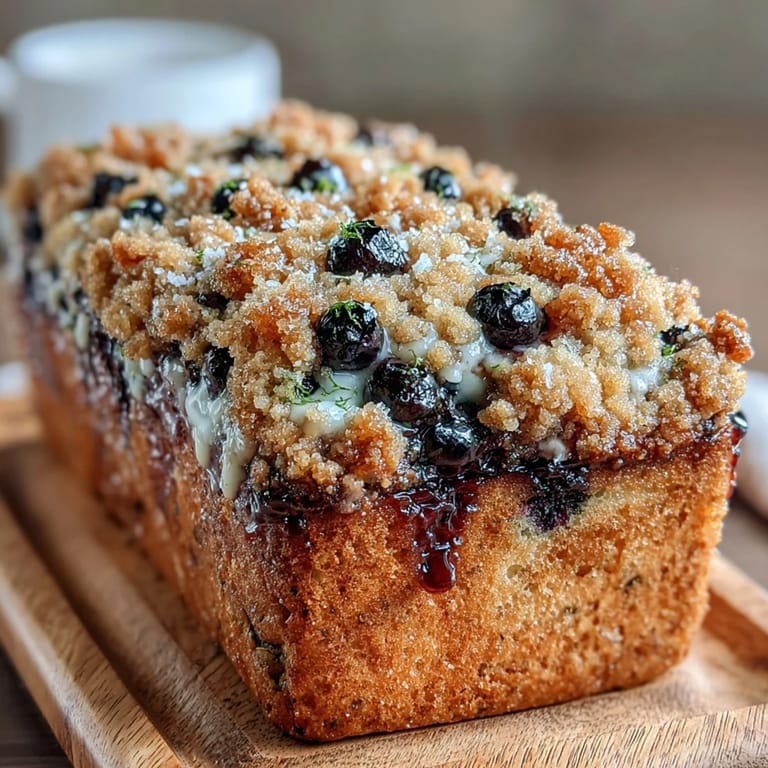
- Preheat your oven to 350 degrees Fahrenheit. If you want extra shine and a deeper golden crust, brush the top of the loaf lightly with milk or a beaten egg—this is optional but worth doing. Scatter the chilled crumble topping evenly over the entire surface, pressing gently so some pieces stick to any egg wash. Slide the loaf into the oven and bake for 50 to 55 minutes, checking around the 30-minute mark. If the top is browning faster than the sides, tent the whole thing loosely with foil to slow down the browning while the interior continues to bake.
- Cool with intention:
- Once the loaf is deep golden brown and a toothpick inserted into the center comes out clean or with just a few moist crumbs, remove it from the oven. Let it sit in the pan for 15 minutes—this is where the crumb sets and becomes sliceable. Transfer it to a wire rack and let it cool completely before slicing, even though the smell will make you want to cut into it immediately.
 Pin It
 My daughter once asked why this bread smelled different from store-bought loaves, and I realized I'd never really explained sourdough to her. Watching her understand that a living starter was responsible for all that flavor and tang made me appreciate what was happening in that bowl in a completely different way.
Why This Loaf Works Every Time
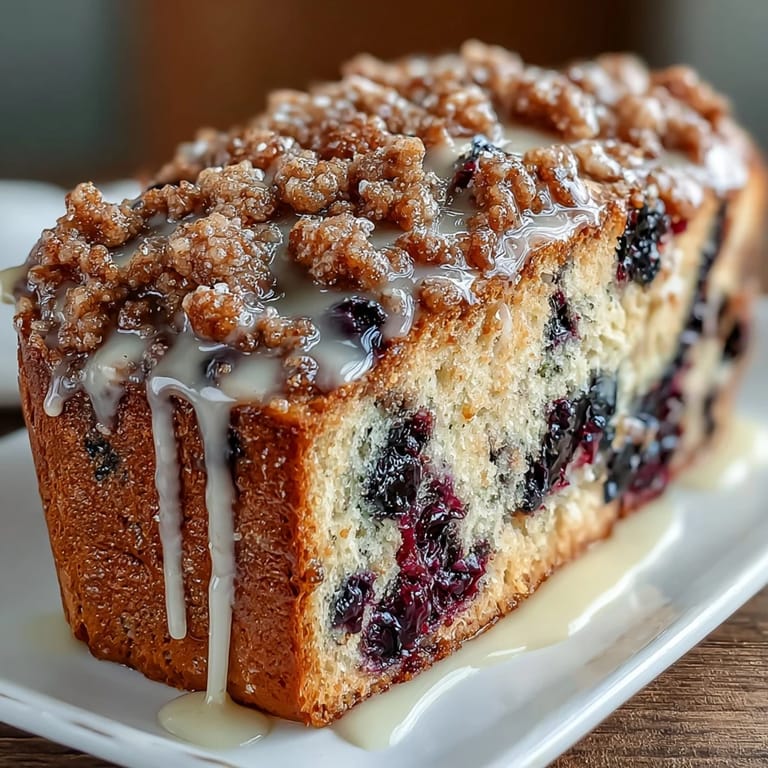
The magic here is in the balance—the sourdough starter provides that complex tang that makes people stop mid-conversation, while the lemon and blueberry keep things bright and approachable instead of heavy. The crumble topping isn't just decoration; it adds textural contrast and a little extra sweetness that rounds out the bread's personality. The cornstarch thickening means your swirl stays where you put it, visible and gorgeous from the first slice to the last.
Timing and Flexibility
The beauty of this bread is that it's forgiving with timing. If your dough is rising faster than expected, you can punch it down and let it rise again, or even refrigerate it overnight after the first rise—that'll give you even more sourdough flavor. If you're short on time, a warm spot in your kitchen speeds things up; a cooler environment just means longer rising times, which honestly produces better flavor anyway.
Serving Suggestions and Storage
Slice this loaf while it's still slightly warm and toast the slices if you want that crispy exterior with a soft, custardy interior. It pairs beautifully with Earl Grey tea or a light coffee, and it's equally at home for breakfast as it is for afternoon tea. Store it in an airtight container at room temperature for up to three days, or wrap it well and freeze it for up to a month; just thaw it at room temperature before slicing.
- A simple lemon glaze drizzled over the cooled loaf adds extra brightness and makes it feel more special without much effort.
- Day-old slices make incredible French toast because the sourdough holds up better than regular bread.
- If you're feeling adventurous, a thin spread of softened butter mixed with a pinch of lemon zest on a warm slice is almost better than the bread itself.
 Pin It
 This loaf transformed how I think about baking—it showed me that complexity and approachability aren't opposites. Every time I make it, someone asks for the recipe.
Your Questions Answered
- → How do I achieve a moist sourdough loaf with lemon and blueberries?
Use lukewarm milk and incorporate softened butter into the dough for moisture. Fresh blueberries and lemon zest add natural juiciness and brightness.
- → What is the purpose of the crumble topping?
The crumble adds a buttery, crunchy contrast that complements the soft, tender loaf, enhancing texture and flavor.
- → Can I use frozen blueberries without thawing?
Yes, frozen blueberries can be used directly. Cooking them with sugar and lemon juice helps release their natural juices for the swirl.
- → How long should the dough proof for best results?
Allow the dough to rise in a warm place until doubled—approximately 2 hours for the first proof and 1 hour after shaping.
- → What temperature and baking time work best for this loaf?
Bake at 350°F (175°C) for 50–55 minutes, tenting with foil after 30 minutes to prevent over-browning.
- → Are there suggestions for serving this loaf?
It pairs beautifully with Earl Grey tea or lightly sweetened coffee. For extra lemon flavor, drizzle with a simple lemon glaze.