 Pin It
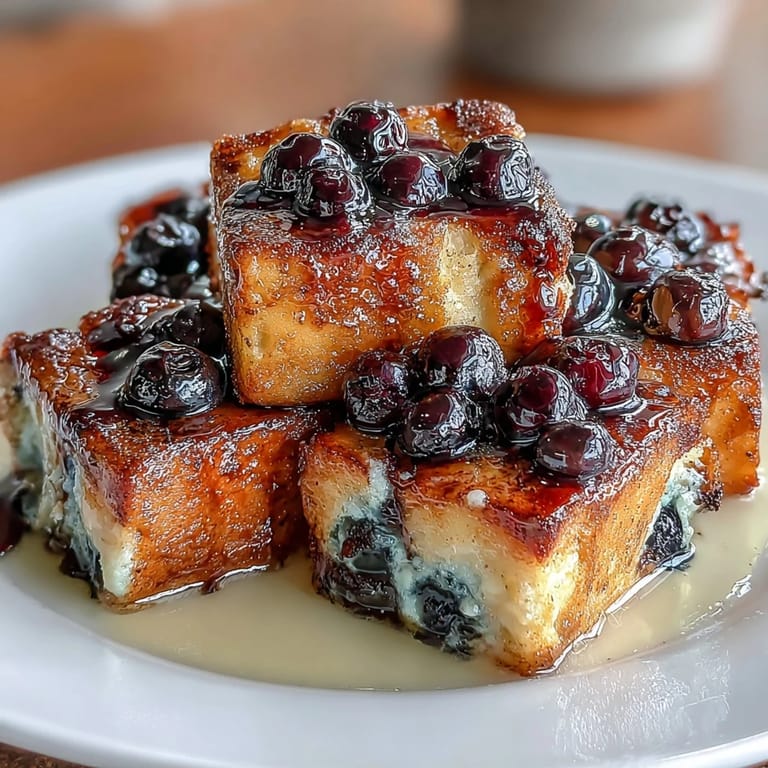
 There's something about the smell of sourdough toasting in a custard bath that makes Saturday mornings feel less ordinary. I discovered this bake quite by accident, really—I'd bought too much sourdough from the farmer's market, and my friend mentioned she was bringing fresh blueberries to brunch. The lemon zest came from a tree in my yard that had finally produced something worth using. What started as a way to avoid wasting bread turned into the dish people now specifically request.
I made this for my neighbor one Sunday after she'd helped me paint my kitchen, and she came back three times asking for the recipe. Her kids actually asked for seconds without being prompted, which felt like winning some kind of parenting lottery. That moment taught me this wasn't just breakfast—it was the kind of dish that makes people feel cared for.
Ingredients
- Sourdough bread, 1 loaf cut into 1-inch cubes: The tang here is essential; it keeps the bake from feeling one-note. Day-old bread works better than fresh because it holds the custard without turning to mush.
- Fresh or frozen blueberries, 1 ½ cups: Frozen work just as well and sometimes taste brighter because they're picked at peak ripeness. Don't thaw them before adding or they'll bleed too much color into the bread.
- Lemon zest, from 1 lemon: Use a microplane if you have one—it catches all the oil and fragrance that makes this special. The white pith underneath tastes bitter, so be gentle with your strokes.
- Eggs, 6 large: Room temperature eggs blend more smoothly into the custard, creating an almost silky texture. Cold eggs straight from the fridge tend to be lumpy no matter how hard you whisk.
- Whole milk, 2 cups: This is your base; it needs to be whole milk or the custard tastes thin and watery. Half and half works if that's what you have, but then use less heavy cream.
- Heavy cream, ½ cup: The richness here is what makes it feel indulgent rather than just eggy bread. If you only have milk, the bake will still work but lose its luxurious edge.
- Granulated sugar, ⅓ cup: This sweetens the custard but doesn't overpower the lemon. Resist the urge to add more; the blueberries bring their own natural sweetness.
- Pure vanilla extract, 2 tsp: The imitation stuff works if that's what you have, but pure vanilla rounds out the flavor in a way that feels almost impossible to describe.
- Salt, ¼ tsp: A small pinch that you barely taste but that makes everything else taste more like itself. It balances the sweetness and lemon juice beautifully.
- Lemon juice, from 1 lemon: Fresh juice only—bottled tastes chemical and ruins the whole point. The acidity cuts through richness and makes the custard taste alive.
- Unsalted butter, 2 tbsp melted: The topping relies on this to crisp up and caramelize. Salted butter will make the sugar topping taste salty, which sounds odd until it's too late.
- Granulated sugar and cinnamon, for topping: This mixture becomes almost candied on top, adding texture and warmth that rounds out the tartness below.
Tired of Takeout? 🥡
Get 10 meals you can make faster than delivery arrives. Seriously.
One email. No spam. Unsubscribe anytime.
Instructions
- Prepare your stage:
- Grease a 9x13-inch baking dish generously—you want butter in every corner so the edges don't stick. Arrange sourdough cubes in an even layer, then scatter blueberries and lemon zest over them like you're seasoning something precious.
- Build the custard:
- Crack eggs into a large bowl and whisk them together first, watching the yolks break and blend into something uniform. Add milk, cream, sugar, vanilla, salt, and lemon juice slowly, whisking constantly to keep everything smooth and incorporated—rushing this step means lumpy custard.
- The crucial soak:
- Pour the custard evenly over the bread, then press down gently with the back of a spatula, letting the bread absorb the mixture without compressing it into a brick. You'll feel the bread drink it in, and that's exactly what you want.
- Let it rest:
- Cover the baking dish with plastic wrap or foil and refrigerate for at least 30 minutes—overnight is genuinely better because the bread fully hydrates and the flavors meld. I usually prep this the night before and bake it while the coffee brews.
- Finish and bake:
- Remove from the fridge and preheat your oven to 350°F while the dish sits out for a few minutes. Drizzle melted butter over the top, then sprinkle the cinnamon-sugar mixture evenly, and bake uncovered for 45 minutes until the center barely jiggles and the edges are golden.
- The rest is patience:
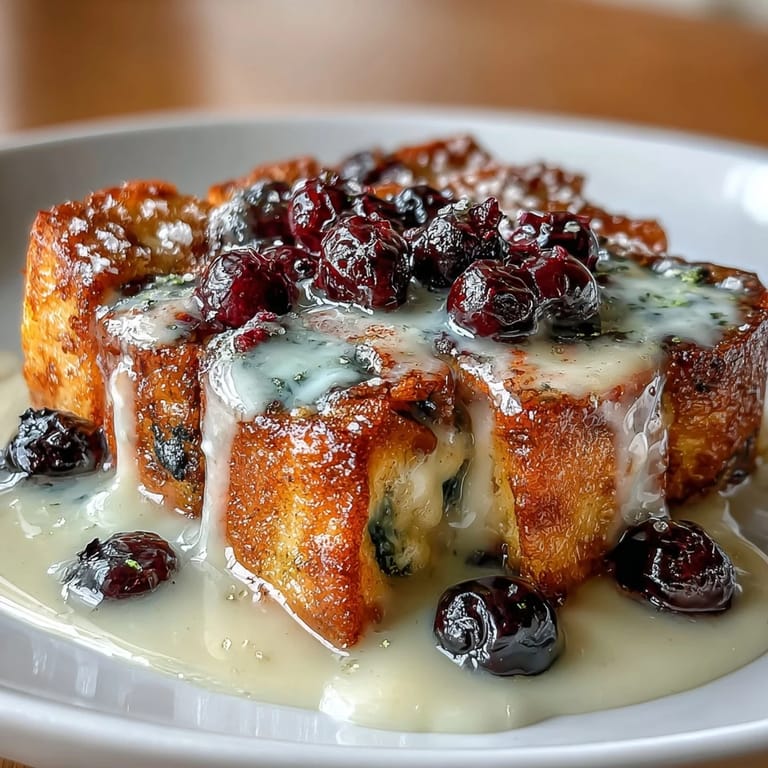
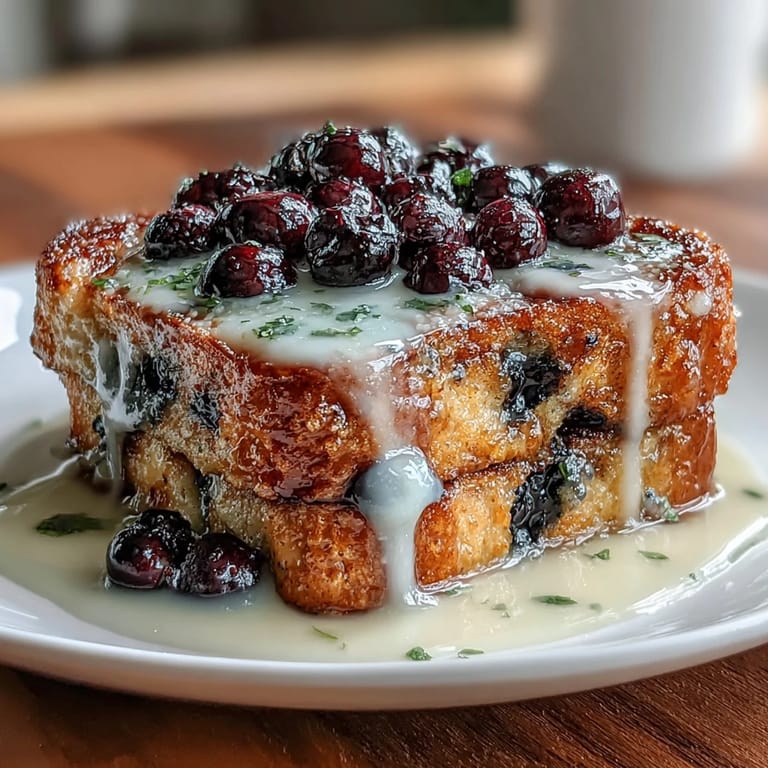
- Let it cool for 10 minutes before serving—this allows the custard to set properly so you get clean slices instead of soupy scoops. Serve warm with maple syrup, powdered sugar, or nothing at all if the blueberries and lemon are speaking for themselves.
 Pin It
 My mom tried this for Easter brunch last spring and told me later that my niece, who usually picks at everything, asked for thirds. There's something about serving food that makes people linger at the table longer, talking about smaller things that somehow matter more. This dish became the reason everyone showed up early that Sunday.
Why Sourdough Matters Here
Sourdough's natural fermentation creates acids that deepen and complicate the flavor in ways regular bread simply can't match. When it sits in the custard overnight, those acids intensify, making every bite taste more interesting than you'd expect from something so simple. I've tried this with brioche and regular white bread out of curiosity, and they felt flat by comparison—the lemon just tasted bright rather than brilliant, if that makes sense.
The Blueberry Question
Fresh blueberries are lovely, but there's honesty in using frozen ones that I've come to appreciate. They stay intact longer during baking instead of collapsing into the custard, and because they're picked at peak ripeness and frozen immediately, they often taste more like themselves than fresh ones that have traveled. I buy mine in bulk in late summer and keep them in the freezer specifically for moments like this, turning winter mornings into something that tastes like summer.
Making It Your Own
This bake is flexible in ways that make it fun to experiment with—I've added raspberries when blueberries weren't available, and the tartness shifted in an interesting direction. Cardamom added to the custard instead of plain vanilla feels Scandinavian and somehow more sophisticated. The base recipe is solid enough to support your mood or what your garden happened to produce this week.
- Swap in raspberries or blackberries if blueberries aren't calling to you, or use a combination for complexity.
- A pinch of cardamom or a tiny scrape of nutmeg added to the custard changes the whole personality without overwhelming anything.
- If you're making this dairy-free, use oat milk and coconut cream for a version that tastes nearly identical and no one will notice unless you tell them.
 Pin It
 This recipe became my answer to the question of what to make when you want to feed people something that tastes like care. It's unpretentious enough to serve on a Tuesday morning and special enough to remember on a Tuesday next year.
Your Questions Answered
- → Can I use frozen blueberries instead of fresh?
Yes, frozen blueberries work well; just do not thaw them before baking to avoid excess moisture.
- → How long should the custard soak for best results?
Refrigerate for at least 30 minutes, though soaking overnight yields a richer texture and fuller flavor.
- → Can I substitute the sourdough bread with another type?
While sourdough provides a sturdy texture, dense breads like French or country loaf can also be used.
- → Is there a dairy-free version available?
Yes, replace whole milk and cream with plant-based alternatives for a dairy-free variation.
- → What toppings complement this sourdough bake best?
Maple syrup, powdered sugar, or a light dusting of cinnamon enhance the flavor beautifully.
- → Can this dish be prepared in advance?
Absolutely! Prepare the custard and bread mixture, refrigerate overnight, then bake fresh the next morning.