 Pin It
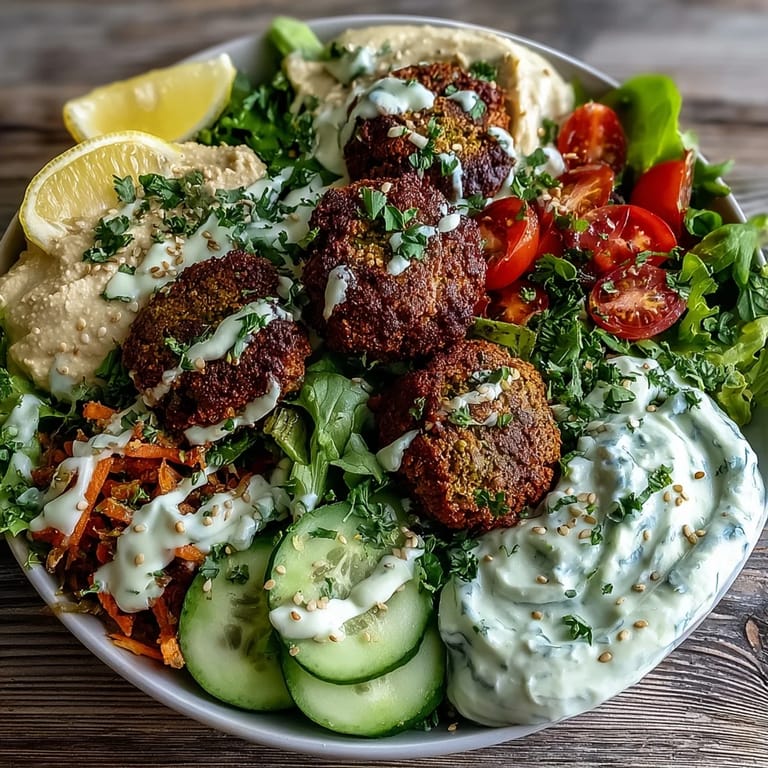
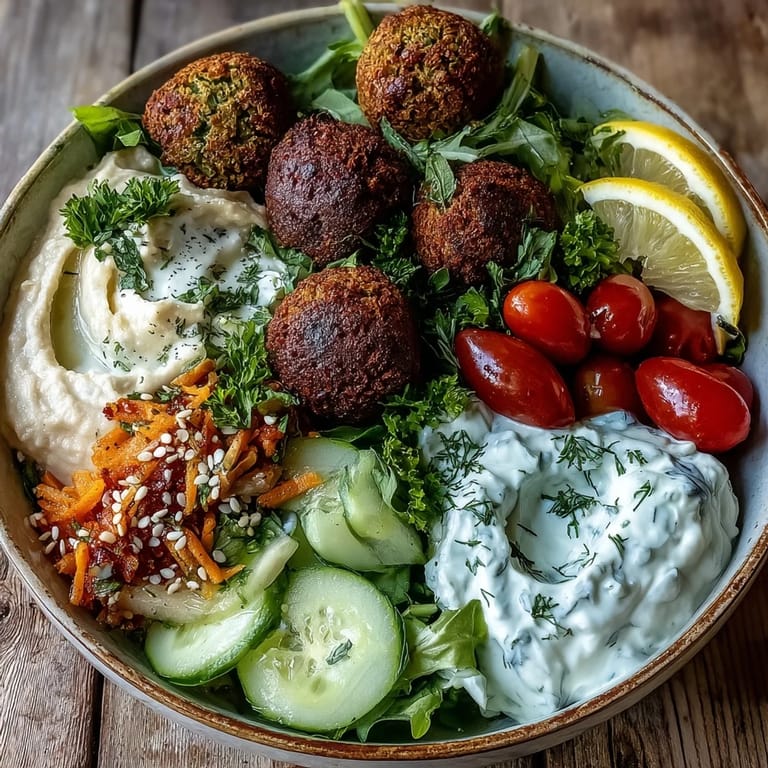
 My neighbor brought over a falafel bowl one afternoon, and I watched her assemble it right there at my kitchen counter—hummus swirled like paint, crisp greens tumbling in, those golden falafel balls placed just so. I'd never thought of falafel as a bowl situation before, always assuming it belonged stuffed in pita, but something about the way she layered it made me see the dish differently. The tahini drizzle caught the light, and suddenly I understood: this wasn't just lunch, it was edible architecture. I've been making versions of it ever since, tweaking and experimenting, and it's become my go-to when I want something that feels both nourishing and exciting.
I made this for my sister when she was going through a phase of not eating bread, and she sat there methodically building each bite, fork and spoon working together like she was conducting a small orchestra. The way the tahini pooled into the hummus, how the lemon brought everything into focus—she actually asked for the recipe before finishing the bowl, which almost never happens. That moment taught me that a good bowl isn't just vegetarian comfort; it's a vehicle for intentional eating, the kind that makes you slow down.
Ingredients
- Falafel: Twelve balls, store-bought or homemade—store-bought saves you time and honestly works beautifully here, no shame in it.
- Hummus: One cup of creamy, garlicky hummus creates the base layer that anchors everything else.
- Tzatziki: One cup of this cooling, herb-forward sauce brings brightness and prevents the bowl from feeling heavy.
- Tahini sauce: A quarter cup drizzled over top adds nuttiness and richness that ties the whole thing together.
- Mixed salad greens: Four cups total—arugula, spinach, or romaine all work, and their slight bitterness balances the creamy elements.
- Cherry tomatoes: One cup halved, they add sweetness and bursts of acidity.
- Cucumber: Half a cup sliced contributes a crisp, watery element that refreshes each bite.
- Red onion: A quarter cup thinly sliced gives sharpness and color contrast.
- Shredded carrots: A quarter cup adds natural sweetness and crunch.
- Fresh parsley: Two tablespoons chopped brighten the whole bowl with herbaceousness.
- Toasted sesame seeds: One tablespoon scattered on top brings a nutty finish and textural surprise.
- Lemon wedges: For squeezing, they're your flavor control—use as much or as little as you like.
Tired of Takeout? 🥡
Get 10 meals you can make faster than delivery arrives. Seriously.
One email. No spam. Unsubscribe anytime.
Instructions
- Prepare your falafel:
- If using store-bought, warm them according to package directions in a frying pan or oven—you want them hot and crispy on the outside. Homemade falafel should be cooked as directed and kept warm while you build the bowls.
- Create the creamy base:
- Divide the hummus and tzatziki between four bowls or large plates, swirling them together slightly so they nestle against each other. This creates pockets where vegetables and falafel will anchor.
- Build the vegetable layer:
- Pile the mixed greens over the spreads, then scatter the tomatoes, cucumber, red onion, and carrots across the top in whatever arrangement feels right—this isn't exact work. The goal is color and texture distribution so every bite has a mix.
- Crown with falafel:
- Place three falafel balls on top of each bowl, nestling them into the greens so they won't roll away. Their warmth will slightly soften the greens beneath, creating a nice textural contrast.
- Finish with sauce and garnish:
- Drizzle tahini sauce over everything in a gentle zigzag pattern, then scatter parsley and sesame seeds on top. Tuck a lemon wedge onto the edge of the bowl so it's there whenever you need it.
- Serve right away:
- Don't let it sit around—the greens stay crispest when you eat it immediately, and the warmth of the falafel is part of the experience.
 Pin It
 I once brought this to a potluck where someone had made a heavy, mayonnaise-based pasta salad, and watching people choose the falafel bowl first taught me something about food: when you offer something vibrant and multi-layered, people are drawn to it. It became the empty bowl at the end of the night, which is the highest compliment you can get.
When to Make This
This bowl is perfect for lunch when you want something substantial that won't make you sluggish through the afternoon, or for dinner when you're tired of cooking but don't want to sacrifice quality. It's also a brilliant option when you're hosting and need something that looks impressive but doesn't require you to stand at the stove—the assembly happens right in front of your guests, which feels generous. Weekends, especially warm ones, are when I find myself craving this most, when eating light but full feels like the right move.
Ways to Customize Your Bowl
The beauty of a bowl is its flexibility—this is a template more than a strict recipe. Some days I add cooked quinoa for extra substance, other times I toss in a handful of pomegranate seeds for brightness and a pop of tartness. Kalamata olives, roasted red peppers, or even a scattering of crispy chickpeas all feel at home here, and they never feel out of place.
Pairing and Serving Suggestions
This bowl holds its own as a main dish, but it's also lovely alongside warm pita bread if you're feeling a bit more indulgent, or paired with a crisp white wine if you want to make it feel like dinner at a Mediterranean restaurant. Serve it at room temperature in summer or with everything warm in winter—the seasonality doesn't matter as much as the care you put into assembly.
- If serving multiple people, assemble individual bowls rather than one large platter so everyone gets perfectly balanced proportions.
- Squeeze a little extra lemon juice over everything just before eating to brighten all the flavors at once.
- Keep extra tahini sauce on the side in case someone wants more—it's better to under-dress and let people add than to over-dress and have it sit soggy.
 Pin It
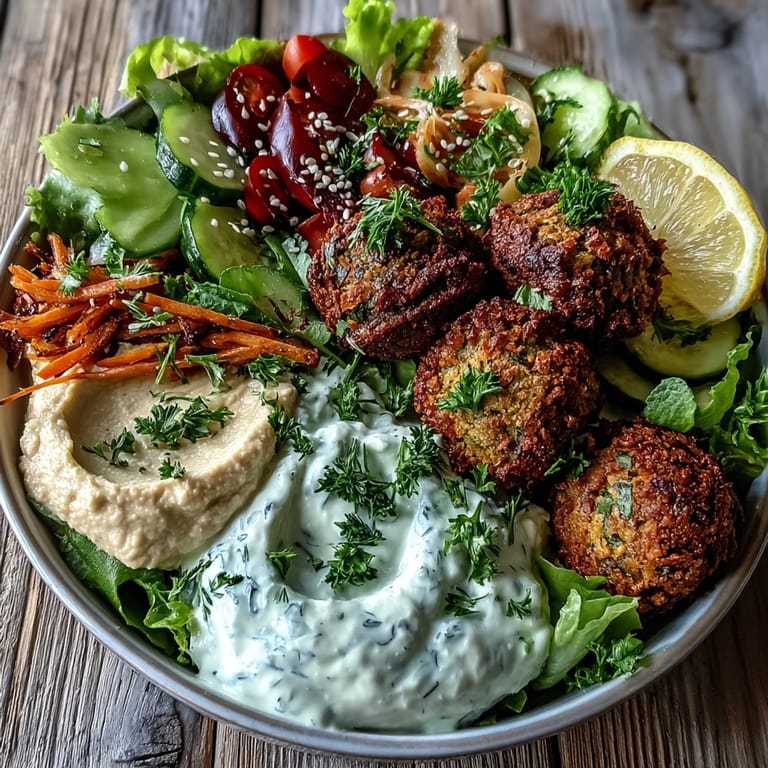
 There's something deeply satisfying about eating from a bowl where you can see every ingredient, where your fork passes through multiple textures and flavors in a single bite. This is comfort food for people who want to know exactly what they're eating and feel good about it.
Your Questions Answered
- → Can I make this bowl vegan?
Yes, simply use dairy-free tzatziki or omit it entirely. The remaining ingredients are naturally plant-based and full of flavor.
- → How do I store leftovers?
Store components separately in airtight containers. Keep falafel, vegetables, hummus, and tahini sauce chilled for up to 3 days. Reheat falafel before assembling.
- → What can I add for more protein?
Add cooked quinoa, brown rice, or chickpeas for extra substance and protein. Grilled chicken or roasted eggplant also work well.
- → Can I use frozen falafel?
Absolutely. Frozen falafel works great—just bake or air fry according to package directions until crispy and golden brown.
- → What vegetables work best in this bowl?
Mixed greens, cherry tomatoes, cucumber, and red onion provide classic Mediterranean flavors. You can also add roasted bell peppers, radishes, or pickled vegetables.
- → How do I make homemade tahini sauce?
Whisk together 1/4 cup tahini, 2 tablespoons lemon juice, 1 clove minced garlic, and warm water until smooth. Season with salt to taste.