 Pin It
 My mother always said that desserts were where you could be both precise and creative at the same time, and pavlova proved her point exactly. The first time I watched her make one, I was struck by how she'd whip those egg whites with such focus, as if coaxing air itself into submission, then carefully fold in the secret ingredients—cornstarch and vinegar—that would give the meringue its signature crisp exterior and pillowy center. When it came out of the cooling oven, slightly cracked on top and golden at the edges, she'd smile and say it was ready for something special. Now when I make this for the people I love most, I understand what she meant.
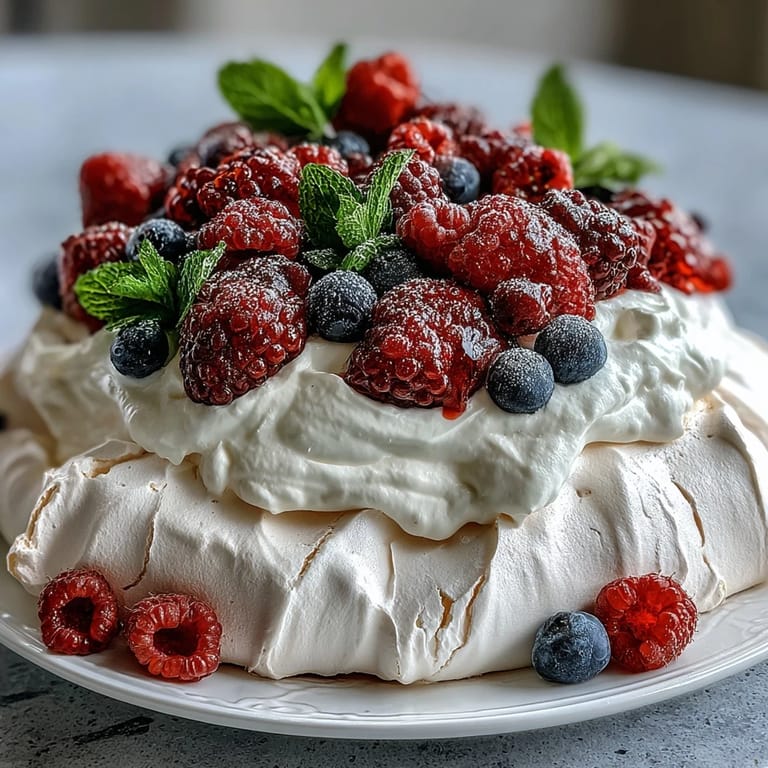
There was a Mother's Day brunch last spring where I brought this pavlova to my sister's house, and I'll never forget how quiet the table got when I set it down. Not a formal quiet, but the kind where everyone pauses because something beautiful just arrived, and they want to really look at it before anyone touches a fork. My nephew called it a "cloud with treasure on top," which somehow felt like the most accurate description anyone's ever given a dessert.
Ingredients
- Egg whites (4 large, at room temperature): Cold eggs won't whip to their full potential, so pull them from the fridge 15 minutes before you start—this makes a real difference in how quickly they reach stiff peaks.
- Superfine sugar (1 cup): The fine crystals dissolve faster and more evenly into the egg whites, creating that glossy, smooth meringue texture; regular sugar will work but takes longer and can feel slightly grainy.
- Cornstarch (1 tsp): This is the secret weapon that gives pavlova its signature contrast of crispy outside and marshmallow-soft center—don't skip it or be tempted to increase it.
- White vinegar (1 tsp): It stabilizes the meringue and helps prevent weeping, which is when that puddle of liquid forms underneath; acidity is your friend here.
- Pure vanilla extract (1 tsp for meringue, 1 tsp for cream): Real vanilla transforms this from good to memorable, though you can swap in almond extract for a subtle twist.
- Heavy whipping cream (1 cup, chilled): Cold cream whips faster and holds peaks better; if yours is sitting on a warm counter, it'll turn to butter before you know it.
- Powdered sugar (2 tbsp for cream, 1 tbsp for dusting): It dissolves into cream seamlessly and gives a lighter sweetness than granulated sugar would.
- Mixed berries (strawberries, raspberries, blueberries, blackberries): Buy them a day or two before you plan to assemble so they're fresh but not so ripe they've started to weep; the mix of colors and flavors is what makes this dessert sing.
- Fresh mint (optional but encouraged): A few bright green leaves add visual contrast and a whisper of freshness that cuts through the richness beautifully.
Tired of Takeout? 🥡
Get 10 meals you can make faster than delivery arrives. Seriously.
One email. No spam. Unsubscribe anytime.
Instructions
- Set your oven and workspace up for success:
- Preheat to 250°F and line your baking sheet with parchment paper, then draw or trace a 9-inch circle on the underside as your guide. This gentle, low temperature is what keeps the meringue crispy outside while the inside stays soft—any hotter and it'll brown before it's cooked through.
- Whip those egg whites until they're glossy and strong:
- Start in a completely clean, dry bowl with a pinch of salt, and beat until soft peaks form. Then add your superfine sugar gradually, about one tablespoon at a time, continuing to beat for 5 to 6 minutes total until the mixture is glossy and forms stiff peaks that hold their shape proudly. This isn't a moment to rush—patience here means a better texture later.
- Fold in the finishing touches gently:
- Sift together the cornstarch, then add the vinegar and vanilla, folding everything in with a spatula using a gentle hand so you don't deflate all that air you just whipped into the eggs. You want streaks to just disappear, not a vigorous mixing that collapses your meringue.
- Shape your meringue nest:
- Spoon the mixture onto your parchment circle, spreading it to fill the outlined space and using the back of your spoon to create slightly raised edges all around, almost like a shallow bowl. The higher edges give you walls to contain the cream and berries, and they'll bake up crispy while the center stays softer.
- Let the oven do its magic:
- Bake for 1 hour 15 minutes without opening the door—I know it's tempting, but every peek lets heat escape. When the time's up, turn off the oven and crack the door open just slightly, letting the pavlova cool completely inside; this gradual temperature drop prevents big cracks from forming.
- Whip your cream while you wait:
- While the meringue cools, chill a bowl and beaters, then whip your cold heavy cream with powdered sugar and vanilla until soft peaks form. Stop before it turns grainy—you want it billowy and spoonable, not stiff.
- Assemble with care and personality:
- Once the meringue is completely cool, transfer it gently to your serving platter, then spread or dollop the whipped cream over the surface. Scatter your mixed berries across the top in whatever pattern makes you happy, tuck in mint leaves if you're using them, and dust lightly with powdered sugar just before serving if you want extra sparkle.
 Pin It
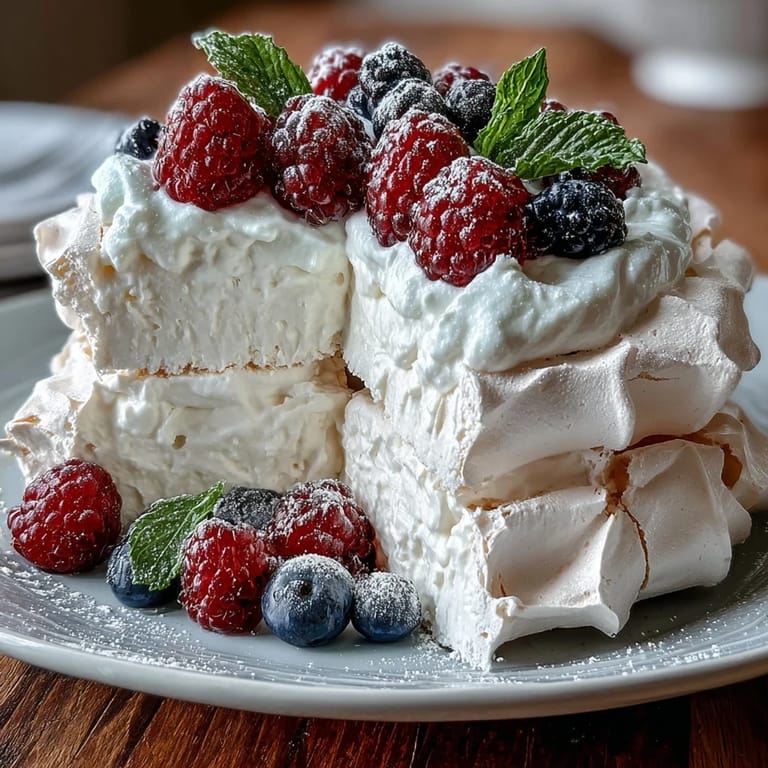
 There's something about the moment when someone takes their first bite of pavlova that feels almost ceremonial—that crackle of meringue, the softness underneath, the brightness of berries and cream all at once. My dad once said it was the only dessert that surprised him every single time, and I think that's because no two bites are exactly the same depending on where you cut into it and how much of each component lands on your fork.
Why This Dessert Works for Celebrations
Pavlova has this extraordinary ability to feel both sophisticated and playful at the same time, which is exactly what you want when you're celebrating someone special. It's also wonderfully forgiving in some ways—a crack down the middle doesn't ruin it, and you can make the hard part (the meringue) well ahead of time, which means you're not stuck in the kitchen right before guests arrive. The whole structure says "I made something beautiful for you," without requiring you to stress about perfect precision.
Adapting This Recipe with the Seasons
One of the joys of pavlova is how easily it adapts to whatever fruit is at its peak. In summer, stick with the mixed berries or add stone fruits like peaches and nectarines; in fall, try kiwi and passionfruit; in winter, you can even use pomegranate seeds and candied citrus peel for a jewel-toned effect. The meringue base stays exactly the same—it's your canvas, and you're just changing what goes on top based on what makes you happy and what's fresh at the market.
Kitchen Secrets and Variations
If you want to explore beyond the classic berry topping, there are subtle shifts you can make that completely change the personality of this dessert. Some of my favorite discoveries happened by accident—like the time I folded sifted cocoa powder into the meringue and created this chocolate-tinged base that paired beautifully with raspberries, or when I whipped a touch of lemon zest into the cream for brightness. Even the optional mint can change everything; it's not just pretty, it genuinely refreshes your palate between bites.
- For a chocolate version, sift 2 tablespoons of cocoa powder and fold it in gently after the cornstarch and vinegar.
- Try a citrus cream by adding lemon or orange zest to the whipped cream instead of or alongside the vanilla.
- Make it ahead by baking the meringue base a full day in advance and storing it in an airtight container—it actually improves as it sits.
 Pin It
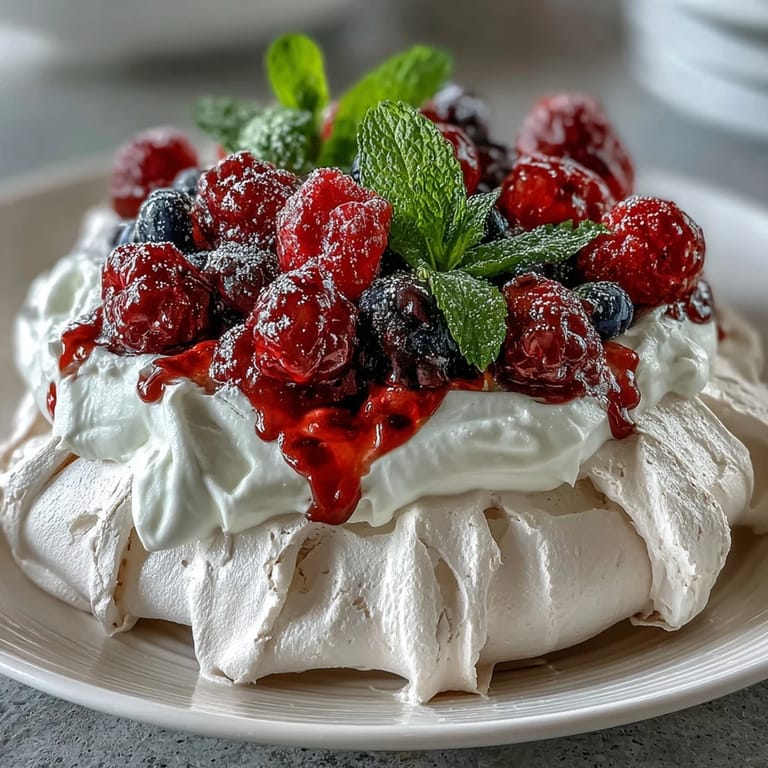
 This pavlova is the kind of dessert that feels like a gift, whether you're making it for your mother, your partner, or your best friend. Once you've made it once and seen how the magic happens, you'll find yourself reaching for this recipe again and again.
Your Questions Answered
- → How do you achieve the crisp shell with a soft center?
Bake the meringue at a low temperature for over an hour, then cool it slowly inside the oven with the door slightly ajar to maintain the marshmallow-like center.
- → Can I substitute the berries with other fruits?
Yes, seasonal fruits like kiwi, peaches or passionfruit can be used to vary the flavor and presentation.
- → What is the best way to whip cream for the topping?
Chill the heavy cream before whipping and add powdered sugar and vanilla extract for a light, fluffy texture.
- → How does humidity affect the pavlova texture?
Humidity can soften the meringue, so it’s best to prepare on a dry day to preserve the crisp shell.
- → Can I add chocolate flavor to the pavlova?
Yes, gently folding sifted cocoa powder into the meringue before baking adds a rich chocolate twist.