 Pin It
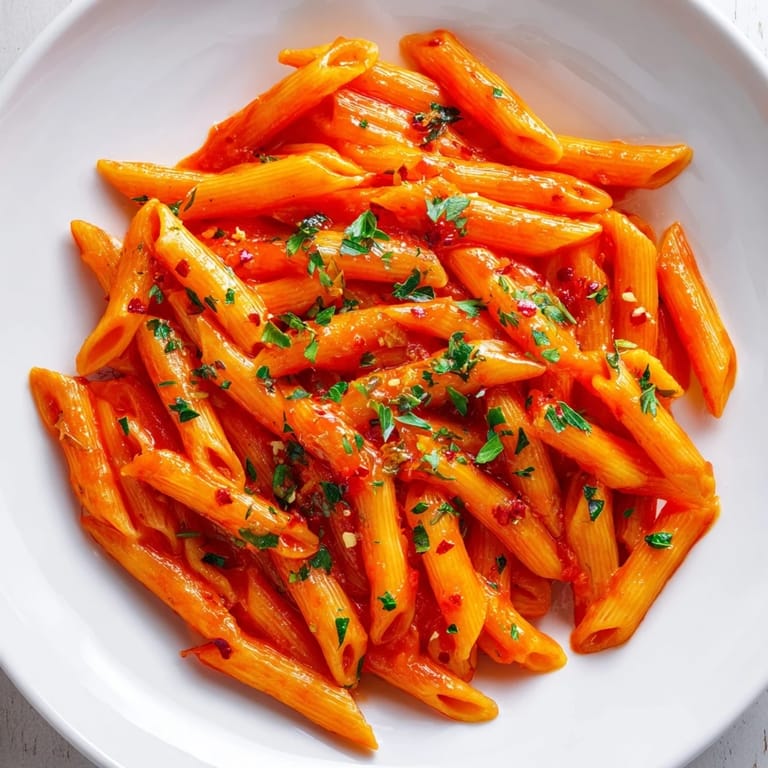
 I discovered penne all'arrabbiata on a Tuesday night when my kitchen smelled like burnt garlic and regret—I'd overcooked everything trying to impress someone. But then, almost by accident, I made it right: simple, fast, with just enough heat to make you pause between bites. That dish became my answer to every "what should we cook?" question, the one I return to when I want to feel competent again in the kitchen.
Years later, I made this for someone who claimed they didn't like spicy food, and halfway through their second bowl, they stopped talking and just kept eating. That's when I understood: this dish isn't about heat, it's about honesty. The chili flakes whisper rather than shout if you listen.
Ingredients
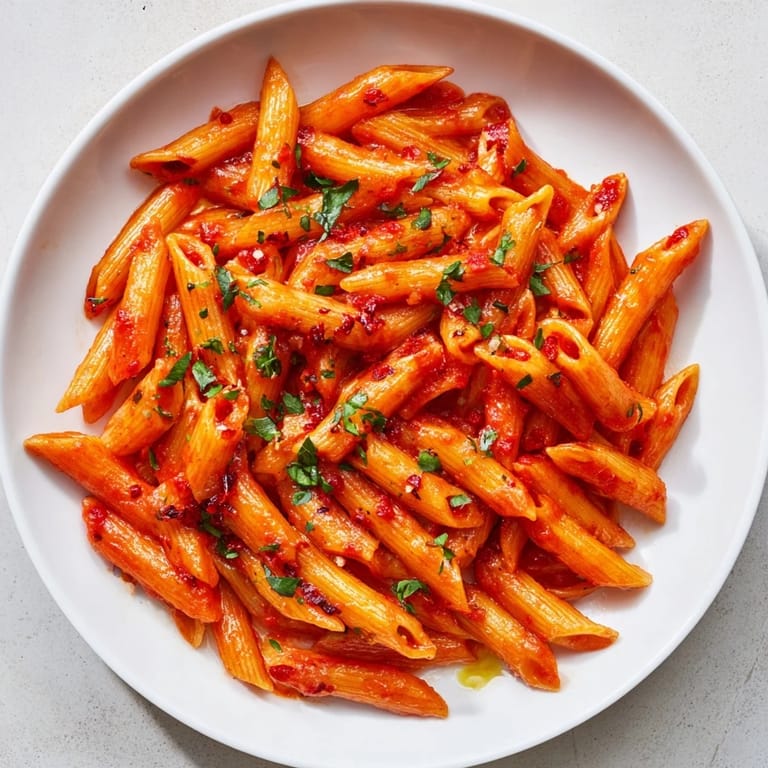
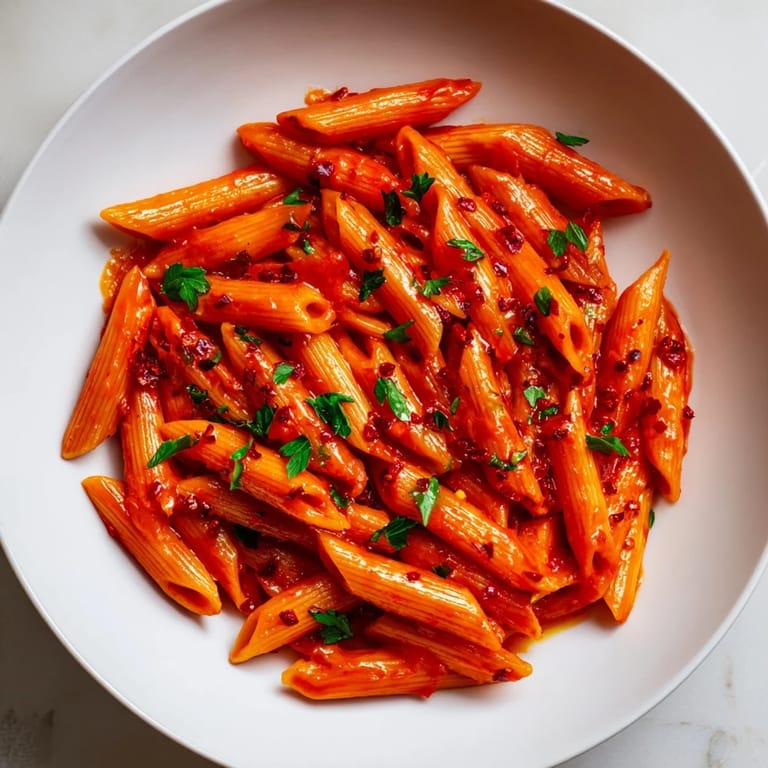
- Penne rigate: The ridges catch sauce like tiny hands, so don't substitute with smooth pasta or you'll lose half the flavor.
- Extra virgin olive oil: Buy the good stuff—it's the only fat in this dish, so it deserves to be the best you can afford.
- Garlic cloves: Slice them thin so they soften into the oil without turning bitter; thick slices will fight you.
- Red chili flakes: Start with 1 teaspoon and taste as you go; heat preferences are personal and non-negotiable.
- Peeled whole tomatoes: Canned is better than fresh here because the tomatoes have already given up their water and concentrated their sweetness.
- Sea salt and black pepper: These aren't just seasoning—they're the punctuation marks that make the tomato sing.
- Fresh flat-leaf parsley: Chop it just before serving so it stays bright green and doesn't bruise into sadness.
Tired of Takeout? 🥡
Get 10 meals you can make faster than delivery arrives. Seriously.
One email. No spam. Unsubscribe anytime.
Instructions
- Start the water:
- Fill your pot generously and salt it like the sea—this is your only chance to season the pasta itself. Let it come to a rolling boil before you add the penne.
- Cook the pasta:
- Watch the clock but also bite a piece around the halfway mark; al dente means it still has a tiny resistance when you chew, not mushy or hard. Reserve that pasta water—you'll need it more than you expect.
- Build the sauce base:
- Pour oil into your skillet and let it warm for a moment, then add the garlic slices. This is the most important minute: the garlic should smell nutty and toasted, never harsh or brown. If it browns, start over—burnt garlic ruins everything.
- Wake up the chili:
- Add the red chili flakes to the warm oil with the garlic, letting them bloom for just a few seconds. This releases their essential oils and distributes the heat evenly instead of leaving hot pockets.
- Add the tomatoes:
- Crush them by hand as they go into the skillet, letting them break down under your palm. Stir in salt and pepper, then let the sauce simmer uncovered, stirring now and then, until it thickens slightly and the raw tomato flavor mellows into something deeper.
- Bring it together:
- Toss the drained penne into the sauce, then splash in a little pasta water until the sauce clings to each piece without pooling at the bottom. The starch in that water is magic—it helps the sauce hug the pasta.
- Finish with care:
- Remove from heat, stir in the parsley, and drizzle with a little more olive oil. Serve immediately while it's still steaming and the parsley is green.
 Pin It
 I remember standing at the stove at midnight, stirring this sauce while a friend sat at my kitchen table telling me about their day, and I realized that sometimes the best meals are the ones that happen when you're too tired to overthink them. This dish has that quiet magic.
The Art of Simplicity
Penne all'arrabbiata taught me that fewer ingredients don't mean less flavor—they mean you taste each one. The garlic becomes sweetness, the chili becomes warmth, the tomato becomes itself, sharper and brighter than you'd expect. This is what happens when you stop adding and start listening to what's already there.
Timing and Patience
The sauce needs exactly 12 to 15 minutes to stop tasting raw, but it also doesn't need hours of simmering. In that brief window, the tomatoes soften, the flavors marry, and something that tasted like three separate things becomes one complete whole. If you rush it, you'll taste the rawness; if you simmer too long, you'll lose the brightness. There's a narrow sweet spot, and it's worth finding.
Making It Your Own
Some nights I add a crushed red pepper or two, crumbled in with my hands, for a different kind of heat. Other times I let the chili flakes be subtle and whisper instead of shout. The beauty of this dish is that it's flexible enough to bend toward your mood while staying true to itself.
- If you love garlic, add an extra clove; if you're cooking for someone sensitive to heat, use less than a teaspoon of chili flakes and trust your taste.
- A pinch of red pepper flakes toasted separately adds a different flavor dimension than flakes cooked in the oil from the start.
- Don't skip the fresh parsley at the end—it's the final note that keeps the dish from feeling heavy or one-note.
 Pin It
 This dish is the answer when you want to cook something that feels elegant but tastes like home. Every time I make it, I remember why I fell in love with cooking in the first place.
Your Questions Answered
- → How is the sauce’s spice level adjusted?
Adjust the red chili flakes quantity to your heat preference, adding less for mild heat or more for extra spiciness.
- → What pasta type works best for this dish?
Penne rigate is traditional, as its ridges hold the sauce well, but other tubular pastas can also be used.
- → Can the sauce be prepared in advance?
Yes, the sauce can be simmered ahead and stored refrigerated, enhancing flavors with time.
- → What finishes the dish for added flavor?
Fresh chopped flat-leaf parsley and a drizzle of extra virgin olive oil brighten and enrich the final plate.
- → Is this dish suitable for special diets?
Yes, it is naturally vegan, dairy-free, and can be gluten-free by using alternative pasta.