 Pin It
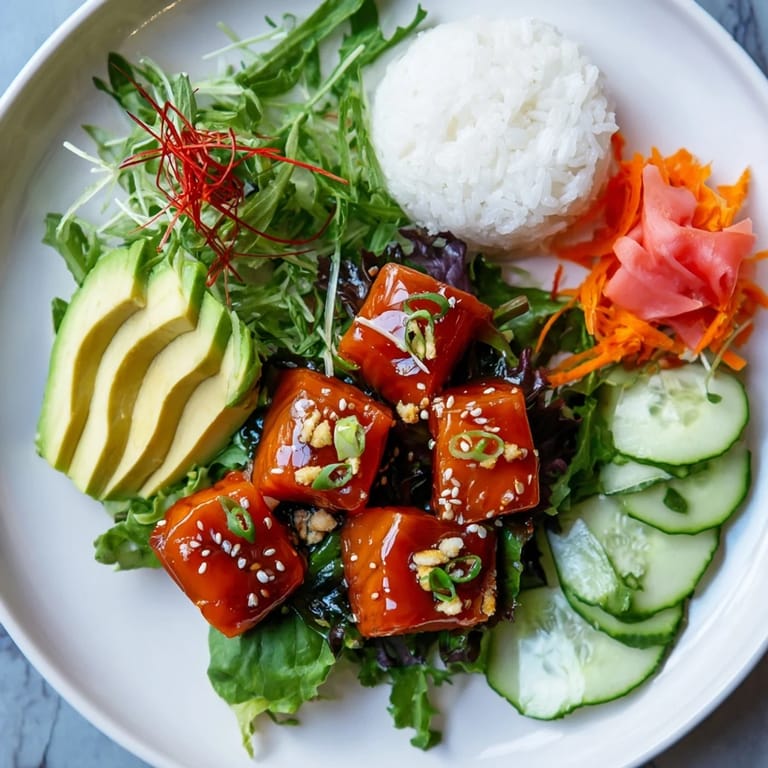
 The first time I made a poke bowl at home, I was trying to recreate that restaurant feeling without leaving my kitchen. I'd just bought some beautiful sushi-grade salmon at the market, and instead of making nigiri, I decided to layer it over greens with a ginger-soy marinade that came together in five minutes. My roommate walked in while I was arranging avocado slices and immediately asked if she could have some. That's when I knew this was going to become a regular thing.
I remember making this for a group of friends on a hot summer evening when nobody wanted anything heavy. I set out all the components and let everyone build their own bowl, and somehow that simple gesture turned a meal into an event. People were mixing and matching toppings, comparing whose bowl looked better, and the whole thing felt celebratory without any stress on my end.
Ingredients
- Sushi-grade salmon or tuna: This needs to be the star, so buy from a fishmonger or trusted source and ask specifically for sushi-grade; the freshness completely changes the eating experience.
- Soy sauce: I learned to taste as I go here because soy sauce brands vary wildly in saltiness, so don't dump the whole amount in blindly.
- Sesame oil: Use the toasted kind for that nutty depth; a little goes a long way and transforms the whole marinade.
- Rice vinegar: This brings brightness and keeps the fish tasting clean rather than heavy.
- Fresh ginger: Grate it just before mixing, and your nose will tell you when it's doing its job with that sharp, clean bite.
- Honey or maple syrup: A teaspoon rounds out the marinade with gentle sweetness that balances the salty-tangy notes.
- Garlic: Minced small means it distributes through the marinade without overwhelming it.
- Mixed salad greens: Whatever's crisp and fresh in your market works; I switch between spinach and arugula depending on mood.
- Cucumber: Slice it thin so it stays delicate and absorbs a bit of that marinade flavor.
- Avocado: Add it right before serving or it'll brown; ripe but firm is the sweet spot.
- Carrots: Julienne them into thin matchsticks so they add texture without dominating.
- Sushi rice or brown rice: Optional but it makes the bowl feel more complete, almost substantial.
- Sesame seeds: Toast them yourself if you can; the difference is real.
- Scallions: Raw and sliced thin, they add a bright onion punch at the end.
- Nori: Those crispy green sheets cut into strips bring that ocean-forward sushi bowl feeling.
- Pickled ginger: A small amount clears the palate between bites in the best way.
- Red chili: Optional but I always add it because a little heat makes everything taste sharper.
Tired of Takeout? 🥡
Get 10 meals you can make faster than delivery arrives. Seriously.
One email. No spam. Unsubscribe anytime.
Instructions
- Make the marinade:
- Whisk soy sauce, sesame oil, rice vinegar, grated ginger, honey, and minced garlic together in a bowl until the honey dissolves completely. The mixture should smell fragrant and balanced, not aggressively salty.
- Marinate the fish:
- Add your cubed fish to the bowl and toss gently so every piece is coated but not broken apart. Cover and let it sit in the fridge for at least 10 minutes; this isn't about cooking the fish, just letting the flavors start to get friendly.
- Build your base:
- While the fish marinates, arrange your greens, cucumber, avocado, carrots, and rice (if using) into bowls. Don't overthink the arrangement; just make sure the greens are distributed so you get some with every bite.
- Top with the fish:
- Spoon the marinated fish and all that liquid gold of a marinade over each bowl. The greens will start to soften slightly from the liquid, which is exactly what you want.
- Finish and garnish:
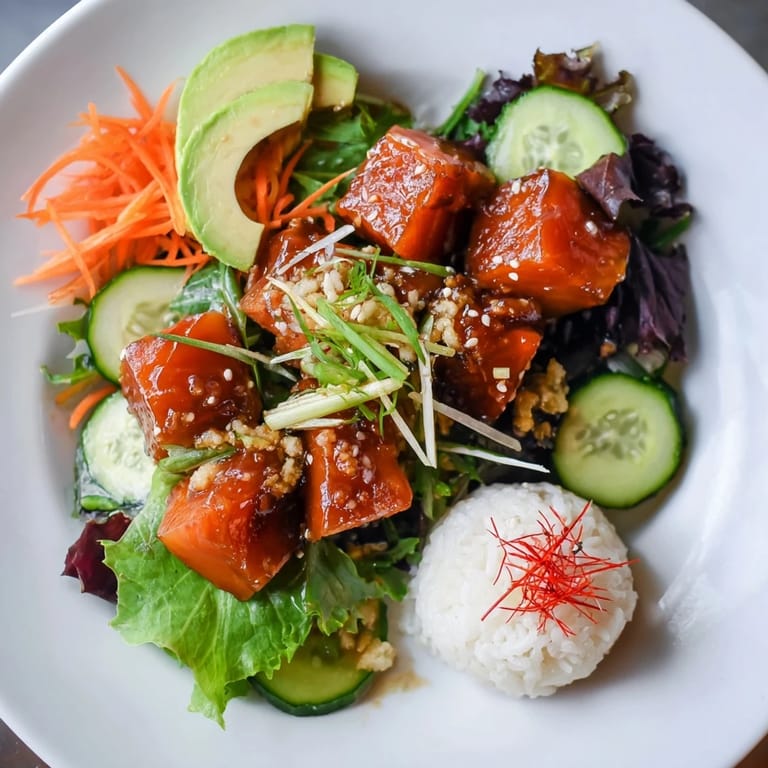
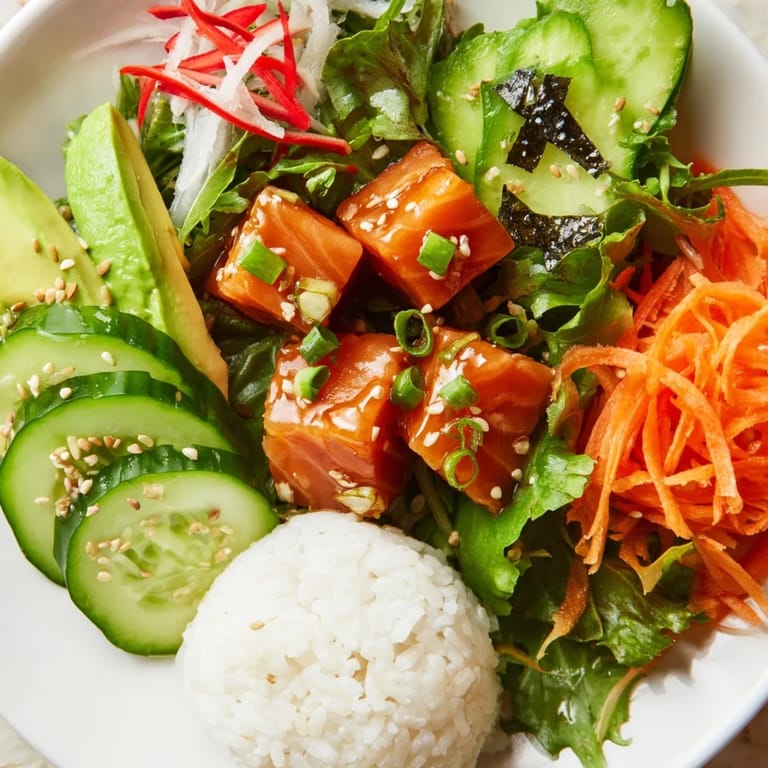
- Sprinkle sesame seeds, scallions, nori strips, pickled ginger, and chili over the top. These final touches are what make it feel intentional and exciting to eat.
- Serve right away:
- Don't let it sit too long or the greens get soggy; the best poke bowl is one you eat immediately while everything's still crisp and cold.
 Pin It
 There was this one afternoon when a friend who'd been worried about trying raw fish finally took a bite of my poke bowl, and their whole face changed. They'd been expecting something intimidating, but instead found something bright and delicate and accessible. Watching someone discover they actually love something they thought they wouldn't was worth more than any compliment.
Making It Your Own
The beauty of a poke bowl is that it's endlessly customizable without losing its identity. I've made it with different fish depending on what looks good at the market, swapped greens based on the season, and changed toppings based on what's in my pantry. The structure stays the same, but the personality changes, and somehow it never feels like the same meal twice.
Flavor Balancing Act
The marinade is where the magic happens, and it's all about balance between salty, sweet, tangy, and nutty. I always make it first and taste it before the fish goes in, adjusting as I go. If it's too salty, a tiny drizzle more honey helps; if it's too sweet, a splash of extra vinegar brings it back. This habit of tasting and adjusting has made every bowl taste intentional rather than just assembled.
Quick Prep Tips
Since everything's raw, the prep is where your effort goes, not the cooking. I like to prep my vegetables right before eating so they stay as crisp as possible, and I keep the fish in the fridge until the last second. Having all your components ready means assembly takes maybe two minutes, and you're sitting down to eat while everything's still at its peak.
- Cut your fish into uniform pieces so they marinate evenly and look intentional on the plate.
- Use a very sharp knife for both the fish and vegetables; dull blades bruise everything and make it look sad.
- If you're batch prepping, keep your cut vegetables in separate containers so flavors don't migrate and everything stays distinct.
 Pin It
 This bowl has become my go-to meal when I want to feel like I've done something special without the kitchen becoming a disaster. It's the kind of dish that makes a weeknight dinner feel like a moment worth savoring.
Your Questions Answered
- → Can I substitute the fish with a vegetarian alternative?
Yes, diced marinated tofu or tempeh works well as a protein-rich substitute while maintaining the dish’s flavor profile.
- → What type of rice is best for this bowl?
Cooked sushi rice enhances texture and authenticity, but brown rice offers a nutritious, heartier alternative.
- → How should the fish be prepared for the dish?
Use sushi-grade salmon or tuna cut into 1 cm cubes, marinated briefly in the soy-ginger dressing to infuse flavor without cooking.
- → Are there any suggested garnishes to enhance the bowl?
Toasted sesame seeds, sliced scallions, nori strips, pickled ginger, and sliced chili add layers of flavor and a touch of heat.
- → Can this bowl be made gluten-free?
Yes, using certified gluten-free soy sauce or tamari ensures the dish remains gluten-free without compromising taste.