 Pin It
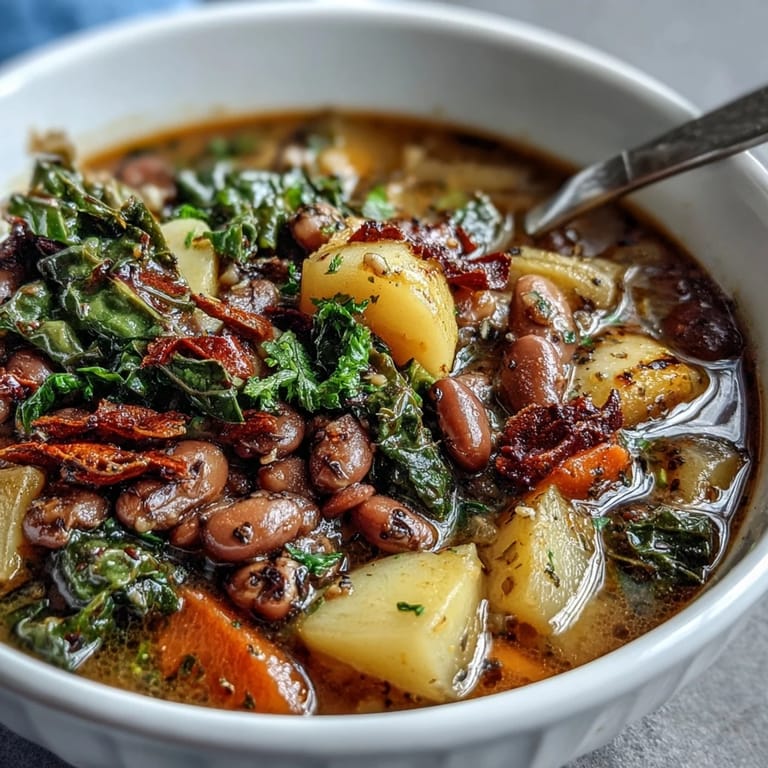
 My grandmother's kitchen always smelled like this stew simmering on the back burner, that particular blend of smoked paprika and collard greens that meant Sunday was happening whether you were ready or not. Years later, I realized she'd been teaching me something without words—that the best comfort food isn't fancy, it's just honest ingredients given time to know each other. This black-eyed pea and collard green stew is exactly that kind of dish, the kind that makes a kitchen feel like home before anyone even sits down to eat.
I made this for a potluck once where I knew exactly zero people, and watching folks come back for seconds while actually talking to each other instead of scrolling told me everything. There's something about Southern food that breaks down walls—maybe it's the warmth, maybe it's that everyone's grandmother made something similar, but whatever it is, this stew does that work effortlessly.
Ingredients
- Olive oil: The foundation that lets everything else bloom—don't skimp here, as it carries all those earthy flavors you're building.
- Yellow onion: One large one diced gives you sweetness without overwhelming the dish, and it practically melts into the broth.
- Garlic: Three cloves minced, added after the softer vegetables so it doesn't burn and turn bitter on you.
- Carrots and celery: This holy trinity base (with onion) is where the depth comes from—don't skip either one.
- Jalapeño: Optional but honestly worth it; seed and chop finely if you want the flavor without setting anyone's mouth on fire.
- Collard greens: About ten ounces, stems removed and leaves chopped—they're earthy and tough enough to hold up to long cooking.
- Diced tomatoes: One can with juices adds brightness and cuts through the richness, keeping the stew from feeling one-note.
- Black-eyed peas: Three cups cooked (or two cans, drained and rinsed) are the heart here—they soften and release starch that naturally thickens everything.
- Vegetable broth: Four cups of low-sodium; you're in control of the salt this way.
- Smoked paprika: One teaspoon is your secret weapon for that deep, almost-smoky flavor without any meat.
- Dried thyme: One teaspoon brings a quiet herbal note that ties everything together.
- Cayenne pepper: Half a teaspoon optional, but it wakes things up if you like heat.
- Salt and black pepper: One teaspoon salt and half a teaspoon pepper—always taste as you go and adjust at the end.
- Bay leaves: Two of these go in whole and come out at the end, adding something you can't quite name but definitely miss if they're not there.
- Apple cider vinegar: One tablespoon at the very end brightens everything and makes the flavors pop forward like they've been waiting for this moment.
Tired of Takeout? 🥡
Get 10 meals you can make faster than delivery arrives. Seriously.
One email. No spam. Unsubscribe anytime.
Instructions
- Build your flavor base:
- Heat olive oil in a large pot over medium heat, then add onion, carrots, celery, and jalapeño. Let them soften for six to eight minutes, stirring occasionally, until the edges start to turn golden and your kitchen smells like something good is happening. You're not rushing this—you're coaxing sweetness out of these vegetables.
- Wake up the garlic:
- Add minced garlic and cook for just one minute until fragrant, stirring constantly so it doesn't catch and turn dark. You'll know it's right when your nose tells you the garlic's ready to move on.
- Season and bloom:
- Stir in smoked paprika, thyme, cayenne, salt, and black pepper, then cook for one minute more. This step matters—it toasts the spices slightly and wakes them up so they're not just powder anymore, they're flavoring.
- Introduce the greens:
- Add chopped collard greens and cook, stirring, for three to four minutes until they begin to wilt and darken. Don't be alarmed at how much volume they have—they shrink dramatically and turn a deeper green that's actually beautiful.
- Bring it all together:
- Pour in diced tomatoes with their juices, black-eyed peas, vegetable broth, water, and bay leaves. Stir well to combine, then bring everything to a gentle simmer over medium heat.
- Let time do its work:
- Reduce heat to low, cover the pot, and cook for forty-five to fifty minutes, stirring occasionally. This is when the stew stops being ingredients and becomes something unified—the broth deepens in color, the greens become tender, and the peas soften completely.
- Finish strong:
- Remove the bay leaves carefully, then stir in apple cider vinegar. Taste and adjust salt and pepper—you might be surprised how much brighter the vinegar makes everything feel.
- Serve with joy:
- Ladle into bowls while hot and serve alongside cornbread if you have it, or alone if you don't—it's complete either way.
 Pin It
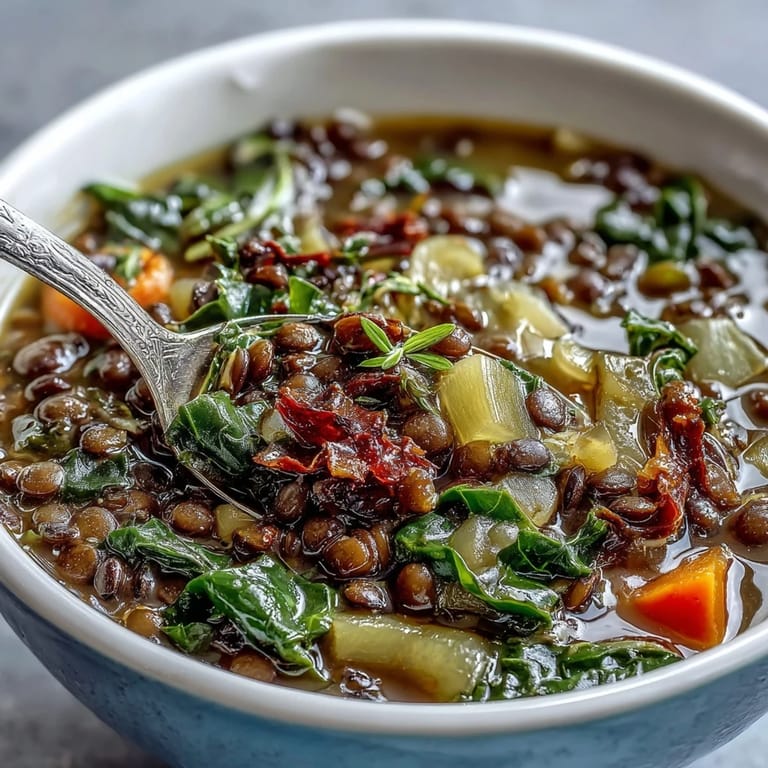
 There was a moment when I served this to my partner on a gray afternoon when neither of us felt like talking, and somehow halfway through the bowl, we were laughing again. Food doesn't always have to fix things, but when it creates space for that kind of easy comfort, you know you've got something worth keeping.
The Soul of Southern Cooking
This stew represents something I've learned about Southern cooking—it's not about individual ingredients being fancy or rare. It's about respecting simple things and giving them the time they deserve to become greater than themselves. Every element here is humble, nothing pretends to be something it's not, and together they create something that nourishes in a way that feels almost spiritual. That's the actual soul in soul food.
When to Make This Stew
Winter evenings are obvious, but I've made this in summer too when everyone's tired and needs something that feels like a hug. It's the kind of dish that works after a long day, before company arrives, when you're feeding people you love or people you're still getting to know. It also freezes beautifully—make a double batch and you'll thank yourself in two weeks when you need dinner but don't have the energy for cooking.
Variations and Flexibility
The beautiful thing about this stew is that it invites you to play. Some days I add a splash of liquid smoke if I'm missing that smoky depth without wanting to cook with actual meat—one teaspoon stirred in with the spices does the job. Other times I'll add four ounces of diced smoked turkey or ham sautéed with the vegetables if I want something richer and more substantial. The heat level is entirely yours too—start conservative with the cayenne and jalapeño because you can always add more at the end when you taste it.
- For extra smokiness, add one teaspoon of liquid smoke when you bloom the spices, or sauté diced smoked meat with your vegetables.
- If you like it spicier, increase the jalapeño quantity or add more cayenne, tasting as you go so you don't overshoot.
- A splash of hot sauce or fresh lemon juice at the table lets everyone customize their own bowl to their preference.
 Pin It
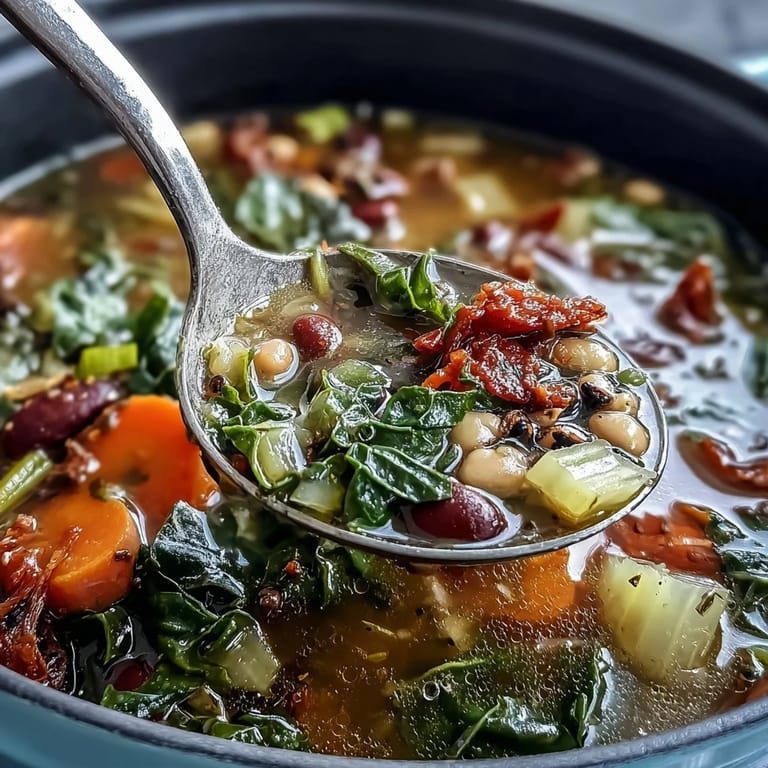
 This stew reminds me that cooking doesn't have to be complicated to be meaningful. It just has to be made with presence and enough time for all the pieces to become something whole.
Your Questions Answered
- → What makes the stew flavorful?
Smoked paprika, dried thyme, and optional cayenne pepper combine to add a smoky, aromatic depth, balanced with fresh vegetables and apple cider vinegar.
- → Can I add meat to this dish?
Yes, diced smoked turkey or ham sautéd with vegetables adds rich, smoky notes. Liquid smoke is an option for deeper flavor without meat.
- → How should I prepare the collard greens before cooking?
Remove stems and chop the collard greens before adding them to the stew, allowing them to wilt and absorb flavors during simmering.
- → Is this dish suitable for vegan diets?
Omit any meat additions and use vegetable broth to keep it vegan-friendly while retaining its hearty character.
- → What sides complement this stew well?
Cornbread is a classic choice, and a splash of hot sauce or lemon juice can enhance the stew's complexity.