 Pin It
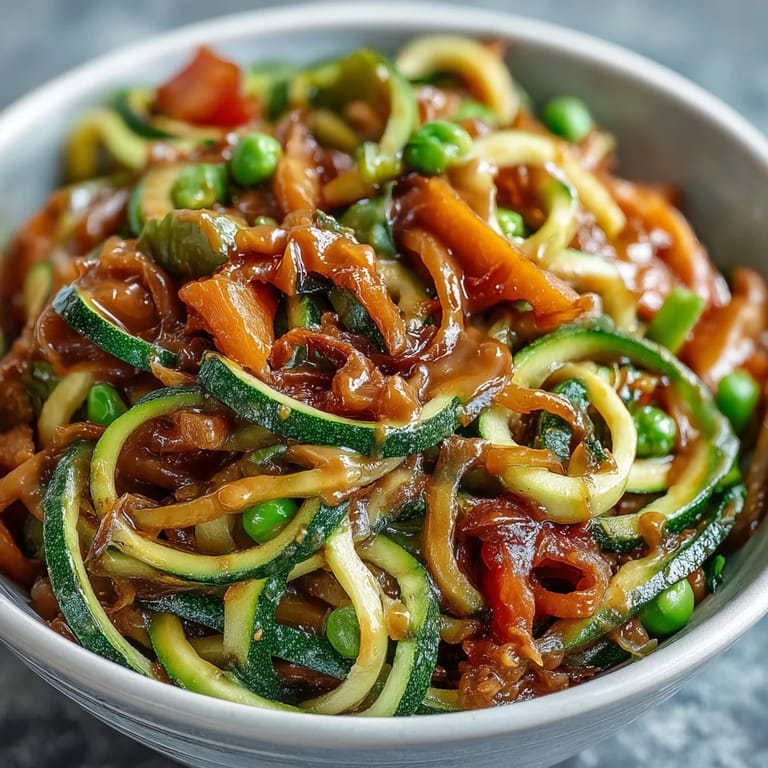
 There's something about a spiralizer that makes you feel like you're actually doing something good for yourself, even when you're just turning vegetables into noodles. I discovered this peanut sauce stir-fry on a Tuesday afternoon when I had exactly fifteen minutes and a fridge full of zucchini that needed rescuing. The sauce came together so quickly that I almost didn't believe it would taste as good as it smelled, but that first bite proved me wrong. Now it's become my go-to when I want something that feels restaurant-quality but doesn't require any complicated techniques or waiting around.
I made this for my friend Sarah on a warm spring evening when she mentioned wanting to eat lighter but not giving up flavor, and watching her face light up when she tasted it felt like winning the kitchen lottery. She asked for the recipe before she'd even finished her bowl, which is always the true test of whether something is actually good or if I'm just delusional about my cooking.
Ingredients
- 4 medium zucchinis, spiralized: These become your noodle base, and the key is not overcrowding your pan, which I learned the hard way on my first attempt.
- 1 large red bell pepper, thinly sliced: The sweetness balances the savory sauce beautifully, plus the color makes the whole dish look alive on your plate.
- 1 large carrot, julienned: Adds a subtle sweetness and nice texture contrast to the softer zucchini.
- 1 cup snap peas: These stay crisp even with quick cooking, which is why I love them in stir-fries.
- 2 green onions, thinly sliced: Save half of these for garnish because they taste completely different when they're fresh versus cooked.
- 2 tablespoons fresh cilantro: Not for everyone, but when you love cilantro, this is where it shines without overpowering the dish.
- 1/3 cup natural peanut butter: Use the kind that's just peanuts and maybe salt, because the sugary versions change the whole flavor balance.
- 2 tablespoons low-sodium soy sauce or tamari: This is your umami backbone, so don't skip it even though the bottle is small.
- 1 tablespoon rice vinegar: The acidity brightens everything and keeps the sauce from feeling too heavy.
- 1 tablespoon lime juice: Fresh lime is absolutely worth the five seconds it takes to squeeze, not bottled.
- 1 tablespoon maple syrup or honey: Just enough sweetness to round out the corners of the spicy and salty notes.
- 2 teaspoons toasted sesame oil: This smells like a hug from someone who knows what they're doing in the kitchen.
- 2 cloves garlic, minced: The fresher the better, and if you're using pre-minced, honestly just add a little extra.
- 1 teaspoon fresh ginger, grated: This is what makes people ask what's in your sauce because it adds something they can taste but can't name.
- 2 to 4 tablespoons warm water: This is your control knob for sauce consistency, so add it gradually and taste as you go.
- 1/2 teaspoon crushed red pepper flakes: Optional, but I always add it because heat makes everything taste more interesting.
- 2 tablespoons roasted peanuts, chopped: These go on top and give you that satisfying crunch that reminds you why you bothered cooking.
Tired of Takeout? 🥡
Get 10 meals you can make faster than delivery arrives. Seriously.
One email. No spam. Unsubscribe anytime.
Instructions
- Gather everything before you start:
- Slice your vegetables and get your spiralizer ready because once you turn the heat on, things move fast. Having everything prepped means you can actually enjoy cooking instead of panicking about what needs chopping next.
- Make your peanut sauce:
- In a bowl, whisk together the peanut butter, soy sauce, rice vinegar, lime juice, maple syrup, sesame oil, garlic, and ginger until it starts to come together. Add warm water one tablespoon at a time, whisking between each addition, until you get a sauce that's smooth and pourable but still has body.
- Heat your pan until it's actually hot:
- Medium-high heat with maybe a splash of sesame oil will get you a nice sizzle when vegetables hit the pan. You want that quick cook that keeps things crisp, not a gentle simmer.
- Cook the firmer vegetables first:
- Bell pepper, carrot, and snap peas go in first and get tossed around for two to three minutes until they're tender but still have some snap. You'll know it's right when the smell changes and everything looks glossy.
- Add the zucchini noodles gently:
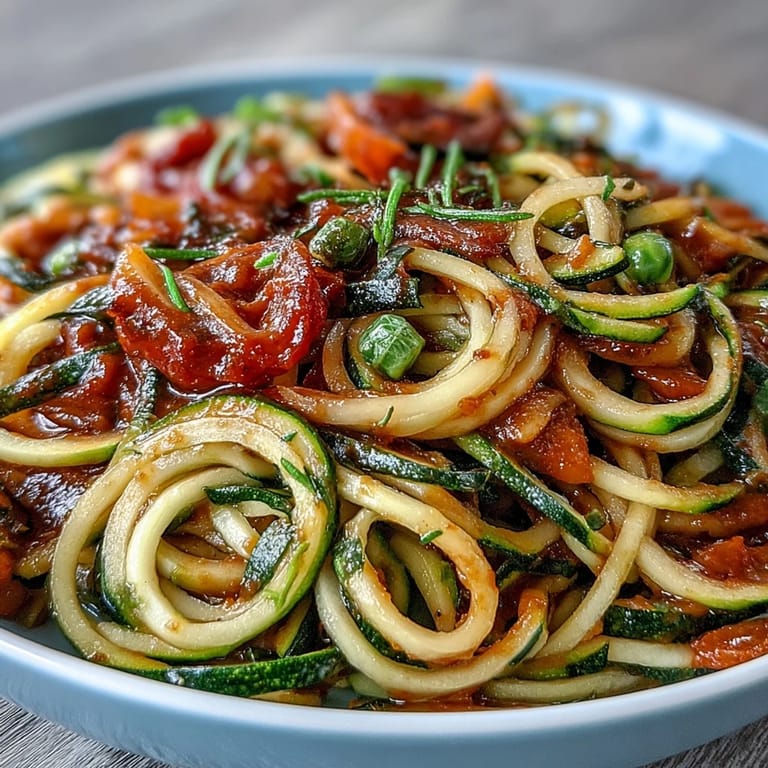
- These cook so fast that you're really just warming them through for two to three minutes while tossing gently. The moment you see them start to release any liquid, you're done.
- Pour the sauce and finish strong:
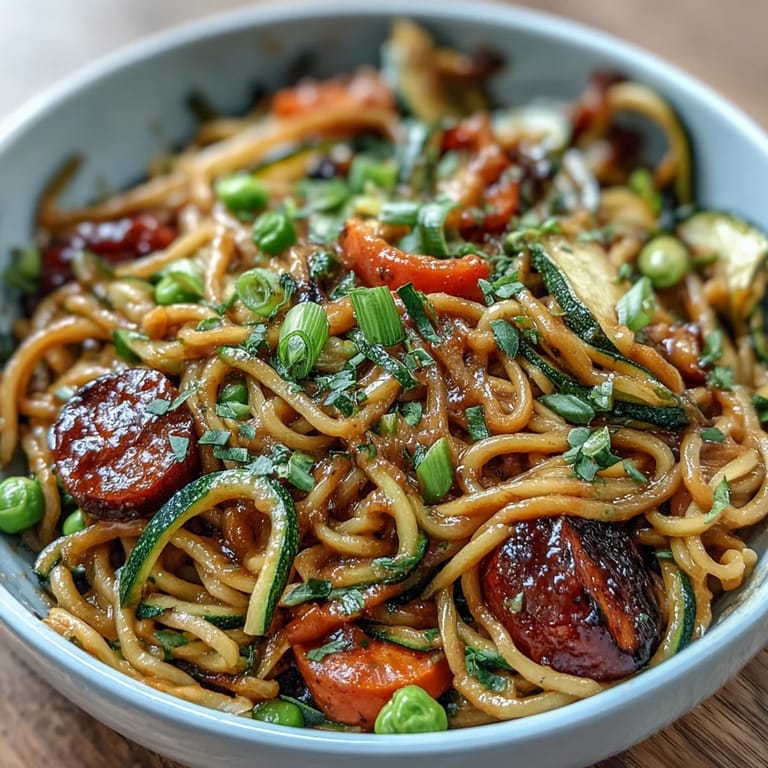
- Toss everything to coat and let it warm through for one to two minutes, which brings all the flavors together without turning your vegetables into mush. Serve immediately while everything is still bright and hot.
 Pin It
 There was this one Saturday when my mom tried this and realized she could finally eat something that didn't feel like diet food, and that small moment of her relaxing her shoulders and actually enjoying her meal reminded me why I started cooking in the first place. Food isn't about restriction or proving something; it's about tasting something delicious and feeling good about it.
Making This Your Own
This recipe is honestly just a framework, and the beautiful part is how forgiving it is to customize. Add grilled tofu, chicken, or shrimp if you want more protein, or throw in mushrooms and broccoli if that's what you have hanging around in your crisper drawer. The peanut sauce works with basically any vegetable combination you can imagine, so don't hesitate to swap things around based on what looks good at the market.
The Sauce Is Everything
I used to think peanut sauce was complicated until I realized it's just a balance of salty, sweet, sour, and spicy. Once you understand those four flavors, you stop following recipes exactly and start tasting as you go. The warm water is your secret weapon because it lets you control the consistency instead of being stuck with whatever thickness the peanut butter happened to have today.
Why This Works as a Quick Dinner
The entire process from unwashed vegetables to eating is genuinely thirty minutes, which is faster than most delivery options and way cheaper. You're not standing around waiting for water to boil or carefully orchestrating multiple pans; you're literally just slicing, mixing, and cooking everything in one place. This is the kind of recipe that makes you actually want to cook on a Wednesday night instead of defaulting to takeout.
- Spiralize your vegetables while the sauce comes together to cut your active cooking time in half.
- If your pan isn't large enough for all the zucchini at once, cook it in batches so nothing steams instead of sears.
- Taste the sauce before you add it to the pan because you might want it a touch more spicy or tangy depending on your mood that day.
 Pin It
 This dish became my answer to the question everyone asks: how do you eat healthy without feeling like you're punishing yourself? The truth is, good food that's also good for you is entirely possible when you stop treating them like separate categories.
Your Questions Answered
- → How do I prevent zucchini noodles from getting soggy?
Cook zucchini noodles briefly over medium heat and avoid overcooking. Toss them gently and serve immediately to keep their texture crisp.
- → Can I substitute peanut butter with another nut butter?
Absolutely. Almond or cashew butters work well as alternatives, but they may slightly change the flavor profile.
- → What is the best way to spiralize zucchini and carrots?
Use a spiralizer or julienne peeler for uniform strands, ensuring even cooking and a pleasing texture.
- → Can this dish be made vegan and gluten-free?
Yes, use tamari instead of soy sauce for gluten-free and ensure your peanut butter contains no animal products.
- → How can I add protein to this dish?
Top with grilled tofu, shrimp, or chicken to increase protein content without altering the core flavors.