 Pin It
 My neighbor stopped by one October evening with a bag of fresh sausage from the farmer's market, and we decided to cook something warm right then and there. We didn't have a plan, just ingredients scattered across her kitchen counter and the kind of mood that calls for something simmering and slow. That soup became a Thursday night ritual for months, the kind of dish that tastes even better when you make it alongside someone who's genuinely excited about eating. Now whenever I smell Italian herbs hitting hot oil, I'm back in that kitchen, laughing over something ridiculous while the pot does the real work.
I learned about this soup's magic when I brought it to a potluck where everyone was expecting casseroles and potato salads. One taste and people kept coming back for seconds, asking if it was a family recipe or something they could find in a restaurant. That moment taught me that comfort food doesn't need to be complicated, just honest and made with ingredients you actually care about.
Ingredients
- Italian sausage (450 g / 1 lb): This is where your flavor foundation lives; don't skip browning it properly to develop those deep, savory notes that make the whole pot sing.
- Yellow onion (1 medium): Dice it fine so it practically melts into the broth, adding sweetness and body that you won't taste directly but will absolutely notice if it's missing.
- Carrots (2): Sliced rather than diced, they soften into the soup and add natural sweetness that balances the sausage's richness.
- Celery stalks (2): This is the quiet hero of any good soup base; it adds depth and a subtle vegetal note that keeps things from feeling one-dimensional.
- Garlic (3 cloves): Mince it fresh and add it at the right moment so it perfumes the oil without burning and turning bitter.
- Red bell pepper (1): Diced alongside the onions, it brings color and a slight sweetness that makes each spoonful visually appealing.
- Diced tomatoes (1 can / 400 g): Use them with their juices for acidity and body; canned tomatoes are actually more reliable than fresh for soup.
- Black-eyed peas (2 cans / 800 g total): Drain and rinse them well to reduce any metallic flavor and to keep your broth clear and clean-tasting.
- Low-sodium chicken broth (1.25 liters / 5 cups): Low-sodium lets you control the salt and prevents the soup from tasting overly salty by the end of simmering.
- Dried thyme (1 tsp): Earthy and slightly minty, it plays beautifully with the sausage without overpowering anything else.
- Dried oregano (1 tsp): This is your Italian anchor; it ties the sausage and tomatoes together in a way that feels familiar and comforting.
- Bay leaf (1): Add it whole and remove it at the end; it flavors the entire pot subtly but you'll notice if you skip it.
- Red pepper flakes (½ tsp, optional): A whisper of heat that wakes up your palate without making anyone cough, but leave it out if you're cooking for people who prefer mild.
- Salt and black pepper: Taste as you go and season at the end when you can actually judge what the soup needs.
- Fresh parsley (2 tbsp): Chopped just before serving, it brightens the whole bowl and adds a fresh note that cuts through the richness.
- Parmesan cheese (optional): A small handful grated over the top transforms each spoonful into something almost indulgent.
Tired of Takeout? 🥡
Get 10 meals you can make faster than delivery arrives. Seriously.
One email. No spam. Unsubscribe anytime.
Instructions
- Brown your sausage:
- Heat your pot over medium heat and crumble the sausage directly into it, breaking it into small pieces as it cooks. Let it sit for a minute or two before stirring so the meat develops color and flavor, about five to seven minutes total until there's no pink left.
- Build your aromatics:
- Add the onion, carrots, celery, bell pepper, and garlic to the pot where the sausage is resting, and let them sauté together for five minutes until they're just starting to soften and smell absolutely incredible. You'll notice the kitchen filling with that smell that makes you want to cancel all your plans and just stay home eating soup.
- Add the liquids and seasonings:
- Stir in the tomatoes with their juices, the drained black-eyed peas, broth, thyme, oregano, bay leaf, and red pepper flakes if you want a little heat. Mix everything together so nothing sticks to the bottom of the pot and the flavors start getting acquainted.
- Let it simmer:
- Bring the pot to a gentle boil, then drop the heat down to low, cover it, and let it bubble quietly for twenty minutes, stirring once or twice. This is the moment when you can step back and do something else, knowing that time and heat are doing all the real work.
- Season and finish:
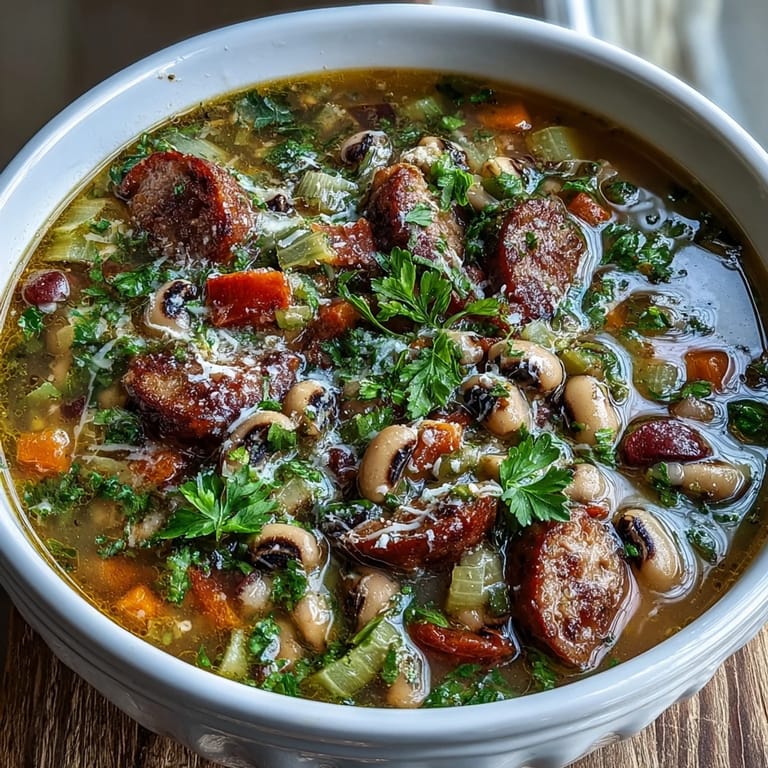
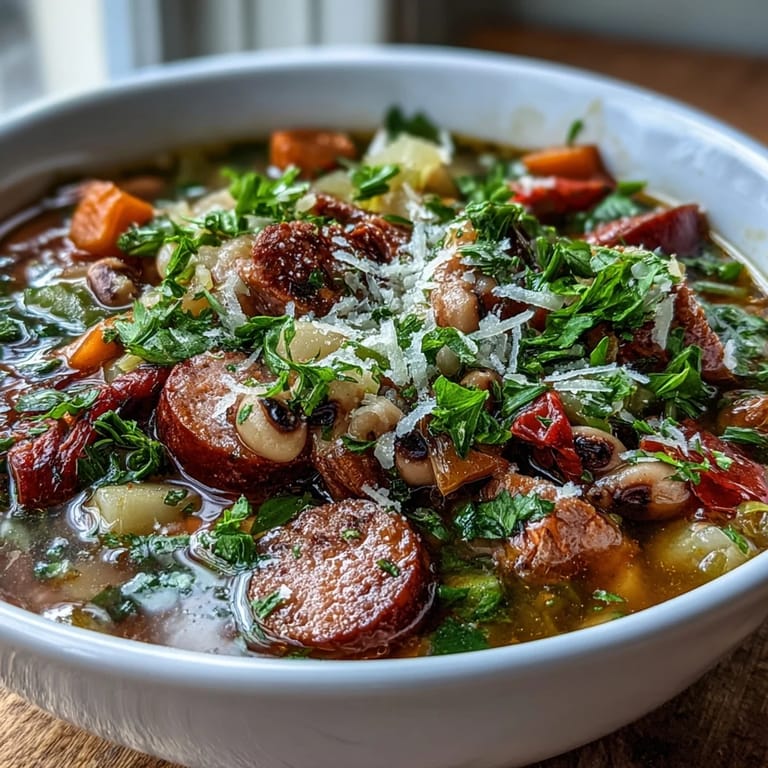
- Taste the soup, remove the bay leaf, and season with salt and pepper until it tastes the way comfort should taste. Ladle it into bowls, top with fresh parsley and a small handful of Parmesan if you want, and get ready for people to ask for the recipe.
 Pin It
 There's something about a soup that made my skeptical friend finally admit she was wrong to doubt something that sounded so simple on paper. She texted me weeks later saying she'd made it again, and I realized that's when you know a recipe matters: when people make it because they want to, not because they're trying to impress anyone.
What Makes This Soup Special
This isn't a soup that tries to be anything other than what it is: a warm, honest bowl that tastes like someone who knows their way around a kitchen made it just for you. The combination of black-eyed peas and sausage is traditional enough to feel trustworthy, but the fresh vegetables and proper seasoning keep it from tasting boring or heavy. Most importantly, it scales beautifully, so you can make a pot for two or double it for a crowd and it tastes equally good either way.
Ways to Make It Your Own
I've made this soup dozens of times and no two batches taste exactly the same, which is the mark of a truly good recipe. Sometimes I use half spicy sausage and half mild, depending on who's coming over, and once I added a handful of kale in the last five minutes just because I had it sitting in my fridge. You could easily swap the black-eyed peas for cannellini beans, add spinach or Swiss chard, or serve it over rice instead of with bread, and it would still be wonderful.
Serving and Storage
Serve this soup as soon as it's ready, when the parsley is still bright and the flavors are sharp and clear. It keeps beautifully in the refrigerator for four days and actually tastes better after a night in the cold, so don't hesitate to make a big batch and let it be your lunch for the next few days. If you want to freeze it, leave out the parsley and Parmesan, add them fresh when you reheat, and you'll have an instant weeknight dinner ready to go.
- Pair it with crusty bread that you can use to soak up every last bit of broth because that's the whole point.
- A simple green salad on the side makes the meal feel complete without adding real work to your evening.
- Leftover soup reheats gently on the stovetop over low heat, and you might need to add a splash of broth if it's gotten too thick.
 Pin It
 This soup became the thing I make when I want to remind myself why cooking matters, and why sharing food with people is one of the simplest ways to say something true. Make it once and it'll probably become your version too.
Your Questions Answered
- → Can I use dried black-eyed peas instead of canned?
Yes, soak dried black-eyed peas overnight and cook them separately until tender before adding to the soup. You'll need about 1.5 cups dried peas to equal the canned amount.
- → How long does this soup keep in the refrigerator?
This soup stores well in an airtight container for 4-5 days. The flavors often deepen and improve after a day or two. Reheat gently on the stovetet, adding a splash of broth if needed.
- → Can I freeze this soup?
Absolutely. Cool completely before transferring to freezer-safe containers. It will keep for up to 3 months. Thaw overnight in the refrigerator and reheat on the stovetop.
- → What can I serve with this soup?
Crusty bread, cornbread, or garlic bread pair perfectly. For a heartier meal, serve over steamed rice. A simple green salad with vinaigrette balances the richness nicely.
- → How can I make this soup vegetarian?
Omit the sausage and use vegetable broth instead of chicken broth. Add smoked paprika or liquid smoke to maintain depth of flavor. You might also include extra vegetables like zucchini or spinach.
- → Can I make this in a slow cooker?
Brown the sausage and vegetables on the stovetop first, then transfer everything to the slow cooker. Cook on low for 6-8 hours or on high for 3-4 hours until flavors are well blended.