 Pin It
 There's something almost meditative about peeling celeriac—that gnarly, bumpy exterior hiding something creamy and refined underneath. I discovered this soup on a grey November afternoon when my farmer's market haul was heavier on root vegetables than inspiration, and I had a half-remembered conversation about roasting instead of boiling everything. The result was unexpectedly luxurious, and the hazelnut crumble on top turned what could have been humble into something guests actually asked for the recipe to.
I made this for my sister when she was going through a phase of not eating much—soup felt less intimidating than a full meal. She had three bowls and asked if we could make it again the next week, which honestly felt like a small victory in my kitchen at the time.
Ingredients
- Celeriac (700 g): The star that's actually underrated—it's milder and creamier than celery root might suggest, and roasting it concentrates all those subtle nutty flavors.
- Onion and garlic: These build the flavor base while celeriac roasts, so you're essentially creating two layers of depth.
- Potato (150 g): Acts as a thickener and balances celeriac's earthiness with gentle starch.
- Vegetable broth (900 ml): Use something you'd actually drink—the soup tastes exactly like your broth, so this matters.
- Olive oil (2 tbsp total): One tablespoon goes to the celeriac before roasting, the other softens the aromatics.
- Heavy cream or plant-based alternative (100 ml): Optional but transforms the texture from soup to velvet; add it only at the very end so heat doesn't split it.
- White pepper (1/2 tsp): Choose white over black here because the specks won't interrupt the pale, elegant color.
- Hazelnuts (70 g): Toast them yourself—this is non-negotiable because the dry heat wakes them up in a way store-bought toasted ones never quite achieve.
- Butter (1 tbsp) and sea salt (1/4 tsp): These two finish the crumble and lock in that golden, just-toasted quality.
- Fresh parsley (1 tbsp, optional): A small green contrast that makes the dish photograph better and tastes fresher on the tongue.
Tired of Takeout? 🥡
Get 10 meals you can make faster than delivery arrives. Seriously.
One email. No spam. Unsubscribe anytime.
Instructions
- Set your oven and prep your vegetables:
- Preheat to 200°C and while it warms, peel and cube the celeriac (yes, it's a bit awkward, but a sharp knife makes it faster). Dice the potato and chop everything else so you're not scrambling later.
- Roast the celeriac until it smells sweet:
- Toss your cubes with 1 tablespoon of olive oil, salt, and pepper, spread them on a baking tray in a single layer, and roast for 25–30 minutes. Halfway through, give the tray a shake so they color evenly on all sides—you're looking for soft interiors and golden-brown edges.
- Start the aromatics while everything roasts:
- Heat the remaining tablespoon of oil in a large pot over medium heat and soften your onion for about 4 minutes until it turns translucent. Add the minced garlic and diced potato, stirring for another 2 minutes so the garlic releases its perfume without browning.
- Combine and simmer:
- Transfer the roasted celeriac to the pot, pour in the vegetable broth, and bring everything to a gentle boil. Lower the heat and let it simmer for 15–20 minutes until the vegetables are completely soft and break easily when pierced.
- Toast the hazelnuts while the soup finishes:
- In a separate dry skillet over medium heat, toast your chopped hazelnuts for 3–4 minutes, stirring occasionally, until they're deeply fragrant. Add the butter and sea salt, stirring constantly for about a minute so the nuts get coated and turn golden, then take it off the heat to cool.
- Blend until silky smooth:
- Using an immersion blender (the easiest path), purée the soup directly in the pot until completely smooth—no flecks, no texture, just velvet. If using a countertop blender, work in batches and be careful with the heat.
- Finish and serve:
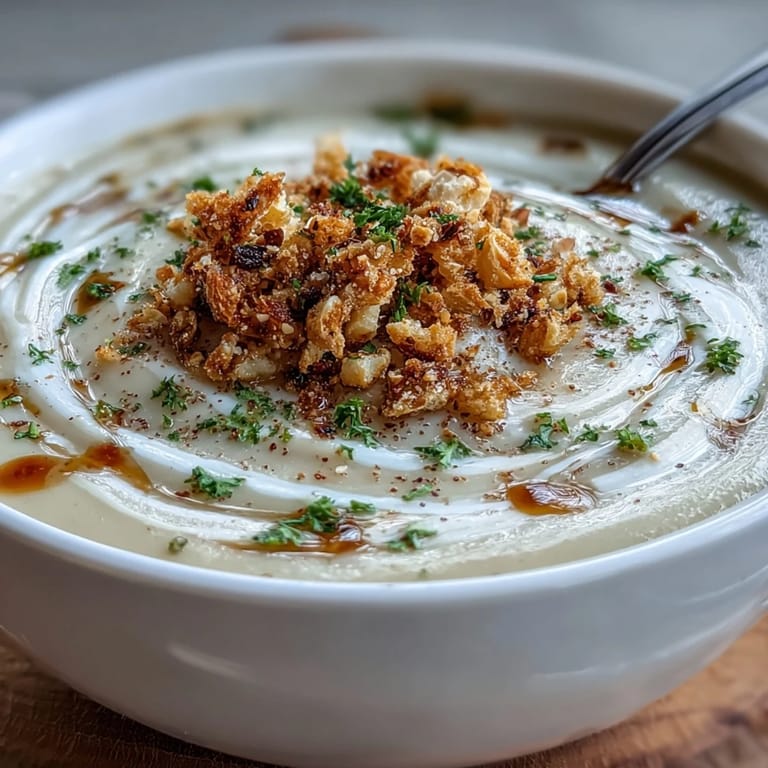
- Stir in the cream if using, taste the soup, and adjust salt and white pepper to your preference. Ladle into bowls, top with a generous handful of the hazelnut crumble, and scatter fresh parsley over the top if you have it.
 Pin It
 There's a moment when you first taste this soup—usually when someone reaches back for seconds without saying anything—where you realize you've made something that transcends the simple ingredients list. It's become one of those recipes I make when I want to feel capable in the kitchen without stress.
Why Roasting Changes Everything
Raw celeriac tastes faintly metallic and sharp, which is exactly why people avoid it. But roast it, and the root vegetable develops this unexpected warmth—almost chestnut-like underneath the earthiness. I learned this by accident when I couldn't be bothered to boil water one evening and chose the oven instead. The difference is the kind that makes you question every other root vegetable soup you've made.
The Hazelnut Crumble Matters More Than You Think
Without that crumble, this is still a lovely soup. With it, people actually stop eating and notice what they're doing, which is rare. The butter-toasted hazelnuts add salt, crunch, and a subtle bitterness that plays off the soup's creaminess in a way that makes both taste better.
Making This Soup Your Own
The base is flexible enough that you can pivot based on what's in your kitchen or mood. Some nights I add a whisper of thyme from the garden, other times a squeeze of fresh lemon juice at the table for brightness. I've also made it fully vegan by using oat cream instead of dairy, and honestly, nobody notices the difference.
- If hazelnuts aren't available or you have an allergy, try toasted pumpkin seeds or crispy sage leaves for that textural contrast.
- A dry white wine like Pinot Gris or Sauvignon Blanc pairs beautifully alongside, not in the soup.
- Make a double batch and freeze half—it reheats perfectly and tastes just as silky after a month in the freezer.
 Pin It
 This soup has become my go-to when I want to prove that simple ingredients and a little patience create something memorable. It's the kind of recipe that quietly becomes a favorite.
Your Questions Answered
- → Can I make this soup ahead of time?
Absolutely. The soup base keeps beautifully in the refrigerator for up to 3 days. Store the hazelnut crumble separately in an airtight container to maintain its crisp texture. Reheat gently on the stove, adding a splash of broth or cream if needed to adjust consistency.
- → What can I substitute for celeriac?
While celeriac's unique flavor is difficult to replicate, you could use celery root's closest relatives like rutabaga or parsnip for a different earthy sweetness. Keep in mind the flavor profile will shift, but the cooking method remains the same.
- → Is freezing an option?
Yes, freeze the soup base without cream for up to 3 months. Thaw overnight in the refrigerator and reheat slowly. The hazelnut crumble is best made fresh, but you can prep and freeze the chopped hazelnuts raw, then toast when ready to serve.
- → How do I achieve the smoothest texture?
Roasting the celeriac first is key—it breaks down fibers before blending. Using an immersion blender directly in the pot works well, but a high-speed countertop blender yields the silkiest results. For extra refinement, pass the puréed soup through a fine-mesh sieve before adding cream.
- → Can I use other nuts for the crumble?
Certainly. Walnuts or pecans work beautifully, offering their own earthy notes. Almonds provide a milder crunch. Adjust toasting times accordingly—smaller nuts like hazelnuts toast faster than larger pieces like walnuts.
- → What wine pairs well?
The earthy, nutty flavors harmonize with a dry white wine like Pinot Gris, Chenin Blanc, or an oaked Chardonnay. For red wine lovers, a light Pinot Noir with good acidity can complement without overpowering the delicate soup.