 Pin It
 I discovered the magic of a well-arranged cheese platter at a small gallery opening in Dublin, where a spread laid out in a Celtic cross pattern stopped me mid-conversation. The way each cheese seemed to tell its own story—the sharp blue against creamy brie, the golden manchego catching the light—made me realize that entertaining doesn't have to be complicated, just intentional. That night stuck with me, and I've been recreating that feeling ever since, adapting it for my own table.
The first time I made this for my book club, I was nervous about the presentation until someone said it looked too beautiful to touch—then they did anyway, and suddenly everyone was reaching, laughing, combining flavors. That's when I understood: a platter like this isn't just food, it's permission to be relaxed and social at the same time.
Ingredients
- Irish cheddar, 100 g cubed: The backbone of this platter—sharp enough to stand up to blue cheese, approachable enough for everyone.
- Brie, 100 g sliced: This is your crowd-pleaser, creamy and forgiving, the bridge between adventurous eaters and cautious ones.
- Blue cheese, 100 g crumbled: Bold and unapologetic; don't skimp on quality here because it's the statement piece.
- Manchego, 100 g sliced: Spanish, slightly nutty, it brings warmth and a touch of elegance without being pretentious.
- Sour cream or Greek yogurt, 150 g: Greek yogurt keeps things lighter and tangier; sour cream is richer and more traditional.
- Fresh chives, 1 tbsp finely chopped: These shouldn't be an afterthought—they brighten the dip and hint at what's coming.
- Lemon juice, 1 tsp: Just enough to keep the dip from tasting heavy and to make everything else taste more like itself.
- Seedless red grapes, 80 g: Their sweetness and burst of color matter as much as their flavor—they're visual anchors.
- Dried apricots, 80 g: These add a gentle sweetness and a rustic texture that grounds the platter.
- Walnuts, 50 g: Toast them lightly if you have five minutes; it changes everything about how they taste.
- Honey, 50 g: A generous drizzle over the blue cheese creates a salty-sweet moment that people return to again and again.
- Rustic crackers, 100 g: Choose ones with actual texture and flavor, not bland rounds.
- Baguette, 1 small sliced: Toasted lightly or left soft, depending on your mood and what the moment calls for.
Tired of Takeout? 🥡
Get 10 meals you can make faster than delivery arrives. Seriously.
One email. No spam. Unsubscribe anytime.
Instructions
- Make the dip a moment of care:
- Stir the sour cream or yogurt with chives, lemon juice, salt, and pepper until it tastes like something you'd want to eat on its own. The dip should taste bright, not bland.
- Create your center point:
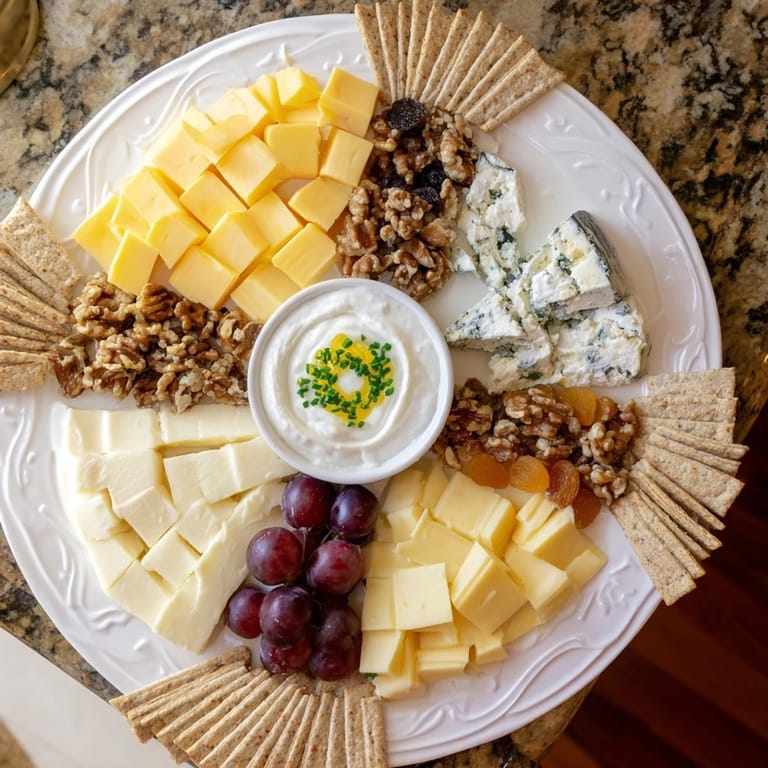
- Spoon the dip into a small round bowl and set it dead center on your platter. This is your anchor, your reason for everything else.
- Divide into four:
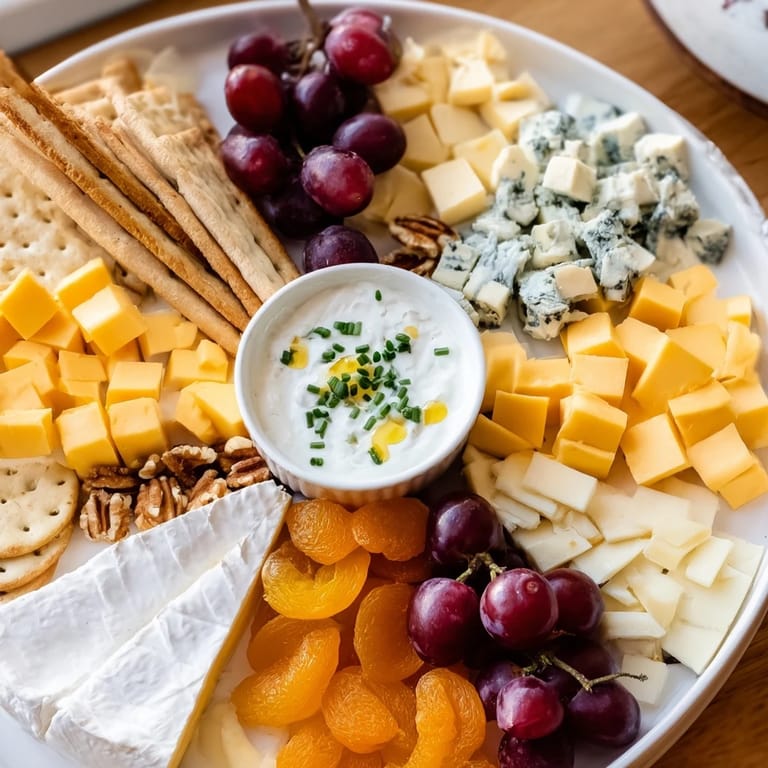
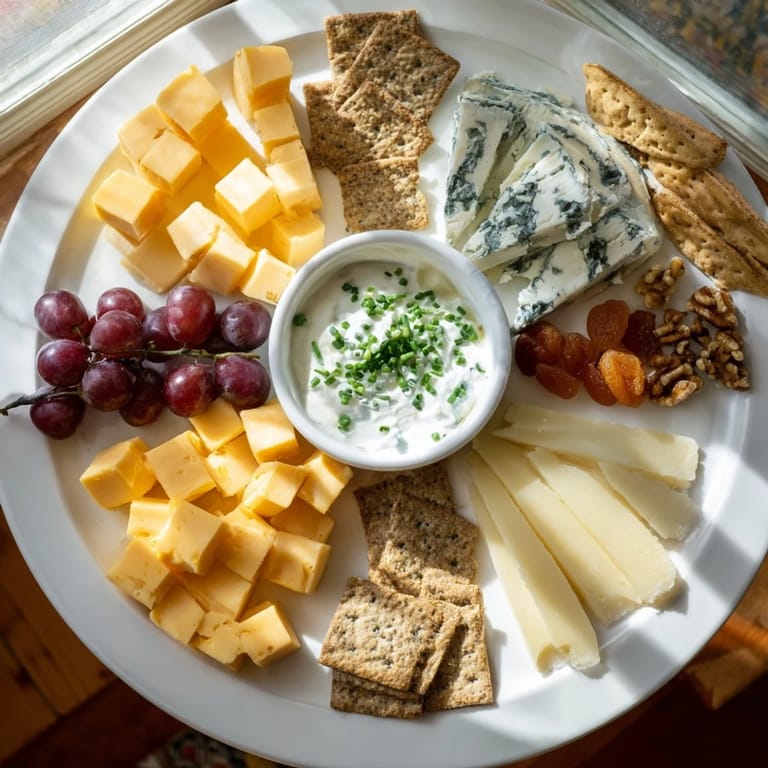
- Imagine lines running north to south and east to west through that center bowl. Each quadrant gets its own cheese type, fanned or grouped so the pieces show their character.
- Build with color and contrast:
- Between the four cheese sections, tuck grapes, apricots, and walnuts in ways that make you pause and look. Odd numbers and clusters feel more natural than scattered singles.
- Finish with honey and intention:
- Drizzle honey over the blue cheese quadrant so it catches light and promises something unexpected. This is where sweet meets savory and people lean in.
- Frame with crackers and bread:
- Arrange these around the outer edge like you're setting a boundary, then step back and see if it feels balanced. If it doesn't, move things until it does.
- Serve at the right moment:
- Everything should be at room temperature so flavors aren't muted. Set it out ten minutes before people arrive if you can.
 Pin It
 My aunt once told me that a good cheese platter is really just an excuse for people to slow down and talk, and I've never forgotten that. When you put thought into how things are arranged, guests notice—not in a showy way, but in how they actually settle in and linger.
Why This Cross Works
The Celtic cross isn't just visually striking—it's practical. Dividing the platter into four quarters means each cheese gets its own space, so flavors don't muddy together and people can navigate without confusion. The central dip becomes the natural gathering point, the reason everything orbits the way it does. It's geometry serving hospitality.
Pairing Beyond the Platter
A crisp Sauvignon Blanc cuts through richness and wakes up the subtle flavors in manchego. A light Pinot Noir complements the earthiness of blue cheese without overpowering it. If you're serving without wine, sparkling water with lemon or a dry cider works beautifully. The goal is something that feels like a conversation between the drink and the cheese, not a competition.
Small Changes That Matter
Apple or pear slices add a crisp freshness that grapes alone can't deliver, and they catch light differently on the platter. You can swap manchego for a sharp Irish cheddar, or blue for a milder gorgonzola if your guests prefer gentler flavors. The cross pattern holds no matter what—it's the structure that makes the presentation sing, not the specific cheeses.
- Toast the walnuts for two minutes in a dry pan before arranging them—they'll taste twice as good.
- If honey drizzles are new to you, warm it slightly so it flows; cold honey sits in stiff pools.
- Set out small cheese knives or spreaders so people don't feel awkward about how to take their pieces.
 Pin It
 A cheese platter like this is one of those rare dishes that feels effortless to eat but intentional to make, which is exactly the balance good entertaining is built on. Take your time with the arrangement, trust your eye, and let the rest unfold naturally.
Your Questions Answered
- → How do you arrange the cheeses on the platter?
Divide the platter into four quadrants and fan or group each cheese type attractively around the central dip for visual appeal and easy access.
- → What ingredients are used in the central dip?
The dip combines sour cream or Greek yogurt with fresh chives, lemon juice, salt, and black pepper to complement the cheeses.
- → Can this platter accommodate dietary preferences?
Yes, using vegetarian cheeses ensures it suits vegetarian diets while offering a diverse cheese selection.
- → What accompaniments enhance the platter's flavor?
Seedless grapes, dried apricots, walnuts, and a drizzle of honey add sweetness, texture, and contrast to the cheeses.
- → What is the best way to serve this cheese arrangement?
Serve immediately at room temperature, arranged on a large round platter with crackers and baguette slices around the edge for easy pairing.