 Pin It
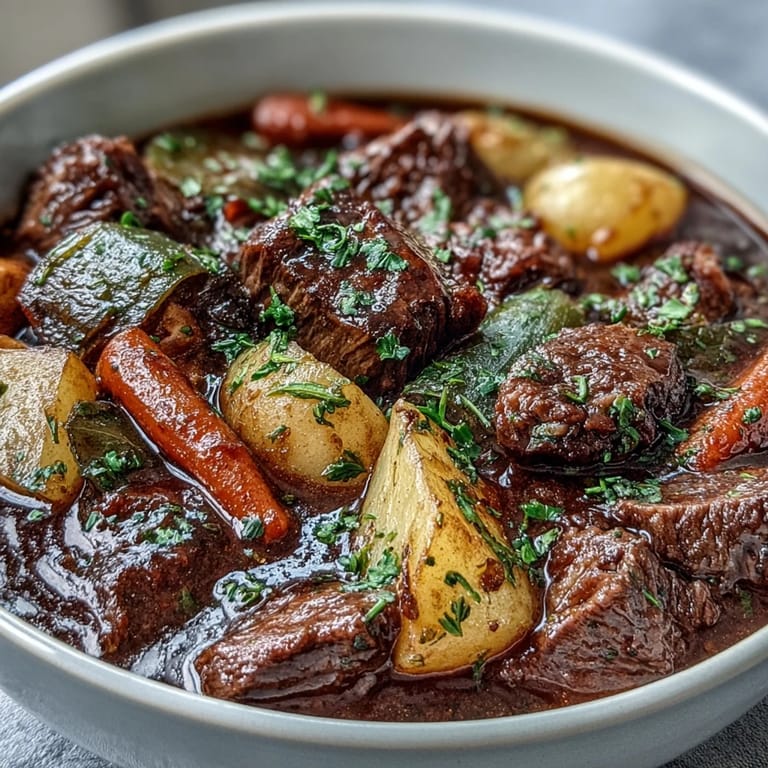
 There's something about the sound of beef hitting a hot skillet that signals the beginning of real comfort food. My kitchen filled with that sizzling promise on a gray October afternoon, and I knew the slow cooker was about to become my best friend for the next eight hours. This stew emerged from wanting something that would taste like it had been simmering since morning, but would actually be ready by dinner without any fuss. The kind of dish where you throw everything together and let time do the heavy lifting for you.
My sister texted halfway through cooking asking what smelled so good, and when she showed up unannounced an hour before serving, I had to confess there was more than enough to feed both of us. She sat at the counter with a glass of wine while I made the thickener slurry, and we talked about everything except food—but we kept stealing glances at that slow cooker like it was keeping a secret. When we finally opened the lid, the steam rolled out and suddenly we were both quiet, just breathing it in.
Ingredients
- Beef chuck, cut into 1.5-inch cubes (2 lbs): This cut has enough marbling and connective tissue to become impossibly tender during the long, low cooking—don't use lean cuts or you'll end up with tough meat.
- Carrots (3 large, cut into 1-inch pieces): They add natural sweetness and body to the broth; cutting them uniformly helps them cook evenly.
- Parsnips (2, peeled and sliced): These bring an earthy, slightly sweet undertone that deepens the flavor profile in ways that potatoes alone cannot.
- Yukon Gold potatoes (2 large, chopped into chunks): Their waxy texture means they hold their shape beautifully instead of breaking down into mush.
- Yellow onion (1 large, diced): The base of nearly every good stew; the long cooking caramelizes the natural sugars into savory richness.
- Celery stalks (3, sliced): Often overlooked, celery adds subtle herbaceous notes that tie the whole dish together.
- Garlic (3 cloves, minced): Mince it fine so it distributes evenly and melds into the broth rather than creating distinct chunks.
- Tomato paste (2 tbsp): A small amount adds umami depth without making the stew taste tomato-forward; it's the secret weapon.
- Worcestershire sauce (1 tbsp): This fermented condiment brings complexity and saltiness that round out the savory notes.
- Bay leaf (1): Remove this before serving—it flavors the broth beautifully but nobody wants to bite into it.
- Dried thyme and rosemary (1 tsp each): These Mediterranean herbs cut through the richness and prevent the stew from tasting one-dimensional.
- Beef broth (4 cups): Use quality broth; this is where most of the flavor comes from, so don't reach for the sodium-bomb bouillon cubes.
- Dry red wine (1 cup): The alcohol cooks off but leaves behind complexity and a subtle acidity that brightens the heavy flavors.
- Cornstarch and cold water (2 tbsp each): Mixed into a slurry, this thickens the stew at the end without clouding the broth or adding flour.
- Kosher salt and black pepper (1/2 tsp each for beef, plus more for seasoning): Season the raw beef before searing to help develop a crust, then taste and adjust at the very end.
Tired of Takeout? 🥡
Get 10 meals you can make faster than delivery arrives. Seriously.
One email. No spam. Unsubscribe anytime.
Instructions
- Season and sear your beef:
- Pat the cubes dry with paper towels—this helps them brown instead of steam—then sprinkle with salt and pepper all over. Working in batches so you don't crowd the skillet, sear each piece until it's deeply browned on at least two sides; this takes about three minutes per batch and creates flavor through the Maillard reaction.
- Get your slow cooker ready:
- Transfer each browned batch to your slow cooker as it finishes. Don't worry if it's not perfect; the layering will happen naturally as you add vegetables.
- Build your vegetable and flavor base:
- Add all the cut vegetables directly to the slow cooker with the beef, then sprinkle in the garlic, tomato paste, Worcestershire, bay leaf, thyme, and rosemary. Stir everything together so the tomato paste coats the vegetables and beef slightly.
- Add your liquids:
- Pour in the beef broth and red wine, stirring gently to combine and make sure nothing is stuck to the bottom. The liquid should nearly cover everything, but don't worry if a few vegetable pieces poke above the surface.
- Cook low and slow:
- Cover and set to low for eight hours—this is not something you need to check or stir. Set a timer on your phone so you don't forget, then walk away and let the slow cooker do its job.
- Make your thickener slurry:
- About fifteen minutes before you want to eat, mix cornstarch and cold water in a small bowl, stirring until smooth with no lumps. The cold water is important because hot water would activate the cornstarch prematurely.
- Thicken and finish:
- Stir the slurry into the stew, then switch the slow cooker to high and leave it uncovered for fifteen minutes so it can thicken slightly. Remove the bay leaf, taste for salt and pepper, and serve.
 Pin It
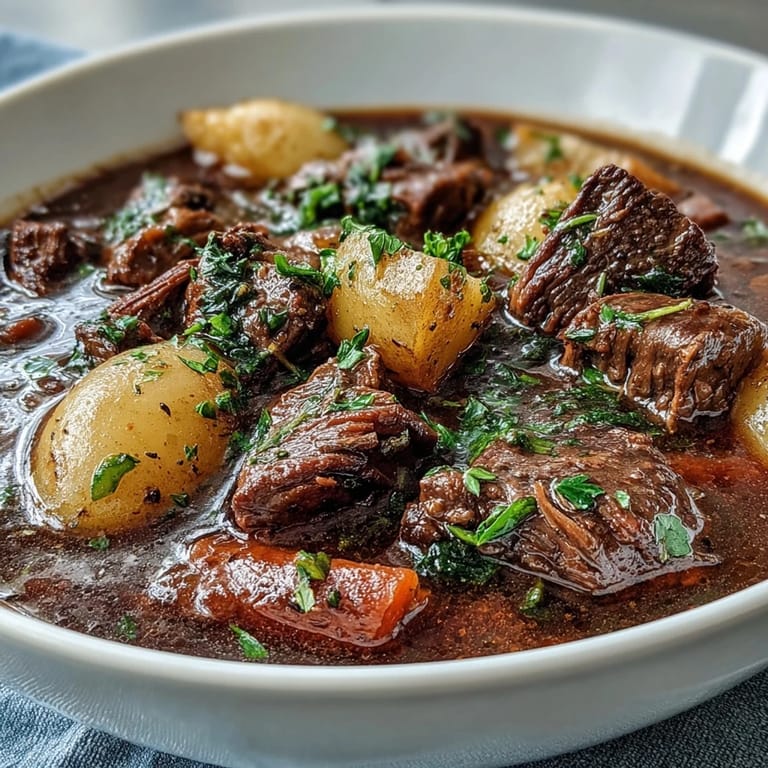
 My brother came home from a long day at work, walked into the kitchen still wearing his coat, and just stopped. He didn't say anything—he just stood there breathing in, and I watched his shoulders drop like something heavy had lifted off them. That's when I realized this stew had become more than dinner; it was a hug served in a bowl, the kind of thing that says I was thinking about you and wanted you to feel taken care of.
Why This Stew Works Every Single Time
The slow cooker transforms tough cuts of beef into something tender through patient, moist heat over hours—there's no rushing it, and there's no need to. The vegetables release their natural sugars and soften completely, thickening the broth naturally while the aromatics meld into one cohesive, savory flavor. The cornstarch slurry at the end creates just enough body to make it feel substantial without making it heavy or glutinous, so every spoonful is balanced.
Variations and Additions
This stew is forgiving enough to take whatever you want to throw at it. Some nights I add mushrooms in the last hour of cooking for earthiness, other times I stir in frozen peas right at the end for a pop of brightness and color. I've also made it with sweet potatoes instead of regular potatoes for a version that leans slightly sweeter, and with extra wine when I'm feeling fancy.
Serving and Storage Secrets
This stew tastes even better the next day because the flavors have more time to marry and deepen. I always make extra specifically so I can eat it for lunch the following day, either straight from a bowl or ladled over crusty bread that soaks up every last bit of broth. It also freezes beautifully for up to three months, so you can make a double batch and have comfort food waiting in your freezer for future gray afternoons.
- Serve with thick crusty bread or over creamy mashed potatoes for maximum comfort factor.
- Leftovers keep in the refrigerator for four days in an airtight container, and defrosting in the slow cooker on low is the gentlest method.
- Reheat gently on the stovetop over medium heat, stirring occasionally, rather than microwaving if you want to preserve the tender texture of the vegetables.
 Pin It
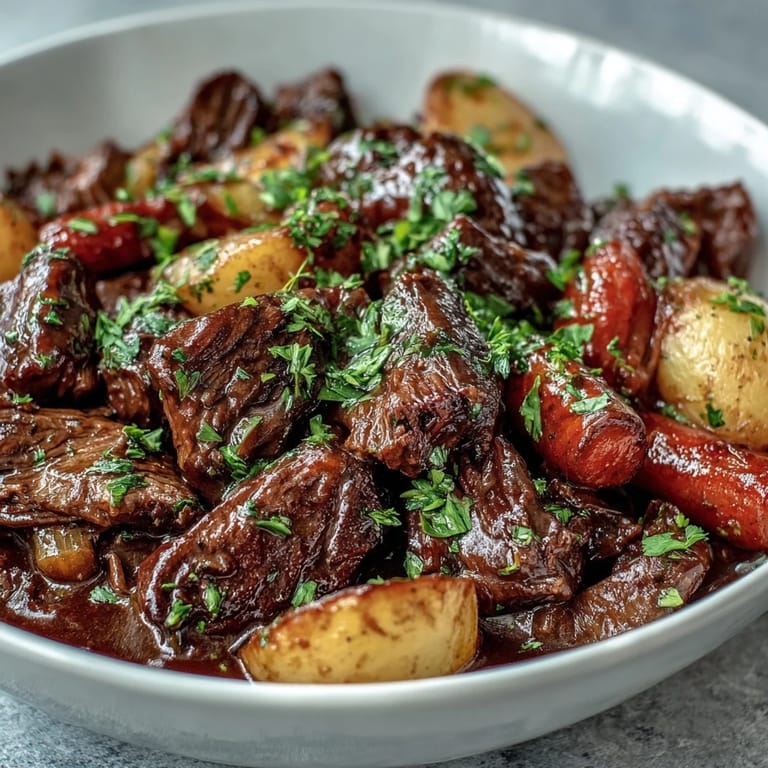
 This stew reminds me that the best things in life don't rush, and that the most meaningful food is the kind that makes people want to linger at the table a little longer. Make this when you need both warmth and company, and watch how quickly it becomes the dish people ask you to make again.
Your Questions Answered
- → What cut of beef works best for this stew?
Beef chuck is ideal due to its marbling and connective tissue, which breaks down during slow cooking, yielding tender, flavorful meat.
- → Can I substitute vegetables in the stew?
Yes, you can swap Yukon Gold potatoes with sweet potatoes for added sweetness or include mushrooms and peas in the last hour for extra flavor and texture.
- → How do I thicken the stew properly?
Mix cornstarch with cold water to create a slurry, then stir it into the stew and cook uncovered on high for 15 minutes until it thickens.
- → Is using red wine necessary in this dish?
Red wine adds depth and richness but can be omitted for an alcohol-free version by replacing it with additional broth.
- → Can I prepare this dish without a slow cooker?
Yes, you can simmer the stew on a low burner or in the oven in a covered pot for several hours until the beef and vegetables are tender.
- → How to adjust seasoning for gluten-free needs?
Ensure the beef broth and Worcestershire sauce used are gluten-free by checking labels carefully to avoid allergen risks.