 Pin It
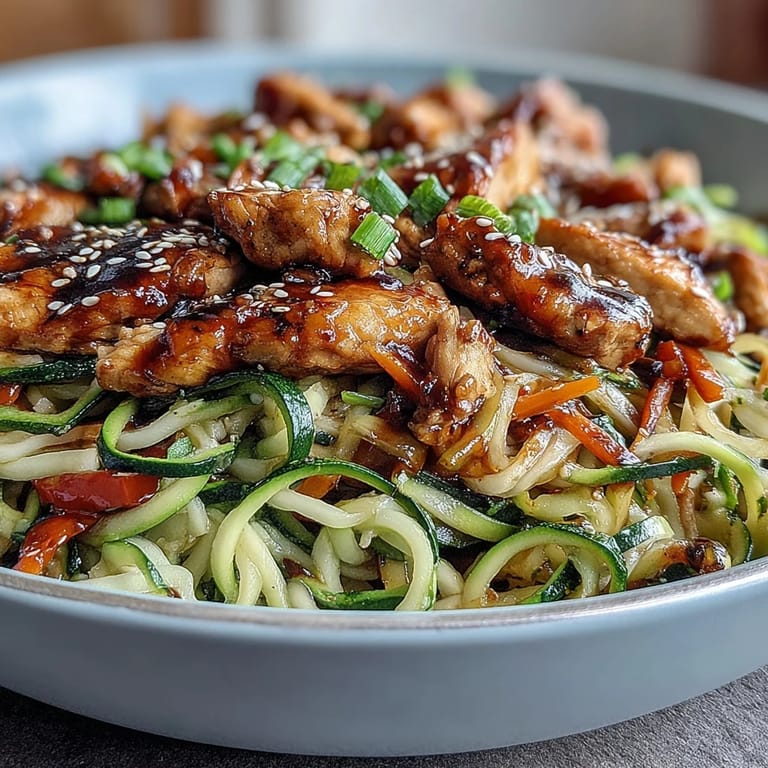
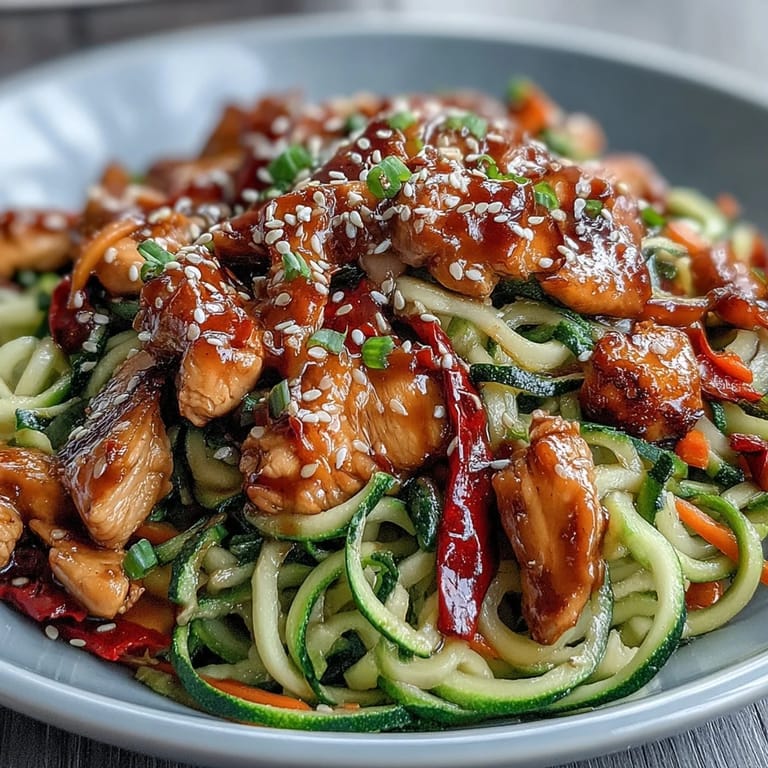
 There's a Tuesday evening I keep coming back to, the one where I stood in front of my pantry feeling stuck between wanting something satisfying and needing something that wouldn't leave me sluggish. That's when zucchini noodles stopped being a thing I tolerated and became something I actually craved. This stir fry happened almost by accident, a Friday night fusion of what was in my crisper drawer and a sauce I'd been meaning to perfect. The magic arrived in that first bite—crisp vegetables, tender chicken, that glossy savory coat that made everything taste intentional rather than healthy-by-default.
I made this for my sister last month when she was visiting, and she sat at my counter watching the pan sizzle with this look of pleasant surprise. She'd been worried I'd become one of those people who only ate raw vegetables and regret, but one bite and she was asking for the recipe. That's when I knew this wasn't just a weeknight solution—it was the kind of dish that makes people feel cared for without any fuss.
Ingredients
- Boneless, skinless chicken breast (500 g), thinly sliced: The thin slicing is non-negotiable here; it cooks faster and absorbs the sauce beautifully, transforming from plain protein to something memorable.
- Zucchini (3 medium), spiralized: These are the noodles, and treating them with respect means not overcooking them past that tender-crisp moment where they still taste like themselves.
- Red bell pepper (1 large), thinly sliced: The sweetness here balances the savory sauce, and the bright color is doing more work than just looking pretty.
- Carrots (2 medium), julienned: They add a gentle crunch that lasts through cooking, plus a natural sweetness that deepens the whole bowl.
- Red onion (1 small), thinly sliced: This brings a subtle bite that keeps the dish from tasting one-dimensional, especially if you prefer your food with some personality.
- Garlic (2 cloves), minced and ginger (1 tablespoon, grated): These are the foundation of the aromatics; they wake up your kitchen and your taste buds within seconds of hitting the hot pan.
- Green onions (2), sliced: Save these for the top—they add a fresh finish that reminds you this is a living, breathing dish.
- Low-sodium soy sauce or tamari (3 tablespoons): The salty backbone of the sauce, and tamari is your friend if you're avoiding gluten.
- Sesame oil (1 tablespoon): Never skimp on this; the toasted, nutty notes are what separate this from a generic stir fry.
- Rice vinegar (1 tablespoon): The acid that brings brightness, cutting through the richness without feeling sharp.
- Honey or maple syrup (1 tablespoon): A whisper of sweetness that makes the whole sauce come together with balance.
- Cornstarch (1 teaspoon, optional): If you like a glossy, clinging sauce, this is your secret; if you prefer things looser, skip it without guilt.
- Chili flakes (1/2 teaspoon, optional): Heat is personal—add, adjust, or leave it out entirely depending on your mood.
- Olive oil or neutral cooking oil (1 tablespoon): For cooking the chicken and vegetables; neutral oil works better if you want the sesame oil to be the star.
- Salt and freshly ground black pepper: Taste as you go; these are your tools for adjusting the final balance.
Tired of Takeout? 🥡
Get 10 meals you can make faster than delivery arrives. Seriously.
One email. No spam. Unsubscribe anytime.
Instructions
- Combine your sauce while your pan gets ready:
- Whisk together the soy sauce, sesame oil, rice vinegar, honey, cornstarch if you're using it, and chili flakes in a small bowl. This is the moment where everything that matters flavor-wise gets decided, so taste it straight from the spoon—you should want to drink it.
- Sear the chicken until it's golden:
- Heat oil in a large skillet or wok over medium-high heat until it's almost smoking, then add your sliced chicken in a single layer. Don't touch it for a minute or two; let it develop color and character. Season lightly with salt and pepper, cook for 4 to 5 minutes until it's cooked through and the edges are golden, then move it to a clean plate.
- Build the aromatics layer:
- In the same pan, add your minced garlic, grated ginger, and sliced red onion. Stir constantly for about a minute—you'll know it's ready when the smell hits you and your kitchen suddenly feels like a restaurant.
- Add the sturdy vegetables:
- Toss in your carrots and bell pepper, stirring often for 2 to 3 minutes until they're just beginning to soften but still have some resistance when you bite them. This is where patience matters; they finish cooking from residual heat, so it's better to undercook them slightly than to end up with mushiness.
- Introduce the zucchini noodles:
- Add your spiralized zucchini and stir constantly for just 1 to 2 minutes. Watch them closely—they release water as they cook, and the moment they turn from raw to tender-crisp is the moment to move forward. Overcooking them here is the most common mistake I see, and it's heartbreaking because everything else is perfect.
- Bring everything back together:
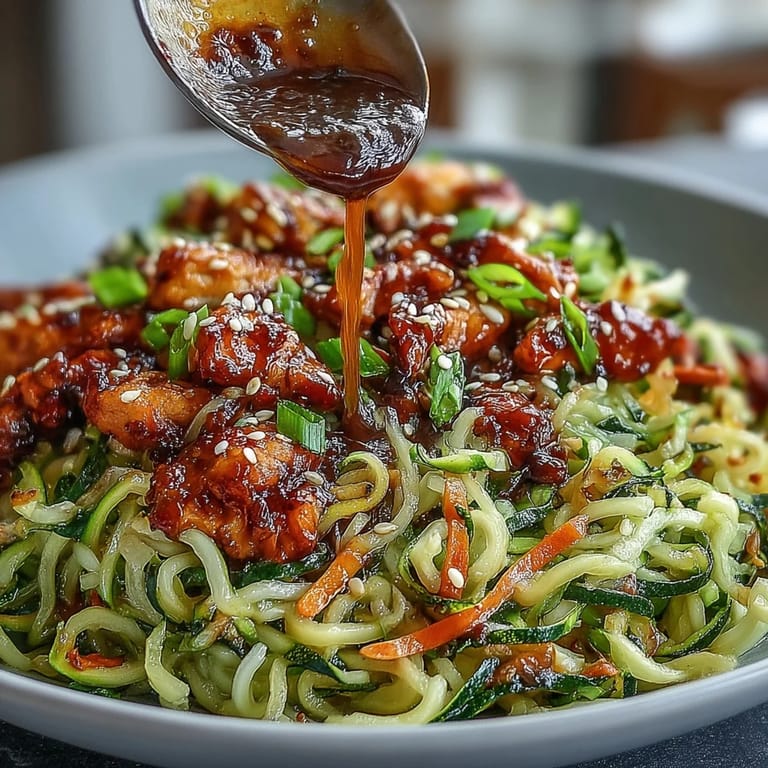
- Return the chicken to the pan, pour in your prepared sauce, and toss everything together for 1 to 2 minutes, allowing the sauce to coat every piece and thicken slightly around the noodles. The pan should smell incredible at this point.
- Taste and adjust, then serve:
- Take a bite of a noodle, check the seasoning, and add more salt, pepper, or a splash of vinegar if something feels missing. Transfer to bowls or plates, scatter those sliced green onions on top, and serve immediately while everything is still steaming.
 Pin It
 My favorite moment cooking this is right after everything comes together in the pan, when the kitchen fills with that aroma of ginger, garlic, and sesame oil. It's a small thing, but it's the smell of something coming together exactly as it should.
Why This Works as Weeknight Dinner
The entire recipe lives in that 30-minute window because every component is designed to cook fast without tasting rushed. Spiralized vegetables cook in minutes, thin-sliced chicken needs barely any time in the pan, and the sauce is bold enough that it doesn't need hours of simmering to taste developed. There's also something psychologically satisfying about using a spiralizer or julienne peeler; it transforms simple zucchini into something that feels special, which makes cooking on a regular Tuesday feel less routine.
The Sauce is Everything
I learned this lesson the hard way after making bland stir fries for years, wondering why restaurants made theirs taste so much better. The sauce is where the magic lives, and getting the balance of salty, sour, sweet, and rich exactly right is what separates a side dish feeling dinner from a proper meal. The sesame oil especially—don't reach for anything else, and definitely don't use light or toasted sesame oil interchangeably; they taste completely different.
Flexibility Without Losing Purpose
This recipe is flexible in ways that matter without becoming an excuse to throw random things in a pan. You can swap the chicken for shrimp, tofu, or even eggs without changing the core structure, and each version tastes intentional rather than thrown together. The vegetable combinations work because they're all cut similarly and cook in roughly the same timeframe, so switching out a bell pepper for snap peas or broccoli florets works beautifully.
- Tofu benefits from pressing first and cooking a little longer to get some color, which gives it more texture and presence in the bowl.
- Shrimp cooks fastest of all—add it after the aromatics and cook for just 2 to 3 minutes, or you'll end up with rubber.
- Extra vegetables like snap peas, broccoli, or mushrooms are welcome additions as long as you adjust cooking times based on how dense they are.
 Pin It
 This meal has become my answer to that 6 PM question of what to make when you want something that feels indulgent but keeps you grounded. It's become proof that eating well and eating deliciously aren't contradictory goals.
Your Questions Answered
- → How do I prevent zucchini noodles from becoming soggy?
Stir-fry zucchini noodles briefly, about 1-2 minutes, to maintain a firm, crisp texture and avoid excess moisture.
- → Can I use tofu instead of chicken?
Yes, replace chicken with firm tofu for a vegetarian option. Press and cube the tofu before stir-frying for best results.
- → What sauce ingredients create the savory flavor?
The sauce combines low-sodium soy sauce or tamari, sesame oil, rice vinegar, honey, and optional chili flakes for a balanced, savory taste.
- → Is this dish gluten-free?
Use tamari instead of soy sauce to make the dish gluten-free. Always double-check ingredient labels for hidden gluten.
- → What garnishes enhance this stir fry?
Sliced green onions add freshness, while toasted sesame seeds or chopped cilantro provide extra flavor and texture.