 Pin It
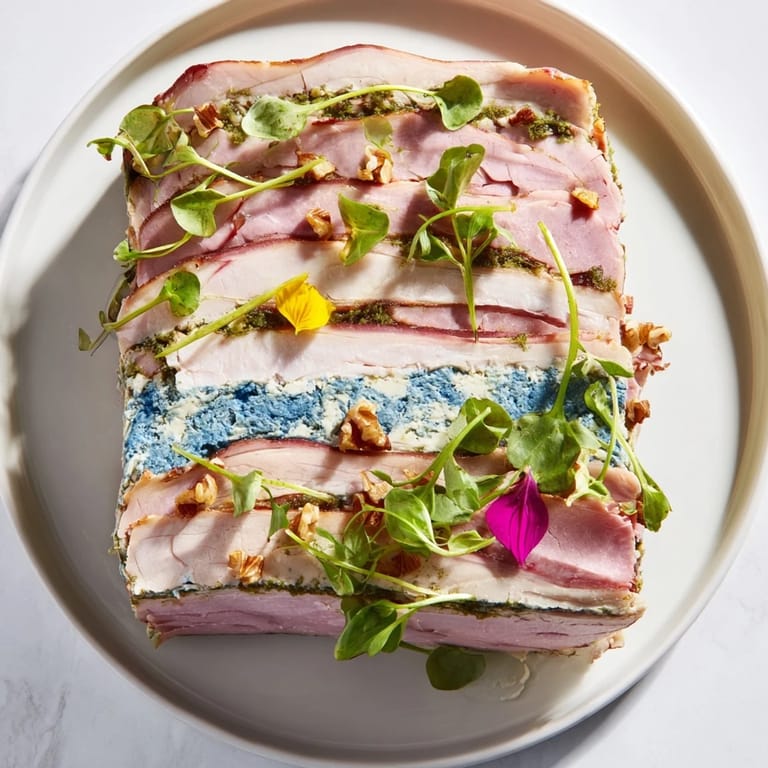
 I stumbled upon the Grand Canyon Rim terrine during a kitchen experiment that started as pure whimsy—I'd been staring at a travel magazine on my counter when it hit me: why not build something edible that captures that landscape? The layered cliffs, the river cutting through, the way light hits those rust-colored rocks. What began as a silly daydream became an obsession, and after several iterations of stacking meat like geological strata, the blue cheese river finally flowed exactly as I'd imagined. It took patience and a willingness to embrace the absurd, but the moment I plated the first slice and saw those vivid layers against the creamy blue center, I knew I'd created something genuinely special.
The first time I actually served this was at a dinner party where I was nervous to the point of second-guessing everything—would it hold together, would anyone appreciate something this conceptual, would the blue cheese taste too aggressive? I remember my friend Sarah cutting into it, and there was this moment of absolute silence before everyone started talking at once about the layers, the texture, the way the flavors built on each other. She said it was the most memorable thing I'd ever made, and honestly, that's when I stopped thinking of it as an experiment and started thinking of it as real.
Ingredients
- Beef sirloin, thinly sliced (300 g): Provides a rich, deep flavor that anchors the terrine and holds its shape beautifully when layered.
- Turkey breast, thinly sliced (250 g): Adds lightness and a subtle sweetness that balances the richness of beef and blue cheese without overpowering them.
- Smoked ham, thinly sliced (200 g): Brings smoke and salt that makes you taste the canyon air, literally—this is where the flavor complexity really lives.
- Pork loin, thinly sliced (200 g): Contributes a tender middle note that keeps the terrine from feeling too heavy or one-dimensional.
- Blue cheese, crumbled (150 g): This is your river, your statement—choose one that isn't too crumbly or the layers get muddy, but don't be timid about the funk.
- Cream cheese, softened (100 g): Acts as a binder that keeps the blue cheese mousse smooth and spreadable without separating during baking.
- Heavy cream (30 ml for mousse): Whips the blue cheese into something cloud-like and luxurious rather than gritty.
- Fresh chives, finely chopped (1 tbsp): Adds a bright, onion-forward note that cuts through the richness and reminds you this is still alive and fresh.
- Fresh parsley, finely chopped (1 tbsp): Brings a quiet herbaceous note that keeps everything from tasting too meaty.
- Eggs (4 large): These and the cream create the custard that seals and holds the meat layers together as they bake.
- Whole milk and heavy cream for binding (120 ml milk, 60 ml cream): Together they create a delicate custard that doesn't overpower but ensures every slice stays intact.
- Salt and freshly ground black pepper (1/2 tsp salt, 1/4 tsp pepper): Season the binding layer, but taste as you go—the meats and blue cheese are already salty.
- Microgreens and edible flowers (optional): These are your finishing touches, the small flowers that bloom between the rocks; don't skip them if you can find them.
- Toasted walnut pieces (optional): Add a subtle crunch and earthy richness that echoes the canyon floor.
Tired of Takeout? 🥡
Get 10 meals you can make faster than delivery arrives. Seriously.
One email. No spam. Unsubscribe anytime.
Instructions
- Set the stage:
- Preheat your oven to 160°C and line a standard loaf pan with plastic wrap, leaving enough overhang so you can fold it over at the end like you're wrapping a gift. This plastic is your safety net—it keeps the terrine from sticking and makes unmolding feel almost magical.
- Build your binding mixture:
- Whisk together the eggs, milk, heavy cream, salt, and pepper until smooth; this custard is what transforms layers of meat into something that holds together beautifully when sliced. Think of it as the geological cement between your canyon strata.
- Create the river:
- Blend the blue cheese, cream cheese, heavy cream, chives, and parsley until it's thick and spreadable, like a luxurious river ready to flow through your landscape. Taste it, adjust the pepper, and if it feels too thick, loosen it with just a touch more cream.
- Layer with intention:
- Begin arranging meat slices in the pan, overlapping them slightly like roof shingles—start with beef along one side, then turkey, then ham, then pork, angling each layer slightly so they slope downward and create that canyon wall effect. This is where patience matters; take your time and let the layers tell a story.
- Bind as you go:
- After every two or three meat layers, brush lightly with the egg mixture, which acts as mortar holding everything together during the bake. Don't drench it—think gentle brush strokes, not soaking.
- Introduce the river:
- About halfway up the pan, spoon that blue cheese mixture in a thick line down the center, then continue layering meats around and over it, maintaining your cliff pattern and building anticipation for the moment someone slices into it and sees that river.
- Seal and protect:
- Finish with a final layer of meat, fold the plastic wrap over the top to seal, then cover everything tightly with foil. This double-wrapping keeps the terrine moist and protected during the water bath.
- The water bath:
- Place the loaf pan inside a larger roasting dish and fill with hot water halfway up the sides—this gentle, even heat ensures the custard sets without curdling and the meats stay tender rather than tough. It's the restaurant technique that makes home cooking feel elegant.
- Bake and rest:
- Bake for 1 hour 15 minutes until the terrine is just set but still slightly yielding when you press it gently. Remove, cool to room temperature on the counter—this prevents condensation from weeping back into it—then refrigerate for at least 4 hours, though overnight is when the flavors truly marry and settle.
- The grand reveal:
- Run a sharp knife around the edges, unfold that plastic wrap, and invert onto a serving platter—the moment it slides out intact is deeply satisfying. Let it rest 10 minutes at room temperature to soften slightly, then slice thickly so those layers and that river are visible and gorgeous.
- Finish with flourish:
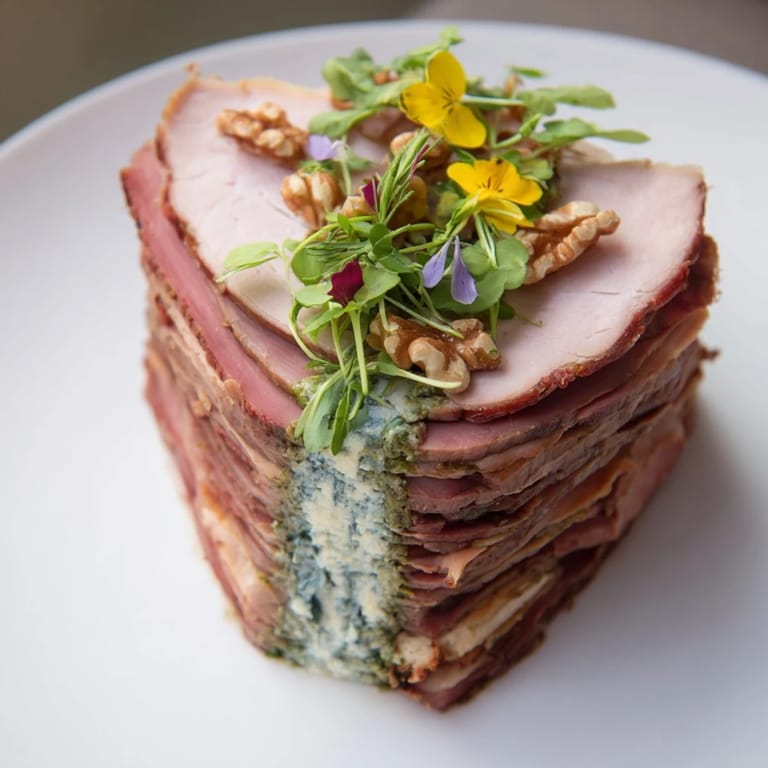
- Top with microgreens, edible flowers, and toasted walnuts if you have them, making each plate feel like a work of art that happens to taste incredible.
 Pin It
 What strikes me most is that this terrine transformed from a visual idea into something that genuinely tastes like it belongs together—the smoky ham, the richness of beef, the brightness of blue cheese and chives all working in concert. Serving it became less about impressing people and more about sharing something that felt like edible storytelling, where every slice told the story of an actual place I'd fallen in love with.
Meat Selection and Sourcing
The quality of your terrine hinges entirely on the meats you choose, so it's worth visiting a butcher who will slice them consistently thin and can talk you through the cuts. I learned the hard way that grocery store pre-sliced deli meat doesn't work here because it's often too thin and falls apart; ask for a quarter-inch thickness, or request that they use their slicer so the pieces stay intact. The smoky ham makes an enormous difference—if you can find a good dry-cured option instead of the commercial stuff, you'll taste how it elevates the whole dish from pleasant to memorable.
Flavor Variations and Substitutions
This recipe is a framework more than a rulebook, and I've had success swapping in smoked duck for some of the pork, or using prosciutto instead of regular ham for a more delicate flavor profile. The blue cheese river can absolutely become a herbed goat cheese river if you prefer something milder and more tangy, or even a green peppercorn mousse if you want to surprise people in a different way. The beauty is that once you understand the layering technique, the terrine becomes a canvas for whatever quality meats and cheeses you can find or prefer.
Serving and Pairing Wisdom
I serve this cold or at cool room temperature with thick slices of toasted brioche that can soak up the juices, and a simple green salad tossed with a light vinaigrette to cut through the richness. A crisp white wine like a Sauvignon Blanc or even a dry Riesling pairs beautifully, though if you prefer red, something light like a Pinot Noir won't overpower it. The key is balance—let the terrine be the star, and give your guests something to cleanse their palate between bites so they can taste each layer distinctly.
- Slice thick, never thin—thin slices fall apart and make the visual impact less dramatic.
- Warm the serving platter slightly so the terrine doesn't feel cold and stiff against your plate.
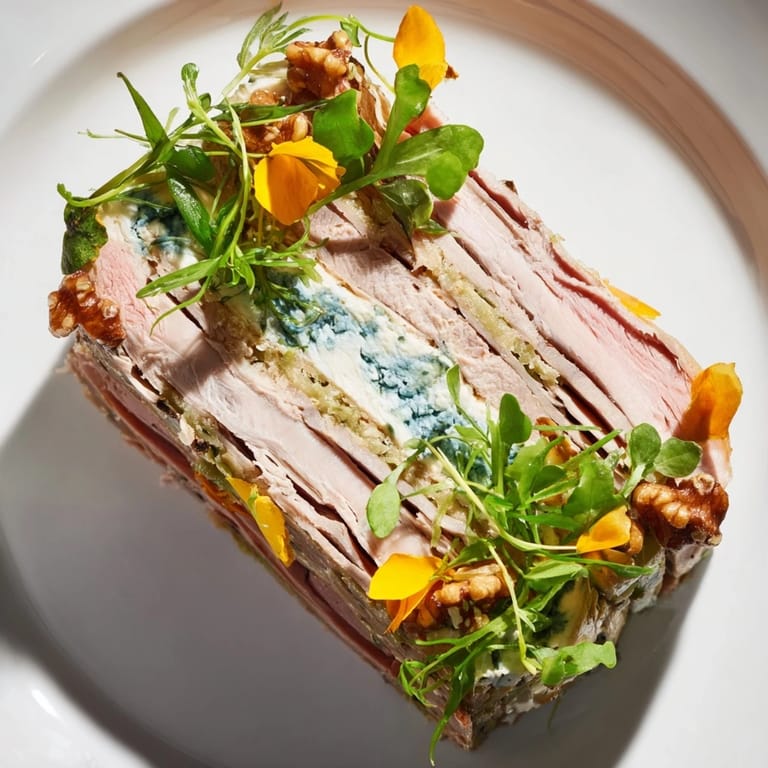
- If you're making this for a crowd, slice it just before serving so each piece shows its full canyon-like cross-section.
 Pin It
 Building this terrine taught me that sometimes the most impressive dishes start with a moment of pure imagination, and the joy is in the execution—in proving to yourself that something that looks impossible is actually just meat, cheese, and technique working together. Every time someone gasps at the first slice, I'm reminded why I love cooking.
Your Questions Answered
- → How is the blue cheese mousse prepared?
Blend blue cheese, cream cheese, heavy cream, fresh chives, parsley, and black pepper until smooth to create a creamy, flavorful mousse.
- → What is the purpose of using a bain-marie in cooking this dish?
The bain-marie provides gentle, even heat during baking, ensuring the terrine cooks slowly without drying out or cracking.
- → Can the smoked ham be substituted with other meats?
Yes, smoked duck or prosciutto can replace smoked ham for a different smoky flavor profile.
- → How long should the terrine chill before serving?
It is best chilled for at least 4 hours, preferably overnight, to allow the layers to set firmly and flavors to meld.
- → What garnishes complement this layered meat dish?
Microgreens, edible flowers, and toasted walnuts enhance both the presentation and textural contrasts.