 Pin It
 My grandmother used to say that the smell of bacon and black-eyed peas on New Year's Day was the sound of luck arriving in the kitchen. I didn't understand it then, but standing over a pot of simmering peas, watching the broth turn golden from the smoky meat, I finally got what she meant. There's something about this dish that feels less like cooking and more like participating in a tradition that stretches back generations. The beauty of Hoppin John is that it asks so little of you—just patience and a willingness to let simple ingredients do something remarkable together.
I made this for a potluck once where everyone brought something trendy and Instagram-worthy, and I almost didn't go because my Hoppin John felt too simple, too old-fashioned. But something told me to bring it anyway, and I watched person after person come back for seconds, then thirds, asking for the recipe with the kind of genuine hunger that only nostalgic food can inspire. That's when I realized this dish doesn't need to be fancy—it just needs to be true to itself.
Ingredients
- Thick-cut bacon (6 oz): Don't skimp on quality here; thick-cut bacon renders more slowly and gives you deeper flavor and crispy bits that are worth their weight in gold.
- Onion, celery, and garlic: This holy trinity is your flavor foundation, and taking time to chop them fine means they'll meld seamlessly into the broth.
- Green bell pepper (optional): If you use it, it adds sweetness and color, but the dish is equally lovely without it if that's what you have on hand.
- Dried black-eyed peas (1½ cups): Soaking overnight is worth the planning because it ensures even cooking and tender results; if you're short on time, canned works beautifully.
- Chicken or vegetable broth (4 cups): Low-sodium is essential because you'll be seasoning as you go and won't want saltiness creeping up on you.
- Bay leaf and thyme: These aren't just decorative—they provide an earthy undertone that elevates the entire pot without announcing themselves.
- Cayenne pepper (¼ teaspoon): Optional but worth considering; even a whisper of heat brightens the earthiness of the peas.
- Long-grain white rice (2 cups): The fluffy canvas that lets the peas shine; avoid short-grain varieties, which can turn gummy.
- Butter and salt for rice: These simple additions transform plain rice into something that feels intentional and complete.
- Scallions and hot sauce: These are your final flourish, adding brightness and the option for heat depending on who's eating.
Tired of Takeout? 🥡
Get 10 meals you can make faster than delivery arrives. Seriously.
One email. No spam. Unsubscribe anytime.
Instructions
- Render the bacon and build your flavor base:
- Start with medium heat and let the bacon cook slowly until the edges curl and darken, about 6 to 8 minutes. You're not rushing this—you're coaxing out the smoke and richness that will flavor everything that follows. Remove half the bacon to a small plate, leaving the rest and all those precious drippings in the pot.
- Soften your aromatics:
- Add the chopped onion, celery, and bell pepper to the bacon drippings, stirring occasionally as they lose their sharpness and become translucent and sweet, roughly 5 minutes. When you add the minced garlic, give it just a minute to release its perfume before you add the peas.
- Combine peas and liquid:
- Add your drained peas, bay leaf, thyme, cayenne if using, and broth, stirring gently to combine. Bring the whole pot to a boil, then lower the heat and let it simmer uncovered—this is when patience becomes your greatest ingredient.
- Simmer until tender:
- For soaked dried peas, this takes 35 to 45 minutes; for canned, just 20 to 25 minutes. You're looking for peas that yield easily to a spoon but haven't fallen apart into mush. Taste and adjust salt and pepper, then remove the bay leaf.
- Cook the rice simultaneously:
- In a separate saucepan, combine rice, water, butter, and a pinch of salt, bringing it to a boil before reducing heat to low and covering. Set a timer for 15 minutes, and when it goes off, resist the urge to peek; let it sit covered for another 5 minutes before fluffing with a fork.
- Bring it together:
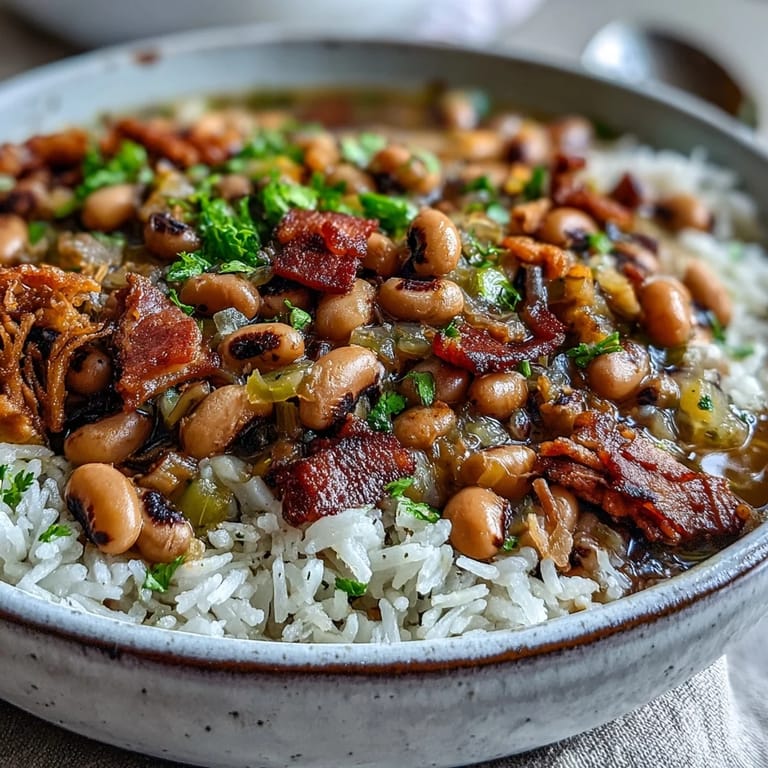
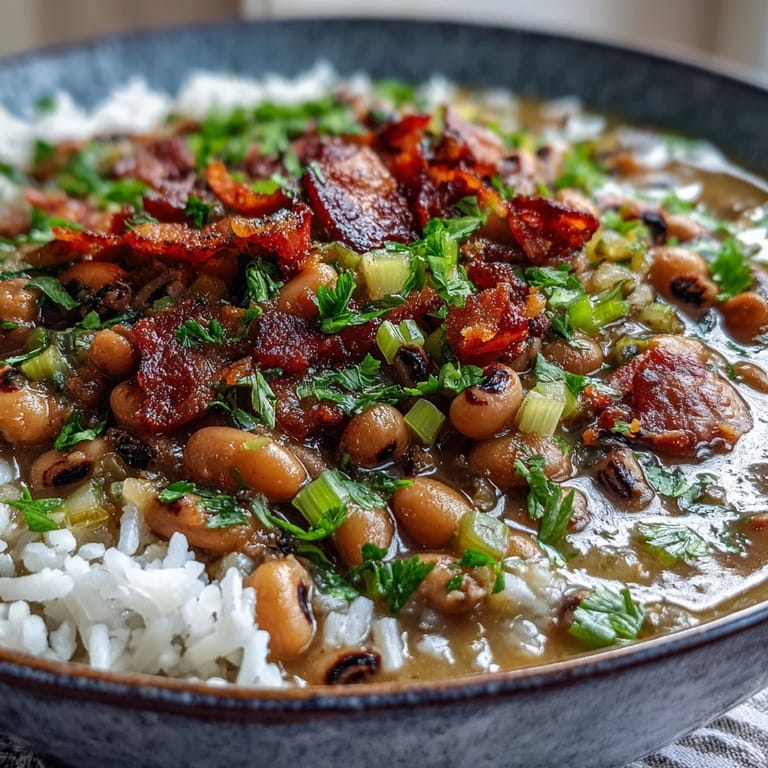
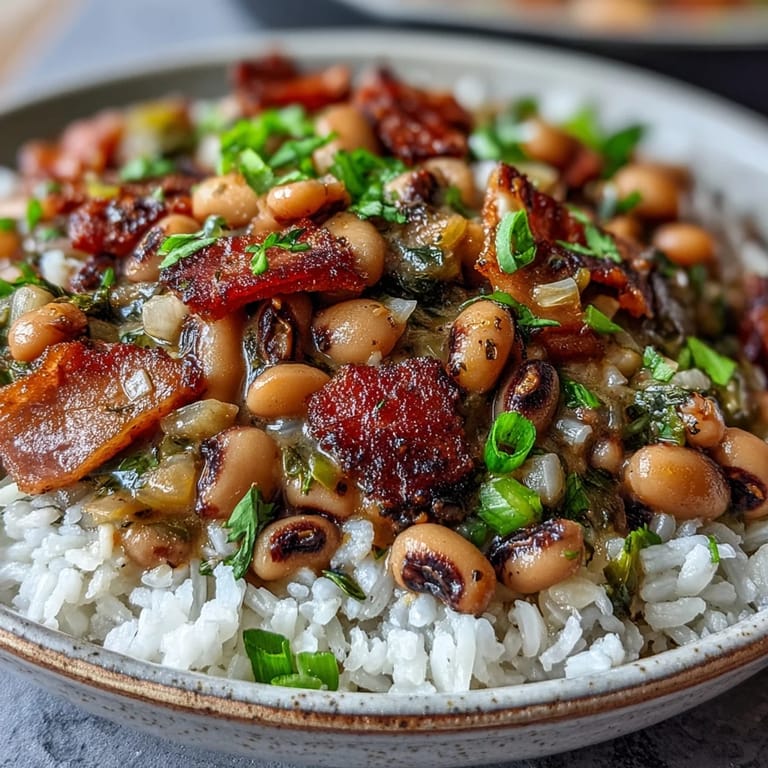
- Spoon fluffy rice into bowls, ladle the peas and their golden broth over top, scatter the reserved crispy bacon across the surface, and finish with sliced scallions. Offer hot sauce on the side for anyone who wants it.
 Pin It
 There's a moment that happens every time I serve this—when someone takes their first spoonful and pauses, eyes widening slightly as if they've just recognized something precious and half-forgotten. That's the moment I understand why this dish has survived centuries and will likely survive centuries more.
The Story Behind Hoppin John
This dish carries the weight and warmth of Southern tradition, with roots that run deep into African American and Gullah Geechee culture. The name itself has been debated—some say it comes from the way children hopped around the table waiting to eat, others that it's a corruption of a French name. What matters more than the origin story is that this food represents resilience, community, and the alchemy of taking humble ingredients and making them sing. Every bowl is a small act of preservation, keeping alive the voices and flavors of people whose contributions to American cooking are immeasurable.
Building Flavor Layers
The secret to unforgettable Hoppin John is understanding that each ingredient plays a specific role in a flavor orchestra. The bacon provides smokiness and fat, which carry flavor and create richness. The aromatics—onion, celery, garlic—mellow and sweeten as they cook, creating a gentle, savory foundation. The peas themselves contribute an earthy, almost mineral note that's uniquely their own. The broth ties everything together, absorbing and melding these elements into something cohesive. This is why you can't really rush it or substitute away key players without losing something essential to the final dish.
Making It Your Own
Tradition is wonderful, but your kitchen is your own, and Hoppin John is forgiving enough to bend with your preferences. Some people add a splash of vinegar at the end for brightness, others swear by a pinch of smoked paprika for depth. I've seen collard greens stirred in at the last minute, transforming it into a more complete meal in a single pot. Some cooks add diced tomatoes, others keep it pure and simple. The framework is sturdy enough to support your creativity while staying true to its essential self.
- Vegetarian versions work beautifully if you swap the bacon for smoked paprika and extra oil, losing nothing in soul or satisfaction.
- Leftovers are almost better the next day when flavors have deepened and melded further together.
- This freezes exceptionally well, making it a smart choice for meal prep or future comfort when you need it most.
 Pin It
 There's comfort in knowing that you're carrying forward something real and meaningful every time you make this dish. Hoppin John asks nothing but your presence and a little time, and in return, it offers luck, memory, and the profound satisfaction of food that tastes like home.
Your Questions Answered
- → Why is Hoppin John traditionally eaten on New Year's Day?
Hoppin John is believed to bring good luck and prosperity in the coming year. The black-eyed peas represent coins, while the greens often served alongside symbolize paper money. This Southern tradition dates back to the Civil War era and remains a cherished custom today.
- → Can I use canned black-eyed peas instead of dried?
Absolutely. Canned black-eyed peas work well and reduce cooking time significantly. Use 3 cups of rinsed, drained canned peas and simmer for just 20-25 minutes instead of 35-45. The result will still be delicious and satisfying.
- → How do I make Hoppin John vegetarian?
Simply omit the bacon and add 1-2 teaspoons of smoked paprika to provide that signature smoky flavor. Use vegetable broth instead of chicken broth, and consider adding a diced smoked vegetable or liquid smoke for additional depth.
- → What should I serve with Hoppin John?
Collard greens, cornbread, and sautéed kale or mustard greens make perfect accompaniments. Some also serve it with sliced tomatoes or fried okra. The combination creates a complete, traditional Southern meal that's both comforting and balanced.
- → How long does Hoppin John keep in the refrigerator?
Stored in an airtight container, Hoppin John will keep for 4-5 days in the refrigerator. The flavors often deepen and improve after a day or two. Reheat gently on the stove with a splash of broth to restore consistency.
- → Can I freeze Hoppin John?
Yes, Hoppin John freezes beautifully. Cool completely, then transfer to freezer-safe containers for up to 3 months. Thaw overnight in the refrigerator and reheat on the stove, adding a little broth if needed. For best results, freeze the peas and rice separately.