 Pin It
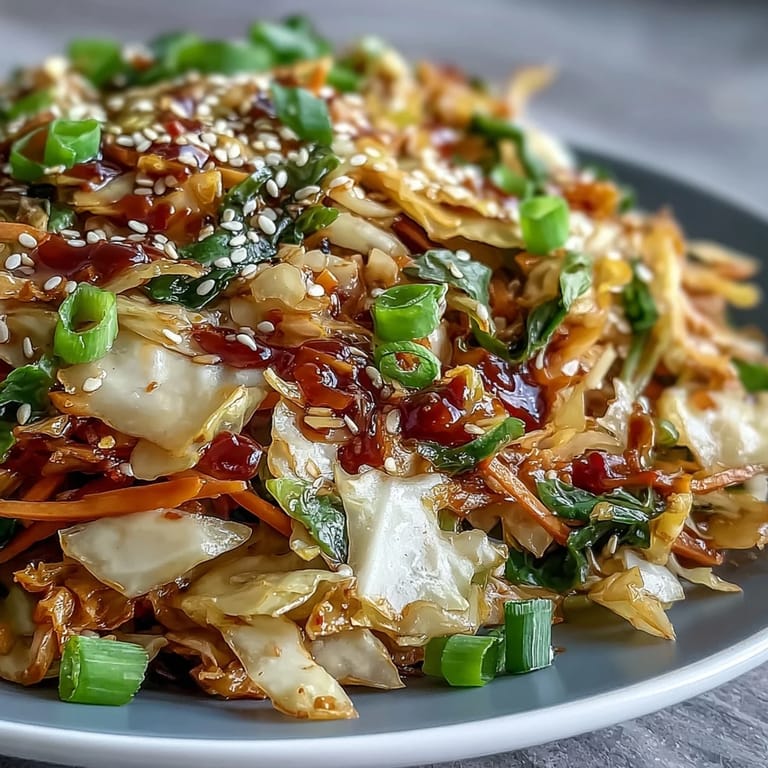
 My neighbor once handed me a jar of homemade chili paste over the fence and said, Try this on cabbage, you won't believe it. I didn't, until I did. The way the heat mingled with vinegar and the cabbage stayed crisp instead of soggy changed how I thought about stir-frying vegetables. Now it's the dish I make when I need something fast, bright, and loud enough to jolt me out of a dinner rut. Every bite still reminds me of that casual conversation and the unexpected gift that became a kitchen staple.
I made this for a potluck once, skeptical that anyone would get excited about cabbage. People kept coming back for seconds, asking what made it so addictive. I realized it was the balance, the way sour and spicy and sweet all showed up without stepping on each other. One friend scraped the bowl clean and texted me the next day asking for the recipe. That's when I knew this wasn't just a side dish, it was a conversation starter.
Ingredients
- Green cabbage: The backbone of this dish, it holds up to high heat and stays crisp if you don't overcook it, slice it thin so it cooks evenly.
- Carrot: Adds a touch of sweetness and color, julienne it for the best texture and visual appeal.
- Scallions: They bring a mild onion flavor that doesn't overpower, slice them on the diagonal for a prettier finish.
- Garlic and ginger: These two create the aromatic base, mince them finely so they distribute evenly and don't burn.
- Soy sauce: Provides the salty, umami depth, use tamari if you need it gluten free.
- Rice vinegar: The sour half of the equation, it brightens everything without being harsh.
- Chili paste: This is where the heat comes from, start with less if you're cautious, you can always add more.
- Sugar: Just a teaspoon balances the sour and spicy, don't skip it.
- Toasted sesame oil: A few drops add a nutty richness that ties the sauce together.
- Vegetable oil: Needed for high heat stir frying, it keeps everything moving without sticking.
- Black pepper and salt: Season to taste at the end, they help everything come into focus.
- Toasted sesame seeds: Optional, but they add a little crunch and visual charm.
Tired of Takeout? 🥡
Get 10 meals you can make faster than delivery arrives. Seriously.
One email. No spam. Unsubscribe anytime.
Instructions
- Mix the sauce:
- In a small bowl, whisk together soy sauce, rice vinegar, chili paste, sugar, and sesame oil until the sugar dissolves. Set it aside so the flavors can mingle while you prep everything else.
- Heat the wok:
- Pour vegetable oil into a large wok or skillet and crank the heat to medium high. Let it get hot enough that the oil shimmers but doesn't smoke.
- Bloom the aromatics:
- Toss in the garlic and ginger, stir frying for about 30 seconds until they smell incredible and just start to turn golden. Move fast so they don't burn.
- Stir fry the vegetables:
- Add the cabbage and carrot, tossing constantly for 3 to 4 minutes. You want them to wilt slightly but keep their crunch, this is where most people overcook and lose the texture.
- Coat with sauce:
- Pour in the prepared sauce and toss everything to coat evenly. Stir fry for another 2 to 3 minutes, letting the sauce cling to the vegetables without drowning them.
- Finish and garnish:
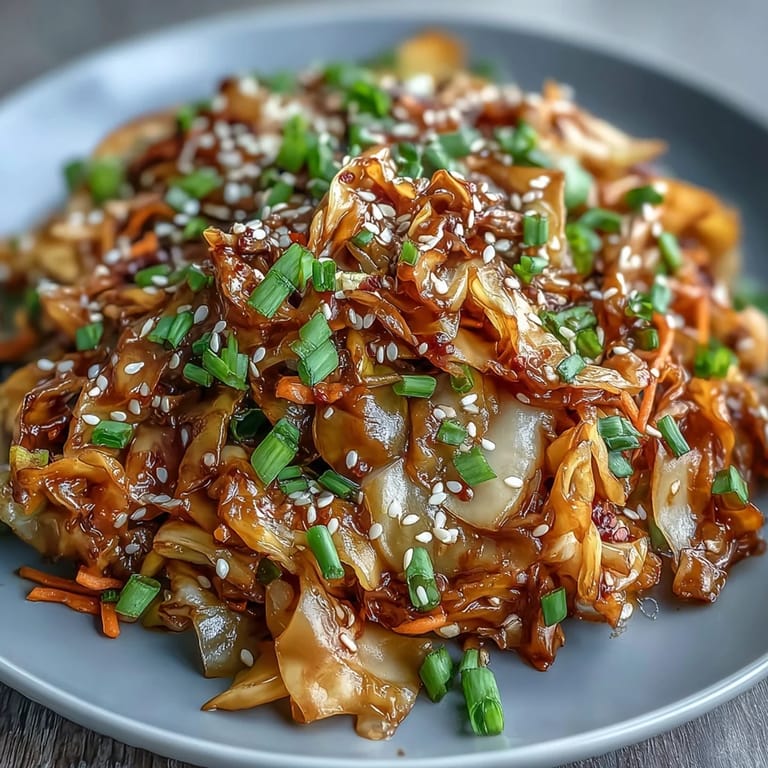
- Stir in black pepper, salt, and scallions, cooking for 1 more minute. Transfer to a serving dish, sprinkle with sesame seeds, and serve while it's still steaming.
 Pin It
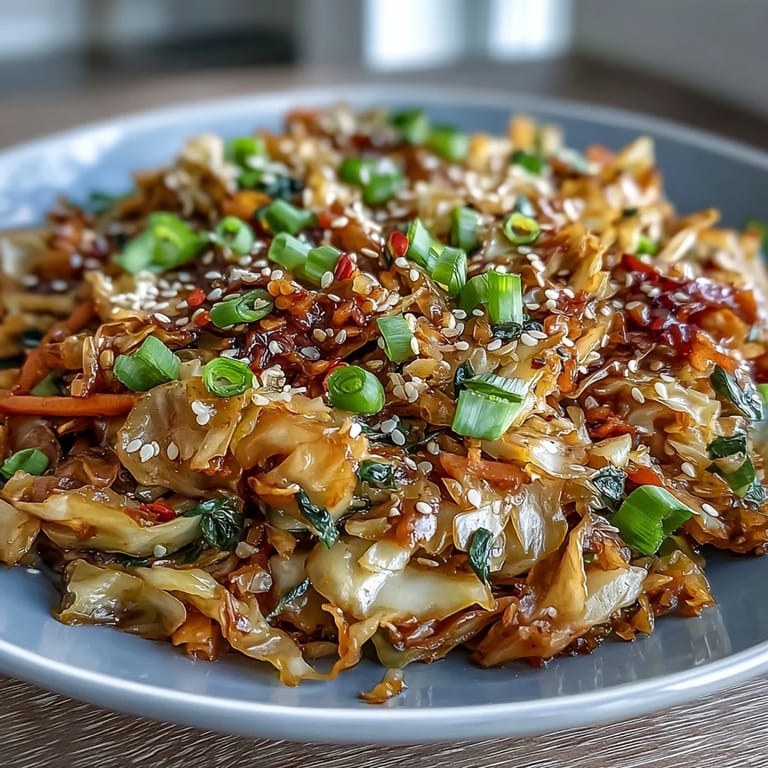
 There was a night I made this after a long day, too tired to think but too hungry to settle for toast. The sizzle of garlic in hot oil woke me up, and by the time I sat down with a bowl, I felt human again. It reminded me that cooking doesn't have to be complicated to be satisfying, sometimes the simplest dishes are the ones that save you.
Choosing Your Cabbage
Green cabbage is sturdy and holds its shape, which is why I reach for it most often. Napa cabbage is milder and wilts faster, so if you want a gentler flavor and softer texture, swap it in. Either way, core it properly and slice it thin, thick wedges won't cook evenly and you'll end up with crunchy and mushy in the same bite.
Adjusting the Heat
Chili paste can vary wildly in intensity, so start with less and taste as you go. I learned this after making a batch so spicy my eyes watered and I had to dilute it with extra cabbage. If you want more complexity, try adding a pinch of red pepper flakes or a few drops of chili oil at the end. Heat should enhance, not obliterate, the sour and savory layers.
Serving and Pairing Ideas
This dish shines next to steamed jasmine rice or as a side to grilled chicken or tofu. I've also piled it into lettuce wraps for a lighter option, or stirred in some cooked noodles to make it a one bowl meal. The leftovers, if you have any, taste great cold straight from the fridge, tangy and crunchy like a quick pickled salad.
- Add sliced mushrooms or bell peppers for more color and texture.
- Drizzle with extra sesame oil right before serving for a richer finish.
- Double the batch if you're feeding a crowd, it reheats well and disappears fast.
 Pin It
 This is the kind of recipe that makes weeknight cooking feel less like a chore and more like a choice you're glad you made. Keep it in your back pocket for when you need something quick, bold, and impossible to mess up.
Your Questions Answered
- → Can I use Napa cabbage instead of green cabbage?
Yes, Napa cabbage works wonderfully and provides a milder, more delicate flavor. It will cook slightly faster, so reduce the stir-fry time by about a minute to maintain its tender-crisp texture.
- → How can I make this dish spicier?
Increase the chili paste to 2 tablespoons or add a pinch of red pepper flakes. You can also drizzle with extra chili oil before serving for an added kick.
- → What can I serve with hot and sour cabbage?
This dish pairs perfectly with steamed jasmine rice, fried rice, or as a side to grilled chicken, pork, or tofu. It also complements noodle dishes and spring rolls beautifully.
- → How do I store leftovers?
Store in an airtight container in the refrigerator for up to 3 days. Reheat in a wok or skillet over medium heat to restore some of the crispness, or enjoy cold as a tangy slaw.
- → Can I add protein to this dish?
Absolutely! Add sliced tofu, tempeh, or shrimp during the stir-fry process. Cook the protein first, set aside, then add it back with the sauce for a complete one-pan meal.
- → Is this dish gluten-free?
It can be made gluten-free by substituting regular soy sauce with tamari or certified gluten-free soy sauce. Always verify that your chili paste is also gluten-free by checking the label.