 Pin It
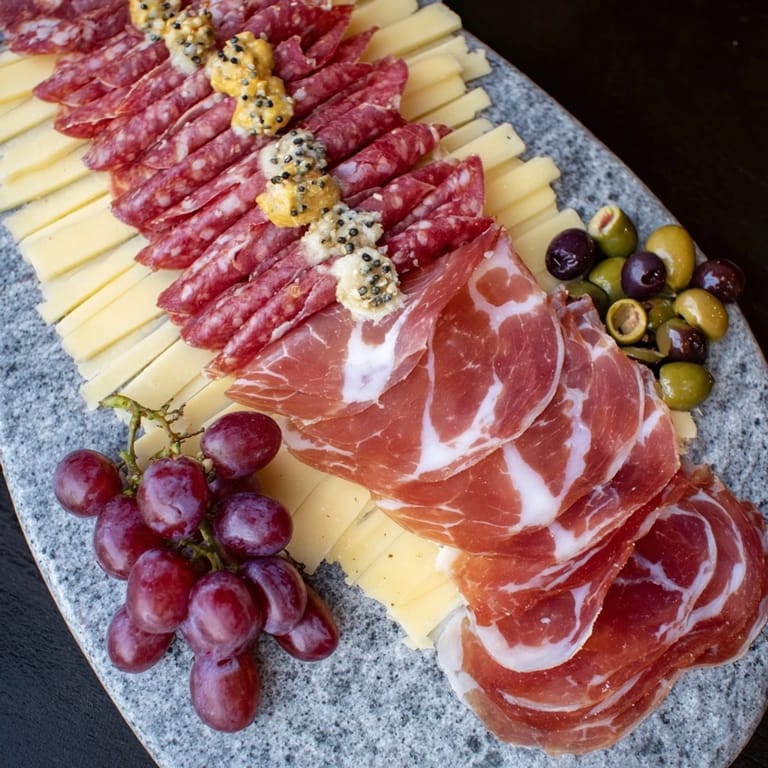
 The first time I arranged meat and cheese on slate, it wasn't planned. A friend was coming over, my kitchen was chaos, and I grabbed the heavy stone coaster from the fireplace in desperation. What started as a practical hack became the most striking thing I'd ever served—no fussy plating, no pretense, just beautiful ingredients in perfect rows. The stark lines somehow made everything taste sharper, bolder. Now I can't imagine serving these things any other way.
I served this at a dinner where someone brought the wrong wine. Instead of panicking, we leaned into the slate—something about the stark geometry made the mistakes feel deliberate, like we were in some minimalist gallery. By the second course, people weren't talking about what went wrong; they were breaking bread and reaching for more cheddar, debating which corner of the slate had the best balance. That's when I knew this wasn't just about the food.
Ingredients
- Smoked prosciutto: Paper-thin and salty, it needs space to breathe on the slate—don't let it overlap or it disappears into itself.
- Soppressata: The peppery one that speaks for itself; slice it thick enough that you see the little peppercorns glinting.
- Coppa: Marbled and luxurious, this one draws the eye, so place it where it can be the quiet star.
- Mortadella: Often overlooked but impossibly silky; it bridges the gap between the aggressive salts and the creamy cheeses.
- Aged cheddar: Look for one with a crystalline bite, something that crumbles slightly at the edges—that's where the real flavor lives.
- Manchego: Nutty and dense, it grounds the spread with a sense of place; Spanish slate pairs beautifully with Spanish cheese.
- Gruyère: The glue that holds a slate together, familiar and creamy enough to balance the sharp edges of everything else.
- Blue cheese: A small amount goes a long way; crumbled rather than sliced, it becomes a seasoning more than a star.
- Seedless red grapes: They're not just decoration—their sweetness is essential punctuation between bites of meat and salt.
- Cornichons: Tart and crunchy, they cut through richness and remind your palate to stay awake.
- Whole grain mustard: The texture matters as much as the taste; those little seeds catch between your teeth and keep things interesting.
- Mixed olives: Choose ones brined simply, not over-seasoned; let them be what they are, green and black side by side like a subtle conversation.
- Black pepper: Freshly cracked, not ground from a tin that's been sitting since last year—the aroma is part of the first impression.
Tired of Takeout? 🥡
Get 10 meals you can make faster than delivery arrives. Seriously.
One email. No spam. Unsubscribe anytime.
Instructions
- Set the stage:
- Place your slate on the table and take a moment to look at it. The imperfections, the weight, the slight irregularities—these are what make it beautiful. If you chill it first, everything stays fresher longer, and there's something satisfying about that cold surface under your fingers as you work.
- Map out the meats:
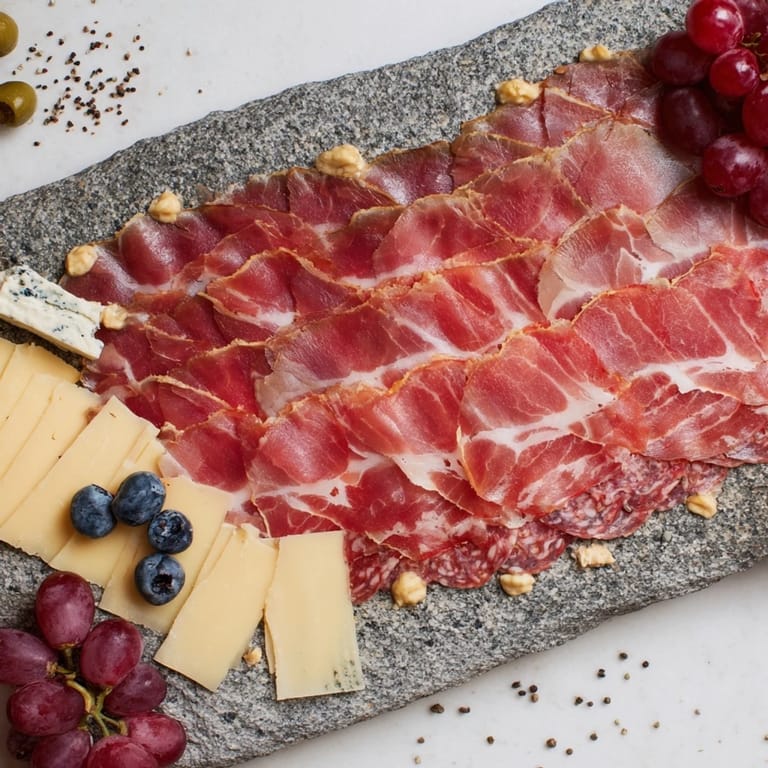
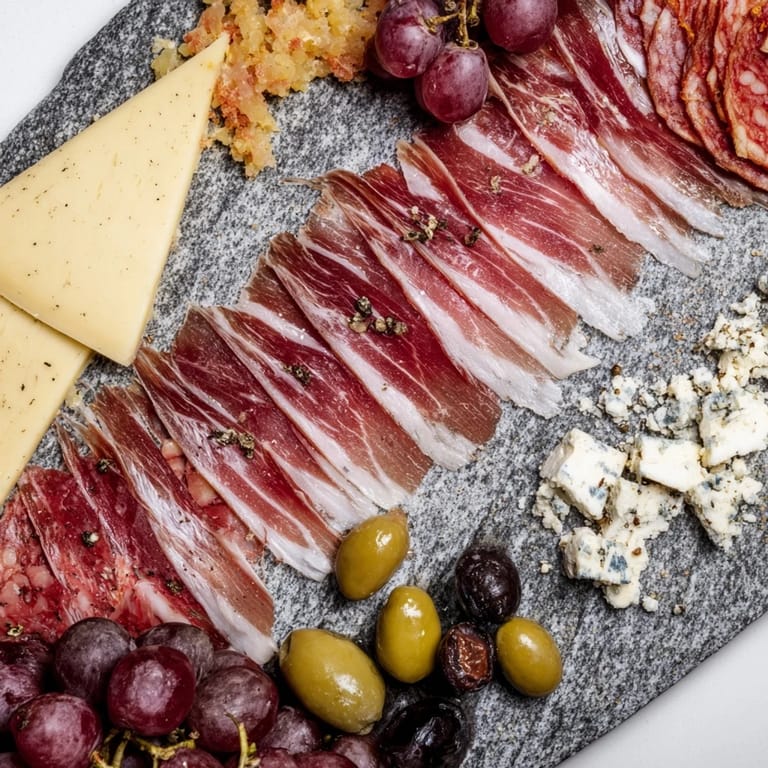
- On one side, create parallel lines with each type of meat, letting them touch but keeping the varieties distinct. Think of it less as arranging and more as drawing with your hands—each line should feel intentional, not fussy. The slight irregularities of the slate actually help here; they give your lines a reason to bend slightly.
- Balance with cheese:
- Opposite the meats, do the same with your cheeses, creating a visual echo. The contrast between the cool marble of the slate and the warm colors of the cheddar and Manchego is part of the meal already, before anyone tastes anything.
- Fill the spaces:
- Nestle small clusters of grapes in the negative space, letting them sit in little pockets. The cornichons go next, then the olives, scattered with enough intention that it looks purposeful but loose enough that it feels organic. You're not filling a void; you're adding breath between the elements.
- Add the condiments:
- Small dollops of mustard in a tight line or a single ramekin at the corner—this isn't about maximizing real estate, it's about knowing where you want someone's eye to travel. Let the mustard sit slightly separate, like it's waiting to be discovered rather than demanded.
- Finish with pepper:
- A light crack of fresh pepper over the top brings aroma and texture, making people lean in before they even taste. The pepper catches the light slightly, adding another dimension to the visual composition.
- Step back and breathe:
- Before serving, stand back and look at what you've made. Industrial doesn't mean cold; it means honest. This platter is exactly what it appears to be, and that simplicity is its power.
 Pin It
 There was a moment, late in the evening, when someone used a piece of the crispy mortadella to scoop blue cheese straight off the slate, and for a second everyone just looked at that small gap where it had been. No one apologized. We all started eating with our hands instead of the little knives I'd set out, and somehow that felt like permission to be less formal, more present. The slate had already done its job by then—it had made us want to lean in.
Building Your Slate Story
The magic of this spread isn't in any single ingredient; it's in how you tell the story of flavors and textures on a single surface. Think of it as a conversation where each element has its say but nobody dominates. The moment someone picks up a piece of soppressata and pairs it with a grape, they're writing their own line in that story. Your job is to give them the vocabulary—sharp against sweet, smooth against crystalline, briny against creamy. The slate is just the canvas; the eater becomes the artist.
Wine and Company
A crisp Sauvignon Blanc will cut through the richness and make the salt sing; a bold Cabernet will deepen the earthiness of the aged cheeses and meats. But honestly, the best pairing is whoever you're feeding. I've served this slate to people who wanted to talk all evening and people who wanted to sit quietly. It works for both. The simplicity creates space—space for conversation, space for silence, space for people to discover what they actually like without guidance.
The Art of Restraint
Modern plating often gets mistaken for empty space, but on a slate, every gap is intentional. You're not showing off by leaving areas bare; you're showing respect for the ingredients by letting them breathe. The slate's weight and imperfect surface remind you that perfection isn't the goal. Honesty is. A crumb slightly out of line, a line of cheese that bends instead of perfectly straightening—these aren't failures. They're proof that a human cared enough to pay attention.
- Less is genuinely more on a slate; resist the urge to cover every inch.
- The arrangement can be different every time—there's no one right way, which means there are infinite right ways.
- If something looks too polished or too perfect, you've probably gone too far.
 Pin It
 This isn't a recipe for when you're trying to impress; it's a recipe for when you want to feed people something beautiful and honest and then step back to let them enjoy it. That distinction matters.
Your Questions Answered
- → What types of meats are used in the platter?
The platter includes smoked prosciutto, soppressata, coppa, and mortadella, each arranged in neat, parallel lines for visual contrast.
- → Which cheeses complement the meats on this board?
Sharp cheeses such as aged cheddar, Manchego, Gruyère, and blue cheese are selected for their bold flavors and textures.
- → How can I create a vegetarian version of this platter?
Simply omit the cold meats and add marinated artichoke hearts and roasted nuts to maintain variety and texture.
- → What is the benefit of serving on a heavy stone slab?
The unpolished stone slab offers a rustic, modern aesthetic and helps keep ingredients cool longer when chilled in advance.
- → What accompaniments enhance the flavor of meats and cheeses here?
Seedless grapes, cornichons, mixed olives, and whole grain mustard add sweet, tangy, and savory contrasts that elevate each bite.
- → Are there any allergens to be aware of with the ingredients?
The board includes dairy from the cheeses and may contain nuts or gluten depending on ingredient variations; checking labels is advised.