 Pin It
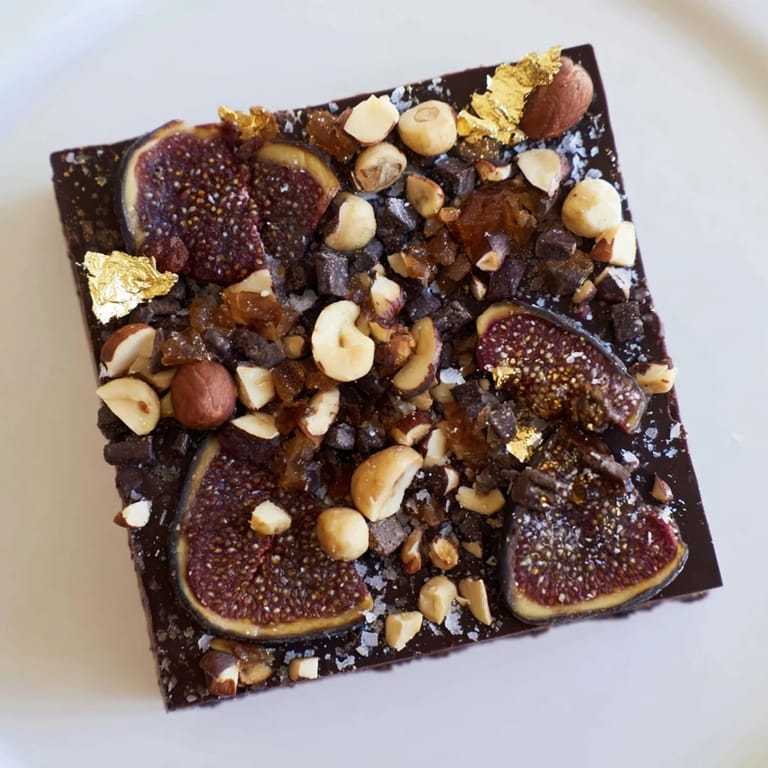
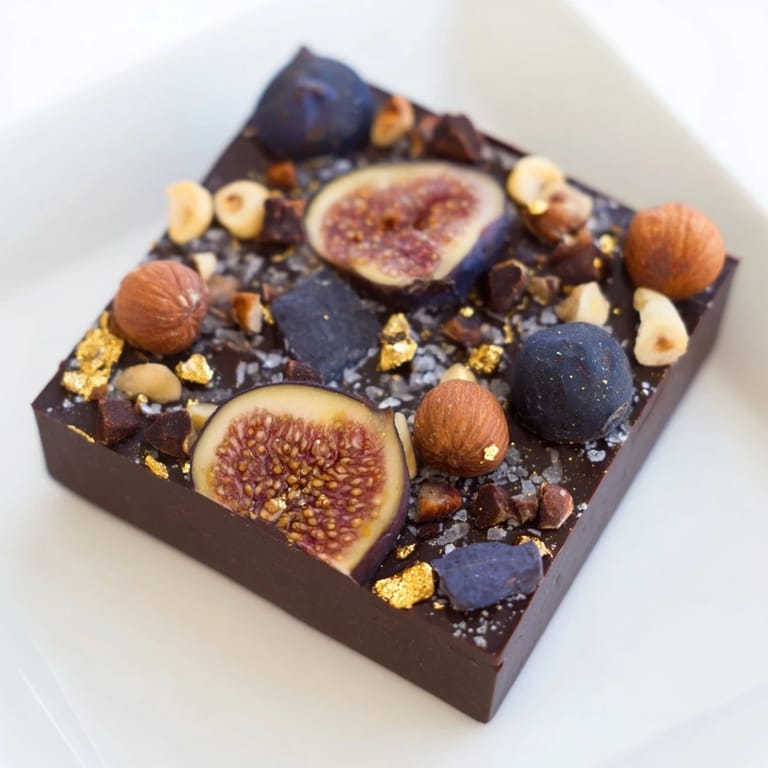
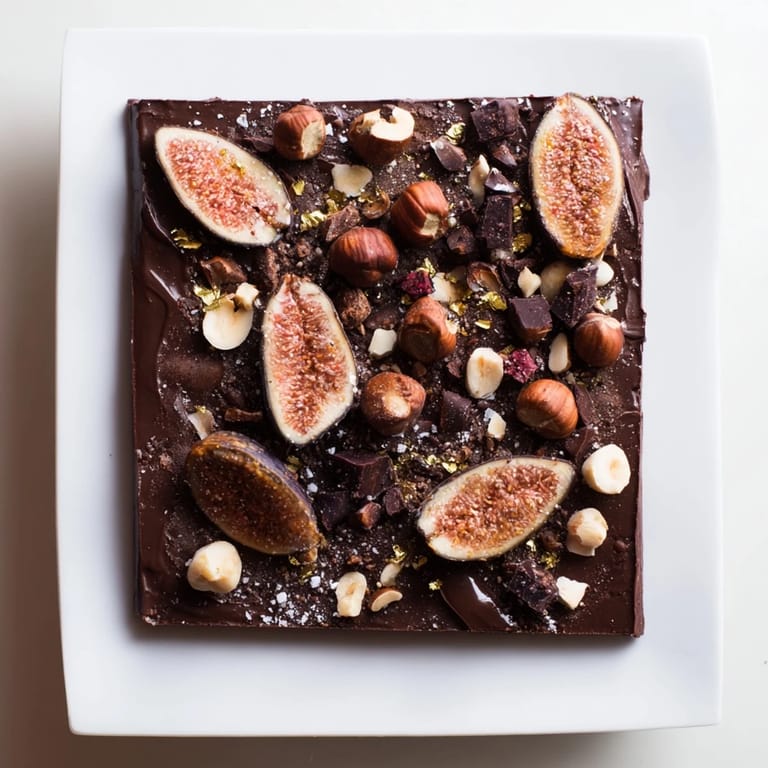
 I discovered this dessert by accident on a late night, scrolling through a food magazine with a cup of cold espresso, when a photograph of something dark and mysterious caught my eye. The image showed a glossy chocolate slab studded with jewel-like figs and the unexpected black pearls of olives, and I remember thinking: nobody combines these things, but somebody should. Three months later, after a handful of kitchen experiments and one particularly dramatic chocolate-tempering mishap, I'd created something that tastes like a secret whispered in the dark.
The first time I served this to friends, a skeptical food writer cut into a slice and went completely quiet, which I'd learned means either disaster or revelation. She bit down and tasted that collision of dark chocolate, briny olive, and sweet fig, and the look on her face told me everything. She asked for the recipe immediately, and I realized then that brave flavors create brave moments around a table.
Ingredients
- Dark chocolate (70% cocoa), 200 g chopped: The 70% cocoa content provides bittersweet depth without overwhelming the other flavors; cheaper chocolate will taste waxy and dull against the figs and olives.
- Unsalted butter, 60 g cubed: This creates a silky texture that makes the chocolate melt evenly on the tongue and prevents the slab from becoming too brittle.
- Honey, 1 tbsp: It adds a gentle sweetness that rounds out the bitterness and helps bind the components together.
- Sea salt, a pinch: The salt awakens all the flavors and adds that whisper of sophistication that makes people wonder what the secret ingredient is.
- Dried figs, 120 g thinly sliced: The sweetness of figs provides contrast to the olives and chocolate; softer figs slice more easily than dried-out ones.
- Pitted black olives, 80 g thinly sliced: Oil-cured olives are essential here because they have more complexity than water-cured varieties, adding that mysterious savory note.
- Roasted hazelnuts, 50 g chopped: Roasting deepens the nutty flavor and adds textural crunch that keeps each bite interesting.
- Cocoa nibs, 30 g: These provide bitter chocolate intensity without melting, creating little flavor bursts scattered throughout.
Tired of Takeout? 🥡
Get 10 meals you can make faster than delivery arrives. Seriously.
One email. No spam. Unsubscribe anytime.
Instructions
- Line Your Canvas
- Line a 20x20 cm square tin with parchment paper, letting the edges hang over the sides like a safety net. This makes lifting and slicing infinitely easier later, and you'll be grateful the moment you pull it out.
- Melt with Intention
- Set a heatproof bowl over barely simmering water and add the chopped chocolate and cubed butter together, stirring until the mixture becomes glossy and completely smooth. Remove from heat, stir in the honey and salt, and let the warmth bring everything into harmony.
- Spread the Foundation
- Pour the chocolate mixture into the prepared tin and spread it evenly with a spatula, creating a smooth, level base. Work quickly but gently so the chocolate doesn't cool and become difficult to spread.
- Build the Mosaic
- Scatter the sliced figs, black olives, hazelnuts, and cocoa nibs evenly across the warm chocolate, pressing each piece gently but firmly into the surface. Fill any gaps so the top becomes a dense, jeweled landscape with no bare chocolate showing through.
- Add the Finish
- Sprinkle flaky sea salt across the top, and add edible gold leaf or dried rose petals if you're feeling fancy. These final touches transform the dessert from impressive to unforgettable.
- Chill Until Set
- Refrigerate for at least 2 hours until the chocolate is completely firm and no longer gives when you press the surface. You can make this ahead and chill it overnight without any loss of quality.
- Slice and Serve
- Using the parchment as handles, lift the entire slab from the tin onto a cutting board, then slice into small squares with a sharp knife, wiping the blade between cuts for clean edges. Serve chilled or let it sit at room temperature for a few minutes so the chocolate softens slightly against your tongue.
 Pin It
 What surprised me most about this dessert is how it works as a conversation starter and a moment of quiet reflection at the same time. Serve it after dinner with strong coffee or a glass of vintage port, and watch as people taste something they didn't know they were missing.
The Science Behind the Flavor Collision
This dessert works because of complementary flavor compounds that seem contradictory on paper but create harmony on the palate. The bittersweet chocolate provides a rich, dark backdrop; the briny olives add umami and a savory whisper; the sweet figs bring fruity warmth; and the roasted hazelnuts add earthiness and crunch. Together, they create what flavor scientists call contrast harmony, where opposing tastes enhance rather than fight each other. The salt amplifies everything, acting as a flavor bridge that ties the components together into something greater than the sum of its parts.
When to Make This and Why
This is not a dessert for Sunday family dinners or potluck crowds; it's for dinner parties where people gather to be surprised, for late-night conversations with one close friend, or for that moment when you want to prove to yourself that you're brave in the kitchen. Make it when you've found really good ingredients, when you want to impress someone whose opinion matters, or when you simply want to taste something unexpected. It's the kind of dessert that stays with people long after they've left your kitchen.
Storage, Substitutions, and Serving Suggestions
Keep this dessert covered in the refrigerator for up to five days, and it actually improves slightly as the flavors deepen and settle together. For a vegan version, swap the unsalted butter for plant-based butter and use maple syrup instead of honey, though the flavor will shift slightly toward earthiness rather than brightness. If hazelnuts don't appeal to you, roasted almonds or pistachios work beautifully and bring their own personality to the mix. Pair it with port, dark espresso, or even a delicate white wine if you're feeling adventurous; the key is serving something complex alongside something complex.
- You can make this up to two days ahead and keep it chilled, which makes it perfect for dinner party planning.
- A sharp knife dipped in warm water between slices creates cleaner cuts and prevents the chocolate from sticking.
- If you can't find oil-cured black olives, marinated Kalamata olives work in a pinch, though the flavor will be slightly less briny and more Mediterranean.
 Pin It
 This dessert taught me that the most memorable flavors are often the ones that make you pause and ask, what is that? Make it when you want to remind yourself that cooking is about courage and curiosity as much as technique.
Your Questions Answered
- → How do I achieve a smooth chocolate base?
Melt dark chocolate and butter together over simmering water, stirring constantly until fully smooth before adding honey and salt.
- → Can I substitute the black olives?
Black olives add a briny contrast; however, you can try other oil-cured olives for similar depth or omit for milder taste.
- → What is the purpose of chilling the dessert?
Chilling helps the chocolate set firmly, ensuring the dessert holds its mosaic pattern and slices cleanly.
- → Are there vegan options for the chocolate base?
Yes, replace butter with plant-based alternatives and use maple syrup instead of honey for a vegan-friendly version.
- → How should this dessert be served?
Serve chilled or at room temperature, sliced into small squares to showcase the dense mosaic topping.