 Pin It
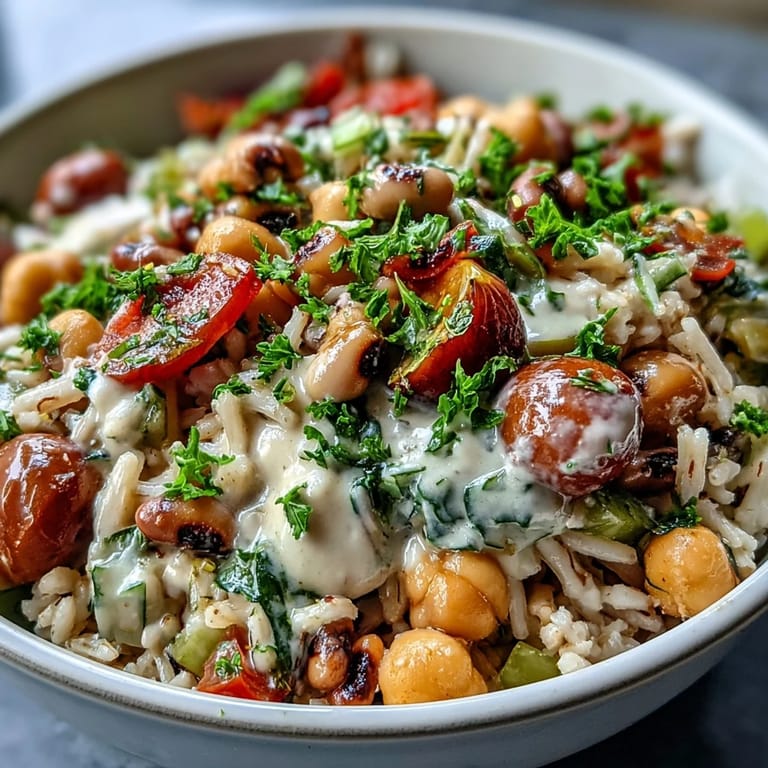
 My neighbor stopped by on December 30th with a jar of homemade tahini and a story about her grandmother's New Year's ritual. She talked about how Hoppin' John was supposed to bring luck, prosperity, and good fortune into the home, but she wanted something lighter, fresher, and honestly more interesting for modern celebrations. We stood in my kitchen that afternoon, and I started playing around with the idea of a salad instead of the traditional stew—keeping the soul of the dish but giving it new energy. What started as curiosity became the salad I've made every January 1st since, the one that somehow tastes like possibility.
I brought this to a friend's low-key New Year's gathering a couple years back, nervous it might seem too simple for a celebration dinner. Within minutes, people were coming back for thirds, and the bowl was emptied before the countdown even began. There's something about serving a salad that's both nourishing and exciting—it made everyone at that table feel like we were starting the year with intention, not just tradition.
Ingredients
- Black-eyed peas (1 cup dried or 1 can): The soul of Hoppin' John and the reason this salad feels ceremonial—they're creamy when cooked properly and hold their shape beautifully when tossed.
- Chickpeas (1 can, 15 oz): They add another layer of earthiness and keep the protein count high, plus their firmer texture contrasts nicely with the softer black-eyed peas.
- Long-grain rice (1 cup cooked): Make sure it's cooled completely before mixing so the salad stays fresh and the grains don't clump together.
- Red bell pepper (1 small, diced): The sweetness and crunch are essential here—it's what keeps every bite interesting.
- Celery stalk (1 small, diced): Adds a subtle mineral note that grounds the whole salad and prevents it from feeling too heavy.
- Red onion (1/2 small, finely chopped): Use red rather than yellow for the color and slightly milder flavor that doesn't overpower the delicate legumes.
- Cherry tomatoes (1 cup, halved): Fresh tomatoes bring brightness and prevent the salad from tasting dense or one-dimensional.
- Green onions (2, sliced): The raw onion sharpness here is crucial—it cuts through the creaminess of the dressing.
- Fresh parsley (1/4 cup, chopped): Don't skip this or use dried; the fresh herb adds a peppery lift that makes the whole dish feel alive.
- Tahini (1/4 cup): This is your dressing base and what makes this feel luxurious—splurge on good quality tahini if you can, the flavor difference is real.
- Lemon juice (2 tablespoons): Brightens everything and prevents the tahini from tasting too heavy or bitter.
- Apple cider vinegar (1 tablespoon): Adds depth and a slight tang that brings all the flavors into focus.
- Olive oil (1 tablespoon): Helps emulsify the dressing and adds silky mouthfeel.
- Maple syrup or agave nectar (1 teaspoon): Just enough sweetness to balance the savory and acidic notes without making it dessert-like.
- Garlic (1 clove, minced): Raw garlic provides a subtle punch that becomes more mellow as the salad sits.
- Water (2–3 tablespoons): Add this slowly to get the dressing consistency exactly right—too thin and it loses its richness, too thick and it won't coat.
- Salt (1/2 teaspoon): Brings out the nutty notes in the tahini and the earthiness of the legumes.
- Black pepper (1/4 teaspoon): Freshly ground is non-negotiable here.
- Smoked paprika (1/4 teaspoon, optional): Adds warmth and a hint of smokiness that echoes the traditional Hoppin' John without being obvious.
Tired of Takeout? 🥡
Get 10 meals you can make faster than delivery arrives. Seriously.
One email. No spam. Unsubscribe anytime.
Instructions
- Prepare your legumes with intention:
- If using dried black-eyed peas, rinse them under cold water and let them soak for at least 4 hours or overnight—this is the step that changes everything about the final texture. Drain and simmer in fresh water for 30–40 minutes until they're tender but not mushy, then drain and cool completely. If you're using canned, that's perfectly fine too; just rinse them thoroughly to remove the canning liquid.
- Get your rice ready:
- Make sure your cooked rice is completely cooled before you add it to the salad, or it'll steam everything and create a mushy situation. If you're making this fresh, spread the hot rice on a plate for a few minutes to cool it down faster.
- Build your salad base:
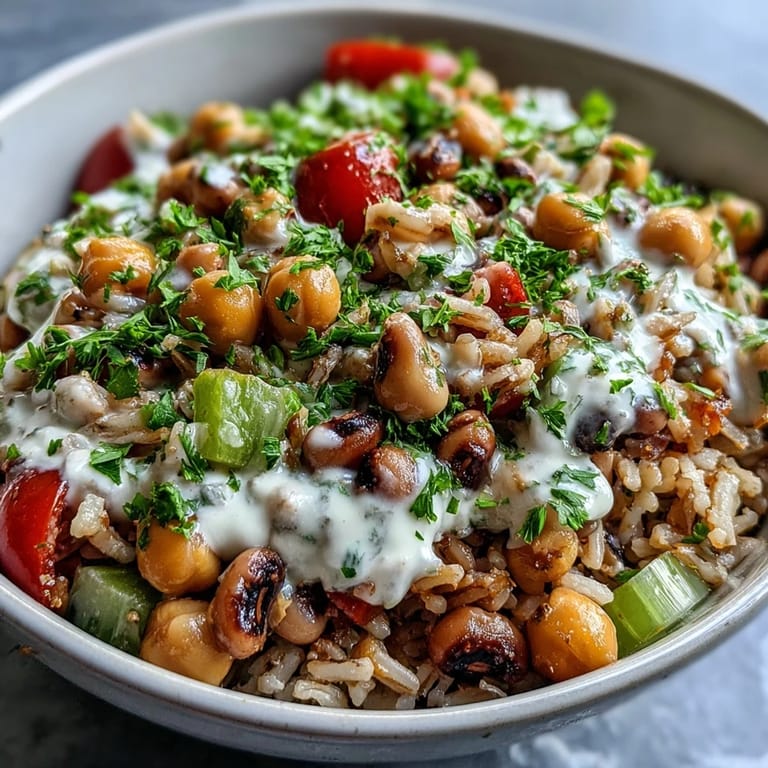
- In a large bowl, combine the cooled black-eyed peas, chickpeas, rice, diced bell pepper, celery, red onion, halved cherry tomatoes, sliced green onions, and chopped parsley. Don't overthink this part—just get everything in there and give it a gentle toss so it's roughly combined.
- Create the tahini magic:
- In a smaller bowl, whisk together the tahini, lemon juice, apple cider vinegar, olive oil, maple syrup, and minced garlic until they start to come together. Add your water one tablespoon at a time while whisking, tasting as you go—you want it to be creamy and pourable, not gluggy or watery.
- Bring it all together:
- Pour your dressing over the salad and gently toss everything until every ingredient is coated. Taste it now and add more salt, pepper, or lemon juice if needed—seasoning is your own edit here.
- Let it rest if you can:
- If you have even 30 minutes before serving, let the salad sit in the fridge so the flavors can get to know each other. Give it one more gentle toss before serving, as the dressing may settle at the bottom.
 Pin It
 My mom tried this salad for the first time last year and sat down halfway through eating it, like something had shifted. She said it reminded her that rituals don't have to stay the same to mean the same thing—they just have to come from the same place in your heart.
Why This Salad Works as Celebration Food
There's something about combining old tradition with new approaches that feels like the perfect metaphor for a new year. Black-eyed peas have been the symbol of luck and prosperity in Southern cooking for generations, and by turning them into a fresh, vibrant salad instead of a heavy stew, you're honoring that legacy while making something that feels energizing rather than heavy. The tahini dressing is what elevates this from a standard bean salad into something that feels deliberately luxurious and intentional.
Storage and Make-Ahead Magic
This salad is actually one of the best make-ahead dishes because the flavors continue to develop as it sits. You can assemble everything except the dressing the night before, keep it covered in the fridge, and mix up your tahini dressing fresh on the morning you're serving it. The whole thing will keep for up to 3 days, though by day 3 the tomatoes will have softened and the onion will have mellowed considerably—which some people actually prefer.
Custom Variations to Make It Your Own
This is a blank canvas, really, and I've learned to treat it that way. Some people add crispy chickpeas for extra crunch, others stir in fresh dill or cilantro depending on their mood. My friend who brought the tahini adds avocado and a handful of pumpkin seeds for richness, while another person I know makes it spicy with diced jalapeños and a pinch of cayenne in the dressing. The recipe is a foundation, but your kitchen wisdom matters more than the original instructions.
- Dice an avocado and add it just before serving for richness and creaminess that feels almost indulgent.
- If you want extra greens, a handful of chopped kale or arugula transforms it into something even more substantial.
- Leftovers are great cold, but if you're reheating, add a splash of water or lemon juice to refresh the dressing.
 Pin It
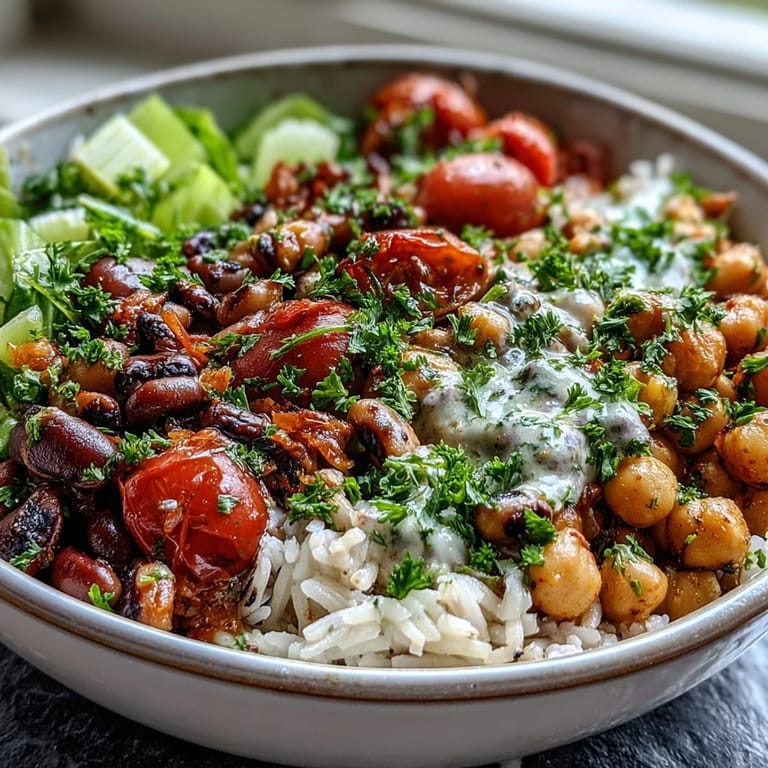
 Every time I make this salad, it feels like I'm making a small promise to myself about what the year could be. It's nourishing without being restrictive, traditional without being boring, and generous enough to feed both yourself and the people you want to celebrate with.
Your Questions Answered
- → What makes Hoppin' John traditionally lucky for New Year's?
Black-eyed peas symbolize coins and prosperity in Southern folklore, while the addition of rice represents abundance. Eating this dish on New Year's Day is believed to bring good fortune and financial success for the coming year.
- → Can I make this ahead of time?
Absolutely. This bowl actually improves after resting in the refrigerator for a few hours as the dressing permeates the ingredients. Store it in an airtight container for up to 3 days, though add fresh herbs just before serving for best texture.
- → What can I substitute for tahini?
Creamy sunflower seed butter makes an excellent sesame-free alternative. For a lighter version, Greek yogurt or a cashew-based cream also works, though you may need to adjust the lemon and seasonings to maintain the tangy balance.
- → Is this dish gluten-free?
Yes, all ingredients are naturally gluten-free. Just verify your tahini brand's certification, as some facilities process wheat products. Serve over quinoa or cauliflower rice instead of regular rice for an extra grain-free option.
- → How can I add more protein?
Consider mixing in diced grilled chicken, roasted shrimp, or even crumbled feta cheese. Hemp seeds or pumpkin seeds sprinkled on top add both protein and pleasant crunch without altering the flavor profile significantly.
- → What's the best way to cook dried black-eyed peas?
Soak dried peas overnight, then simmer in fresh water for 30-40 minutes until tender but not mushy. Adding a bay leaf and garlic clove to the cooking water enhances flavor. Avoid salt during cooking as it can toughen the skins.