 Pin It
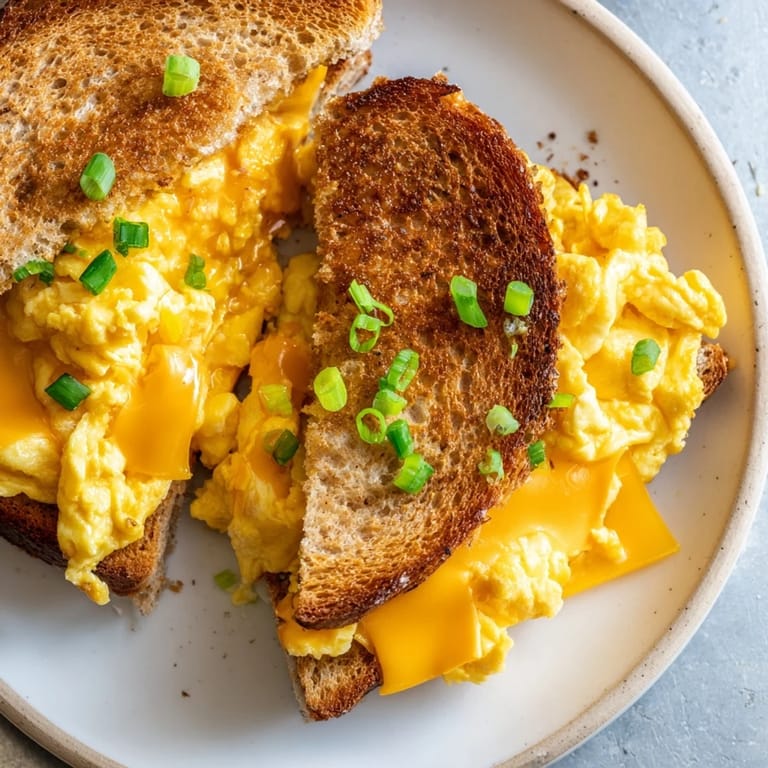
 There's something magical about cooking breakfast in one pan—less cleanup, more time to actually enjoy the morning. I discovered this sandwich completely by accident one weekday when I was running late and didn't want to dirty multiple dishes. I'd toasted the bread, the butter was already sizzling, and suddenly I had the thought: why not just pour the eggs right over it? Ten minutes later, I was eating the most perfectly soft, creamy egg sandwich, still warm and utterly simple. It became my go-to whenever I need something fast but still feel like I made a real breakfast.
I made this for my partner on a rainy Saturday, and the smell of butter toasting with eggs filling the tiny kitchen felt like a small act of care that morning. They ate it so quickly I barely had time to sit down, and the contentment on their face made me realize this wasn't just convenient—it was genuinely beloved. That's when I knew I'd stumbled onto something worth making again and again.
Ingredients
- Large eggs (3): These are your base and should be at room temperature if you have the time; they scramble more evenly and create that silky texture you're after.
- Milk (2 tablespoons): This loosens the eggs and makes them creamy rather than dense—whole milk is ideal, but any milk works.
- Salt and black pepper: Season boldly; the eggs will taste flat otherwise, and there's nowhere for the seasoning to hide in a one-pan situation.
- Sturdy sandwich bread (2 slices): Sourdough or whole wheat stands up to the moisture and butter without falling apart, unlike soft white bread which turns to mush.
- Unsalted butter (1 tablespoon): This amount is enough to coat the pan, toast the bread, and create that golden crust that makes the whole thing special.
- Cheddar cheese (2 slices): Cheddar melts predictably and adds a gentle sharpness, but use whatever cheese you love—swiss, gruyère, or even american works beautifully.
- Chives or green onions (2 tablespoons, optional): A small sprinkle at the end adds brightness and a hint of onion flavor that lifts everything.
Tired of Takeout? 🥡
Get 10 meals you can make faster than delivery arrives. Seriously.
One email. No spam. Unsubscribe anytime.
Instructions
- Whisk the eggs with intention:
- In a bowl, combine your eggs, milk, salt, and pepper and whisk until the color is uniform and no streaks of white remain. This takes less than a minute and ensures even cooking.
- Get your pan ready:
- Heat a large nonstick skillet over medium heat and let it warm for about 30 seconds before adding the butter. Swirl it around so it coats the entire bottom—this is your non-stick insurance policy.
- Toast the bread properly:
- Place both bread slices side by side in the butter and let them sit undisturbed for 1–2 minutes until the bottom is golden and crispy. Flip them over so the toasted side faces up and will eventually face inward when you fold the sandwich.
- Pour and pause:
- Pour your whisked egg mixture directly over and around the bread slices. Let it sit for about 10–15 seconds—this gives the bottom a chance to set slightly so the bread doesn't absorb all the liquid unevenly.
- Gently scramble toward the edges:
- Using a spatula, push the eggs slowly toward the sides of the bread, allowing the uncooked egg from the top to flow underneath. Work slowly and gently; you're creating creamy curds, not aggressive scramble.
- Layer the cheese:
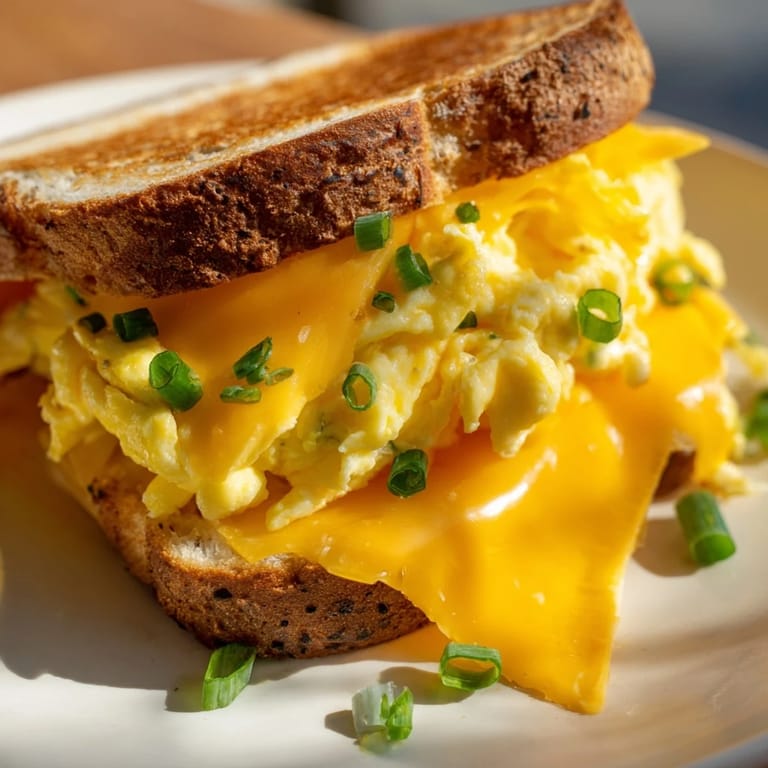
- Once the eggs are mostly cooked but still slightly wet on top, lay one slice of cheese on each piece of bread. The residual heat will begin melting it immediately.
- Fold into a sandwich:
- Use your spatula to fold any loose cooked egg onto the bread, then carefully slide one bread slice over the other to form a sandwich. Press down gently so everything adheres.
- Final cook and melt:
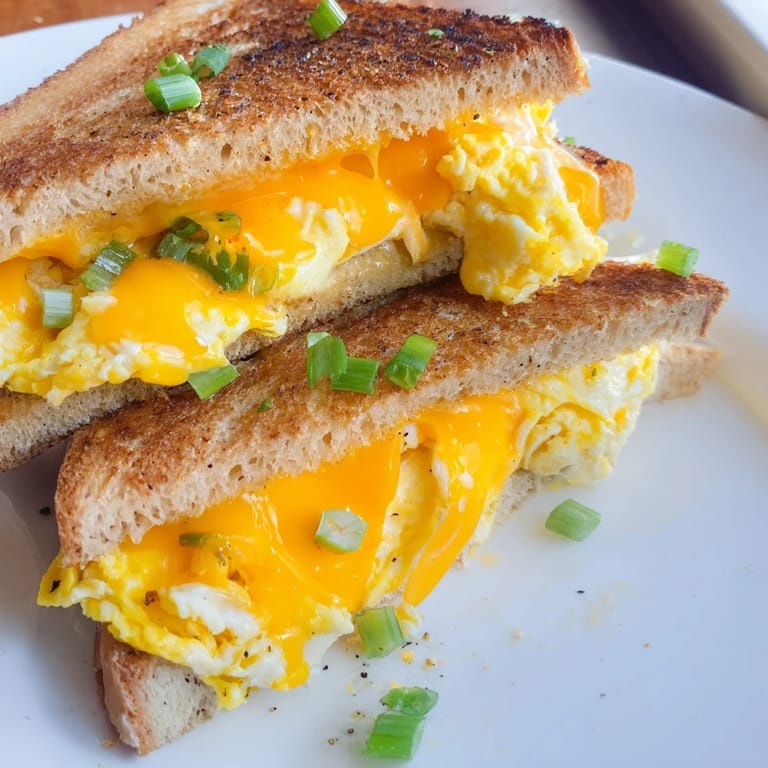
- Cook for another 1–2 minutes, pressing gently with your spatula, until the cheese is fully melted and the outside is golden. You're not looking for crispness; you want it warm, cohesive, and barely holding together.
- Finish and serve:
- Transfer to a plate, cut in half if you like, and sprinkle with chives or green onions if using. Eat it while the cheese is still warm and the bread is still soft on the inside.
 Pin It
 I remember the moment I realized this sandwich was more than breakfast—it was an expression of something intimate about how I cook now. It's fast but not rushed, simple but intentional, and it tastes like you actually cared about your own morning. That shift in perspective changed how I see the whole recipe.
Why This Works as One-Pan Cooking
The genius of cooking the bread and eggs in the same pan is that they become inseparable. The bread acts as a vehicle for all the buttery, eggy flavors pooling around it, while the eggs gain structure from the warm bread itself. There's no wasted heat, no juggling multiple pans, and every surface gets used. It's the kind of simple efficiency that feels almost accidental until you realize you've stumbled onto something smarter than you intended.
Variations That Still Feel Natural
The base recipe is sturdy enough to handle add-ins without falling apart. I've folded in crispy bacon, sautéed spinach, sliced tomatoes, and even a tiny bit of hot sauce before cooking—each one finds a home in the eggs or nestles between the bread and cheese. The key is not to overload it; you want two or three add-ins maximum, or the bread starts to struggle with the weight.
The Small Moments That Make It Special
This sandwich teaches you to pay attention to sound—when the butter hits the pan and starts to sizzle, you know the temperature is right. Listen for the gentle fry of the egg hitting the hot surface, watch for the bread to deepen in color. These tiny sensory cues are your guide, more reliable than any timer.
- Serve it immediately with your favorite condiment—ketchup, hot sauce, or even a dab of mayo on the side.
- If you're doubling this for more people, cook one sandwich at a time rather than crowding the pan.
- Leftovers don't reheat well, so this is truly a cook-to-order kind of breakfast.
 Pin It
 This is the kind of recipe that sneaks into your regular rotation because it asks so little but delivers so much. Make it once, and you'll find yourself craving it on mornings when you need something both nourishing and fast.
Your Questions Answered
- → How do I get soft scrambled eggs on the bread?
Whisk eggs with milk and pour over toasted bread in a warm, buttered skillet. Let eggs set briefly, then gently push uncooked eggs under the bread edges to cook evenly.
- → Can I use different types of bread?
Yes, sturdy sandwich breads like sourdough, whole wheat, or gluten-free options work well for toasting and holding the eggs.
- → What cheese works best for melting on this sandwich?
Cheddar is classic and melts nicely, but feel free to use mozzarella, Swiss, or any favorite melting cheese.
- → Can I add extra toppings?
Absolutely! Cooked bacon, ham, or sautéed vegetables can be added for more flavor and texture.
- → How do I prevent the bread from getting soggy?
Toasting the bread first and cooking eggs carefully helps keep the sandwich from becoming soggy while ensuring eggs cook fully.