 Pin It
 My grandmother's kitchen smelled like wood smoke and possibility, especially on New Year's Day when she'd make her Hoppin John. Years later, standing in my own kitchen with a bag of black-eyed peas and no bacon in sight, I realized this Southern staple didn't need meat to be magnificent. The smoked paprika does something magical, filling the air with that same warmth I remember, and suddenly this plant-based version felt like a love letter to her cooking rather than a compromise.
I made this for my friend Marcus on a chilly January evening, and watching him take that first bite, close his eyes, and just nod was everything. He didn't say it was vegetarian at first, just said it reminded him of his mom's cooking, and that's when I knew the recipe had something real going for it. Food that carries that kind of memory across kitchens and backgrounds feels like it's doing its job.
Ingredients
- Olive oil: Just enough to get everything shimmering and prevent sticking, nothing fancy required.
- Onion, green bell pepper, and celery: This trio is the holy trinity of Southern cooking, and together they create a flavor foundation that makes everything taste intentional.
- Garlic: Three cloves minced fine will perfume your whole kitchen in under a minute.
- Black-eyed peas: Canned and rinsed saves time without sacrificing quality, and they absorb all the spice flavors beautifully.
- Smoked paprika: This is your secret weapon for that savory, almost bacon-like depth that makes people ask what's in here.
- Thyme, oregano, and cumin: Each one adds a different whisper of flavor that builds into something unmistakably complex.
- Cayenne pepper: Keep this optional but within reach because the heat is totally your call.
- Bay leaves: Two of them will steep into the liquid and vanish by the end, but they matter more than you'd think.
- Vegetable broth and soy sauce: The broth is your cooking medium, and the soy sauce adds umami that rounds out all those spices.
- Rice, fresh herbs, and lemon: These finishing touches turn a pot of peas into something that feels restaurant-worthy on a weeknight.
Tired of Takeout? 🥡
Get 10 meals you can make faster than delivery arrives. Seriously.
One email. No spam. Unsubscribe anytime.
Instructions
- Build your flavor base:
- Heat oil over medium heat and add your diced vegetables, letting them soften for about six minutes while you listen to them sizzle. You're looking for the onions to turn translucent and everything to smell sweet and tender.
- Wake up the garlic:
- Once the vegetables have softened, add minced garlic and stir constantly for just one minute until the raw edge disappears and your kitchen smells like something wonderful is about to happen.
- Toast the spices:
- Add all your dried spices and stir them into the vegetables for about thirty seconds, coating everything evenly. This brief moment of dry heat releases the oils in the spices and prevents them from tasting dusty in the final dish.
- Bring it together:
- Pour in your rinsed black-eyed peas, vegetable broth, soy sauce, and bay leaves, stirring everything until it looks cohesive. The mixture will seem a bit loose at this point, and that's exactly right.
- Let time do the work:
- Bring the pot to a gentle simmer, then turn the heat down and let it cook uncovered for twenty to twenty-five minutes, stirring every few minutes. You'll watch the liquid reduce and thicken while the flavors deepen, creating something that tastes like it's been cooking for hours.
- Taste and adjust:
- Fish out the bay leaves, give everything a gentle stir, then taste carefully. Add more salt, heat, or even a squeeze of lemon juice if something feels like it needs balancing.
- Plate with care:
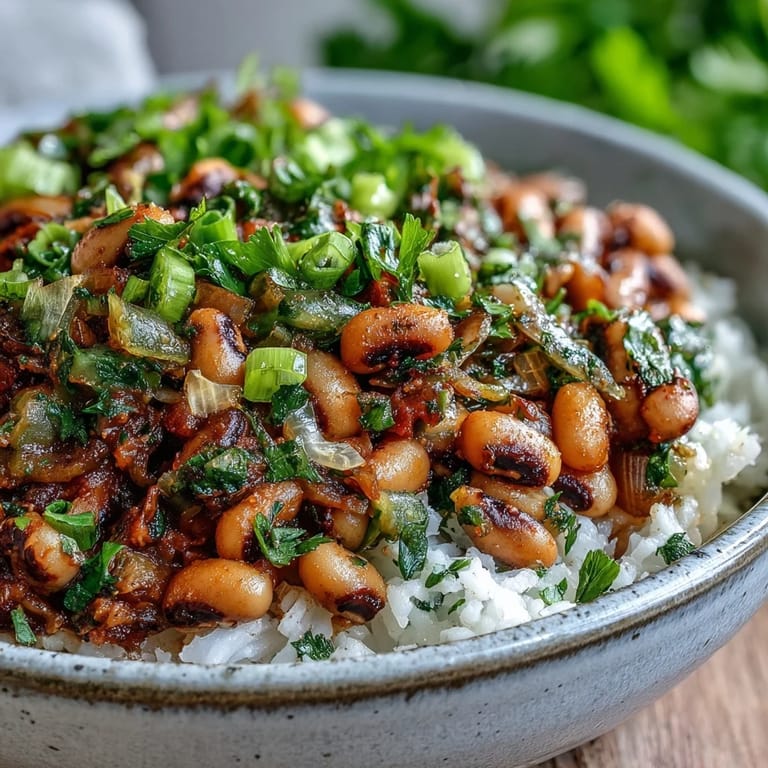
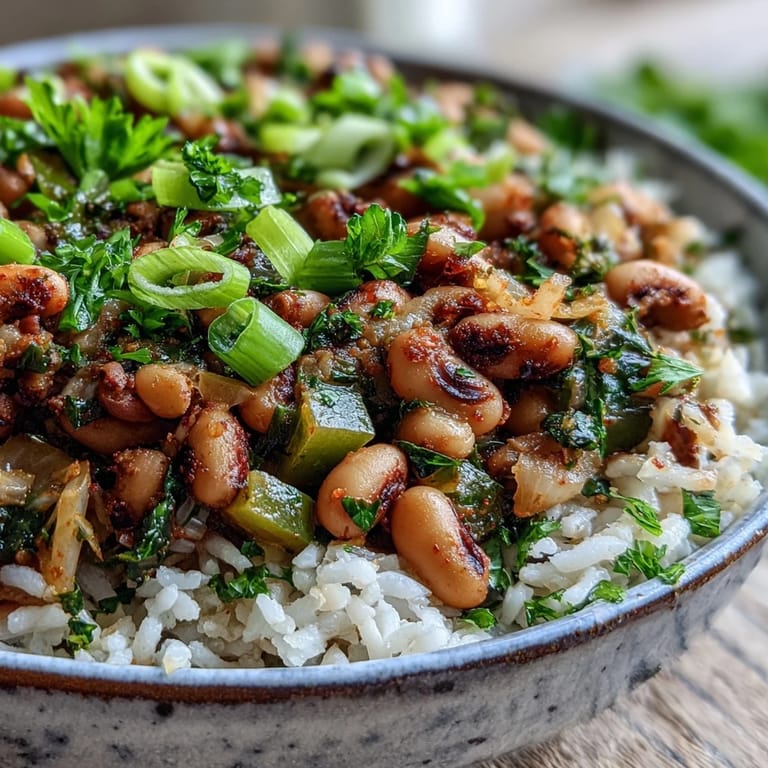
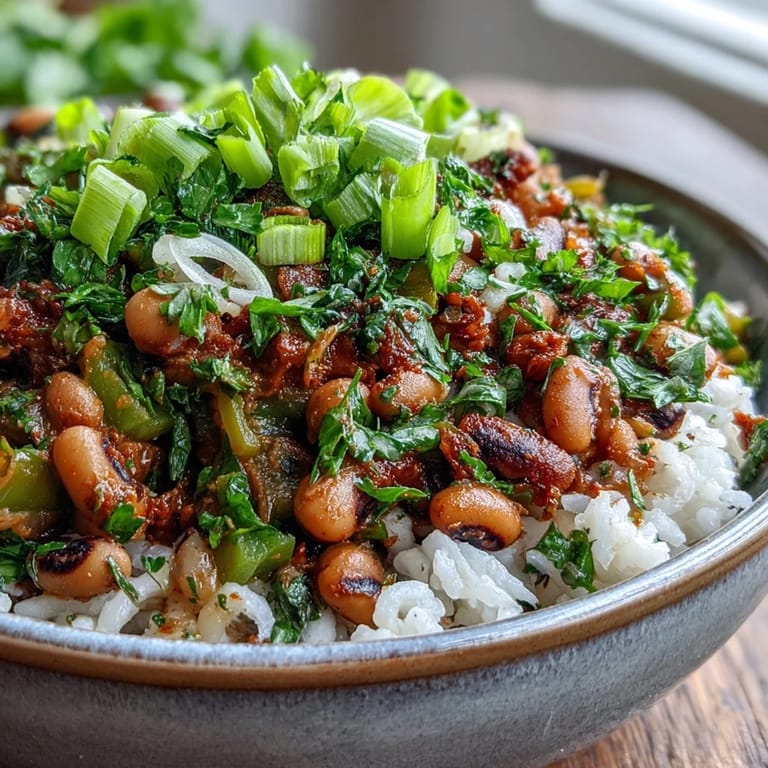
- Spoon the hoppin john over warm rice and finish with a handful of fresh herbs, some thinly sliced green onions, and a wedge of lemon on the side for anyone who wants brightness.
 Pin It
 There's a moment somewhere around minute twenty of cooking when you step away to do something else and come back to a pot that smells like a country kitchen you've never been to but somehow recognize. That's when you know the recipe is working, when the dish becomes something bigger than the sum of ingredients you threw together.
Making This Dish Your Own
The beauty of hoppin john is how forgiving it is once you understand the basic structure. I've made it with kidney beans when I couldn't find black-eyed peas, swapped in fresh thyme when I was out of dried, and even added a splash of hot sauce at the end because someone at the table asked for more kick. None of these changes broke the dish, they just shifted its personality slightly. Trust your instincts with the vegetables too, especially if you have extra celery or want to add some diced carrots for sweetness.
The Smoke Question
The smoked paprika is already doing heavy lifting to replace the smokiness you'd get from traditional bacon or ham hock, but sometimes I find myself wanting even more of that flavor. This is when liquid smoke becomes your friend, though you only need a few drops because it's intense and can easily overpower the dish if you're not careful. I've also used chipotle powder instead of cayenne in moments when I wanted that smoky heat combination, and it creates a completely different but equally satisfying flavor profile.
Serving and Storage
Hot hoppin john over warm rice is the classic approach, but I've also served it over creamy polenta or alongside crusty bread when I wanted to stretch it further. Leftovers keep beautifully in the refrigerator for about four days, and the flavors actually deepen when it sits overnight, which is one of those unexpected gifts that makes weekday lunches feel less like settling and more like planning ahead.
- Reheat gently on the stovetop with a splash of water to restore the sauce and prevent drying out.
- Serve with collard greens, hot sauce, or pickled vegetables alongside for a complete Southern plate.
- Double the recipe for meal prep since it only gets better as it sits.
 Pin It
 This vegetarian hoppin john taught me that honoring a recipe doesn't always mean following it exactly as tradition demands, but rather understanding what makes it work and building on that foundation. Every time I make it, I think of my grandmother and all the kitchens that came before mine, grateful I can carry forward something that tastes like home.
Your Questions Answered
- → What makes this dish vegetarian?
Traditional Hoppin John often contains pork or bacon for flavor. This version uses smoked paprika and soy sauce to achieve that savory depth without any meat products, making it completely plant-based while maintaining the classic Southern profile.
- → Can I use dried black-eyed peas instead of canned?
Absolutely. Soak dried peas overnight, then simmer for about 45-60 minutes until tender before adding them to the vegetables. You'll need about 1.5 cups of dried peas to equal the two cans. Adjust the cooking liquid as needed since dried peas may absorb more liquid.
- → How do I store and reheat leftovers?
Store the pea mixture and rice separately in airtight containers in the refrigerator for up to 4 days. Reheat gently on the stovetop with a splash of broth or water to loosen the consistency. The flavors often develop and improve after a day or two.
- → What sides pair well with this dish?
Collard greens, sautéed kale, or roasted vegetables make excellent sides. Cornbread, biscuits, or crusty bread complete the Southern meal. For extra heat, serve with hot sauce or pickled peppers on the side.
- → Can I make this dish spicy?
The cayenne pepper adds mild heat. For more spice, increase the cayenne amount, add diced jalapeño with the vegetables, or use chipotle powder instead of smoked paprika. Hot sauce as a garnish lets diners adjust heat individually.
- → Is Hoppin John traditionally served for New Year's?
Yes, Hoppin John is a Southern New Year's tradition. Black-eyed peas symbolize coins and prosperity, while rice represents abundance. This vegetarian version honors that tradition while accommodating plant-based diets.