 Pin It
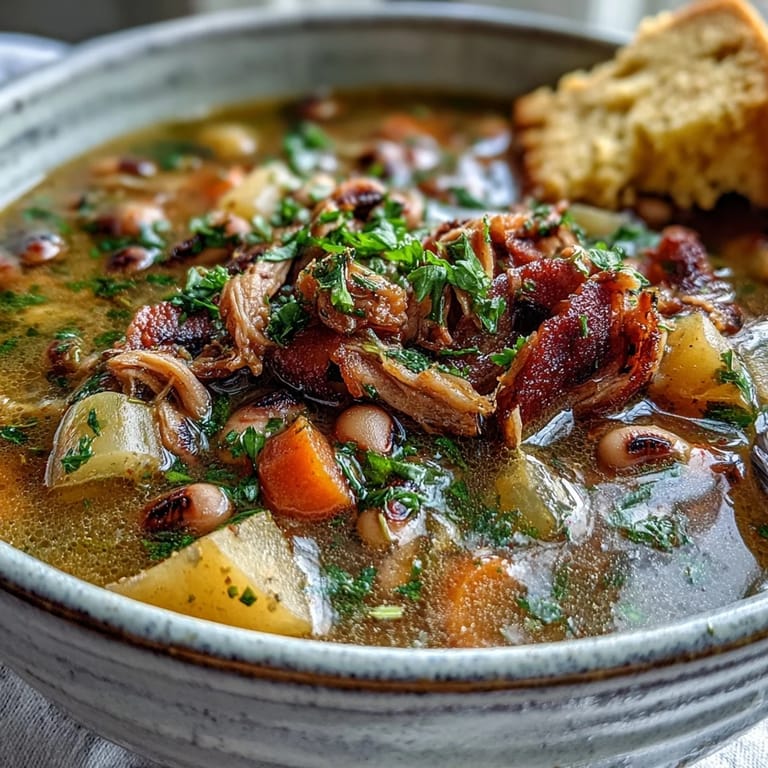
 My grandmother used to make this stew on the coldest January mornings, and the whole house would smell like smoke and thyme by noon. There was something about watching those ham hocks break down into the broth, turning it golden and rich, that made everything feel intentional and unhurried. I didn't appreciate it then, but now I understand she was teaching me that the best meals require patience and good ingredients working together quietly. This black-eyed pea stew carries all of that forward, and honestly, it tastes even better when you make it for someone you want to feed well.
I made this for a group of friends on a rainy Saturday when nobody felt like going out, and something shifted in the room the moment I ladled it into bowls. One person asked for seconds before finishing their first bowl, and another person's eyes got a little wet without explanation. That's when I realized this stew does something beyond filling your stomach—it creates a moment where everyone slows down together.
Ingredients
- Smoked ham hocks (about 1.5 lbs): These aren't just seasoning—they're the backbone of the whole stew, releasing collagen and smoke flavor as they simmer, which is why you can't rush this or substitute them with bacon bits.
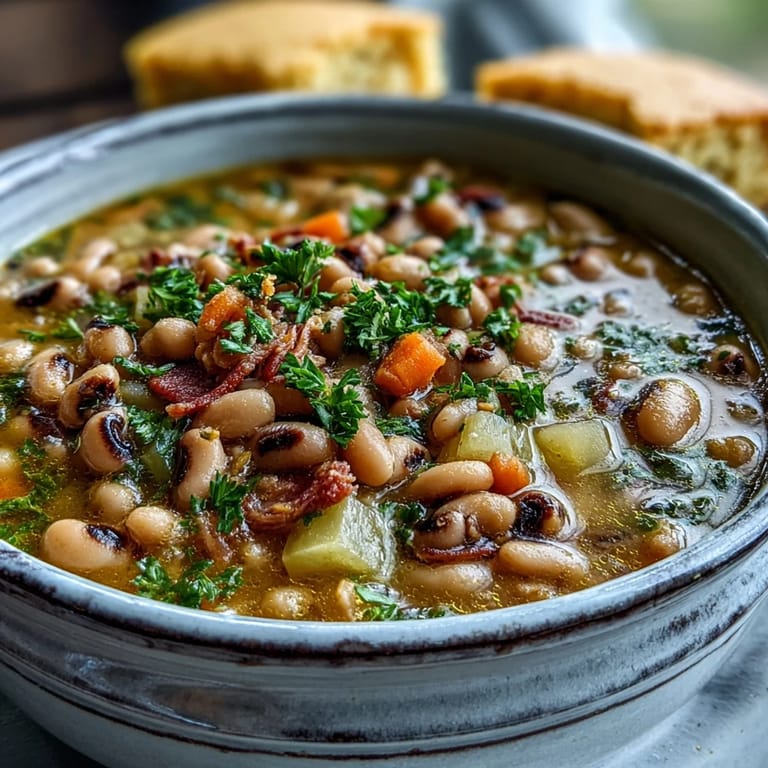
- Dried black-eyed peas (2 cups, soaked overnight): Soaking overnight isn't busywork; it cuts cooking time and makes them creamy instead of grainy, though canned works if you're short on time.
- Onion, carrots, and celery (1 onion, 2 carrots, 2 stalks): This trio is where savory depth begins—dice them roughly the same size so they cook evenly and release their sweetness into the broth.
- Potatoes (2 medium, cubed): They thicken the stew naturally as they break down, so don't skip them just because they seem like filler.
- Garlic (3 cloves, minced): Add it after the vegetables soften so it doesn't burn and turn bitter—that single minute makes the difference between sharp and round.
- Diced tomatoes with juice (1 can, 14.5 oz): The acid brightens everything and keeps the broth from tasting one-note, so use the juice and don't drain it.
- Chicken or vegetable broth (6 cups): Low-sodium lets the ham hocks speak without competing flavors, and you can always add salt at the end but can't take it out.
- Bay leaves, thyme, smoked paprika, black pepper, cayenne (as listed): Smoked paprika echoes the ham and ties the whole flavor story together, while cayenne is optional but worth a pinch if you like heat.
- Fresh parsley and hot sauce (garnish): Parsley adds brightness at the end, and hot sauce lets people control their own spice level without you deciding for them.
Tired of Takeout? 🥡
Get 10 meals you can make faster than delivery arrives. Seriously.
One email. No spam. Unsubscribe anytime.
Instructions
- Soak your peas the night before:
- If you're using dried black-eyed peas, cover them with plenty of cold water and let them sit overnight—they'll soften and cook faster, and the water keeps them from fermenting. If you forget or are in a hurry, canned peas work just fine, just rinse them well.
- Build your flavor base:
- Heat a splash of oil in your Dutch oven over medium heat and add the onion, carrots, and celery—let them soften and turn a little translucent, about 5 minutes, then stir in the garlic and cook just until fragrant. This step is where you're developing the base sweetness that balances the smokiness later.
- Bring everything together:
- Add the ham hocks, drained peas, potatoes, tomatoes with their juice, broth, and all your seasonings—the bay leaves, thyme, smoked paprika, pepper, and cayenne if you're using it. Stir it all so nothing sticks to the bottom, then turn the heat up to bring it to a boil.
- Let it simmer low and slow:
- Once it boils, reduce the heat to low, cover the pot, and leave it alone for about 2 hours, stirring every 20 minutes or so—the peas should be completely tender and the ham should be falling off the bone. You'll smell the smoke getting deeper and richer, and that's exactly what you want.
- Shred and return the ham:
- Pull the ham hocks out carefully—they'll be soft and fragile—and pick the meat off the bone, discarding the skin, fat, and bone. Chop or shred the meat and stir it back into the pot, letting it warm through in all those flavors.
- Finish and taste:
- Taste the stew and add salt until it tastes like itself, not bland but not aggressive either. If you want it thicker, simmer uncovered for another 10 to 15 minutes—the broth will reduce and concentrate.
- Serve with intention:
- Fish out the bay leaves, ladle into bowls, and garnish with fresh parsley if you have it—the green lifts the earthiness and reminds people that this is a complete meal, not just comfort in a bowl.
 Pin It
 There's a moment when you're standing over a pot of simmering stew and you realize it smells nothing like the ingredients anymore—it smells like something completely new, like home, like care. That's when you know you're making something that matters beyond nutrition, and that feeling is exactly why I keep coming back to this recipe.
Why Black-Eyed Peas Matter
Black-eyed peas have been feeding people through hard times and celebrations alike, and there's something powerful about that continuity. They're not fancy, but they're sturdy and creamy when cooked right, and they absorb all the flavors around them like little sponges. In the South, they show up on New Year's Day for luck, but honestly, they're lucky any time you make them because they turn a simple broth into something substantial and nourishing.
The Ham Hock Secret
Ham hocks are where cooks find out the difference between seasoning food and cooking with an ingredient that transforms everything. They're inexpensive and underrated, and they release a kind of richness that you can't fake with stock cubes or liquid smoke alone. If you've never cooked with them before, this recipe is your permission to start—they're worth the two hours of waiting.
Serving and Storage Wisdom
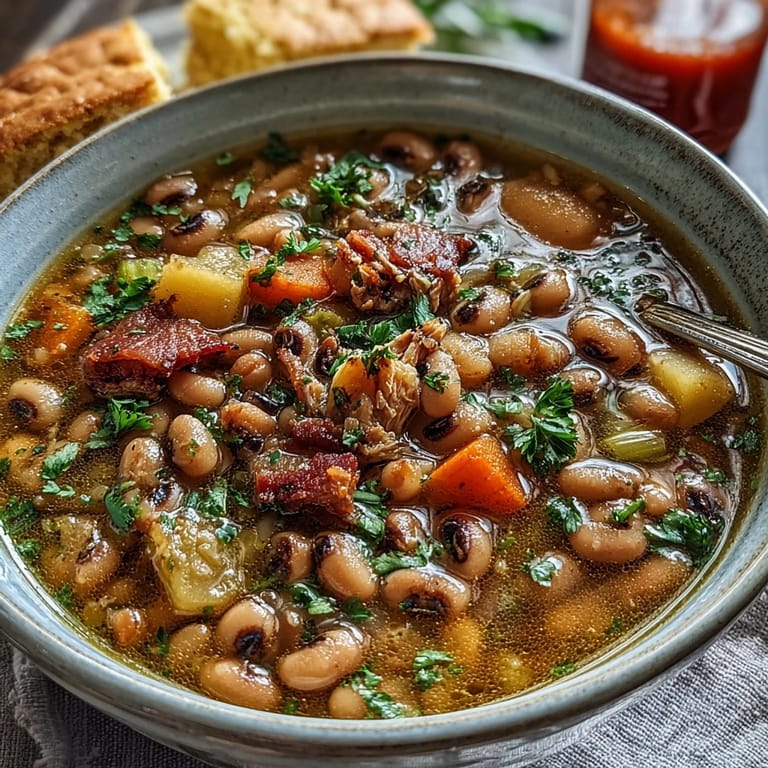
This stew tastes better the next day, which is one of those kitchen truths that feels like magic but is actually just science—the flavors marry overnight and everything settles into harmony. Serve it in wide bowls with cornbread on the side or over rice if you want something to catch the broth, and always pass hot sauce so people can adjust the heat to their preference. Leftovers keep well for three days in the refrigerator, and it freezes beautifully for up to two months if you want to make a double batch.
- Reheat gently on the stovetop over medium heat, stirring occasionally, and add a splash of broth if it thickens too much.
- Hot sauce on the side lets everyone control their own spice level without you guessing wrong.
- Make cornbread in a cast iron skillet while the stew simmers so everything finishes at the same time.
 Pin It
 This stew teaches you that the best meals don't rush—they unfold over time, filling your kitchen and your life with warmth. Make it when you need to slow down or when you want to feed people something that says you care.
Your Questions Answered
- → Do I need to soak the black-eyed peas?
Yes, if using dried black-eyed peas, soak them overnight in plenty of water. This ensures even cooking and tender texture. Alternatively, you can use canned peas to save time.
- → Can I make this vegetarian?
Absolutely. Simply omit the ham hocks and use additional smoked paprika or a few drops of liquid smoke to maintain that smoky depth of flavor. Vegetable broth works perfectly in place of chicken broth.
- → How long does this stew keep?
The flavors actually improve over time. Store in an airtight container in the refrigerator for up to 3 days. The stew can also be frozen for up to 3 months.
- → What should I serve with this?
Cornbread is the classic Southern pairing, but crusty bread, steamed rice, or buttermilk biscuits all work wonderfully to soak up the flavorful broth.
- → Is it spicy?
The cayenne is optional and adds just a gentle warmth. Without it, the stew has mild heat primarily from the black pepper. Adjust the cayenne to your preference or serve with hot sauce on the side.