 Pin It
 There's something deeply satisfying about layering a lasagne directly in the pan you'll bake it in—no transferring, no fuss, just honest cooking. I discovered this one-pan method on a drizzly autumn evening when I wanted comfort food but absolutely no extra dishes to wash afterward. What started as a lazy shortcut became my favorite way to make lasagne, especially when I swapped the traditional meat for smoky red lentils and roasted vegetables that somehow taste even more substantial. The smoked paprika was the real revelation, turning what could've been just another veggie bake into something with real character and depth.
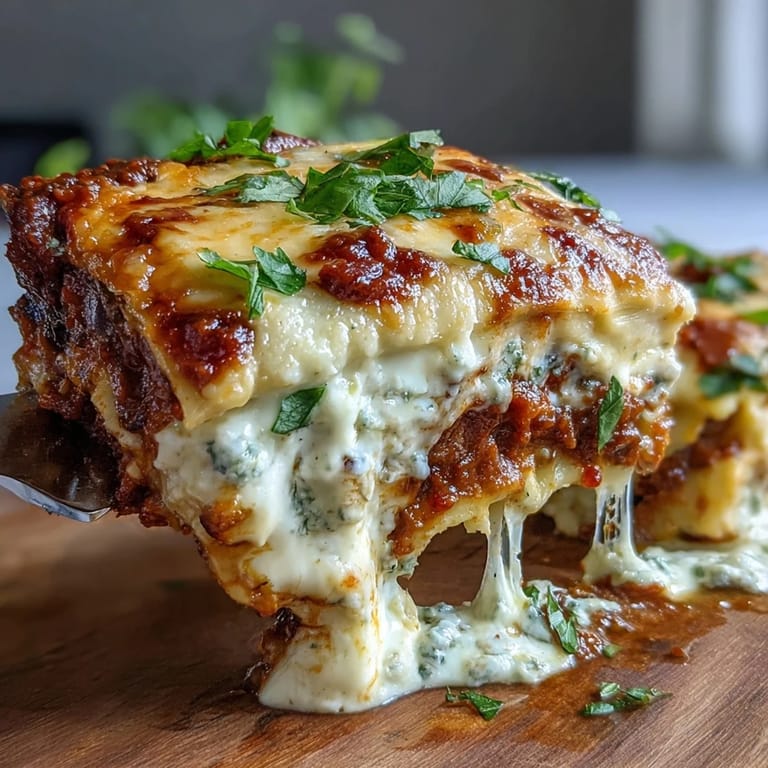
I made this for my partner on a Sunday when we were both pretending to be productive but mostly wanted an excuse to sit by the window with wine and heavy food. The smell of smoked paprika and caramelized mushrooms filled the flat so completely that friends texted asking what we were cooking. By the time the cheese on top turned golden and bubbly, we'd already set the table twice and lit every candle we could find—the kind of dish that demands a moment.
Ingredients
- Olive oil: Use a good quality one here since it anchors the entire flavor profile from the very first sauté.
- Onion, garlic, carrot, red bell pepper: The aromatic foundation that makes everything taste intentional rather than rushed.
- Mushrooms: They add umami depth and a meaty texture that makes this genuinely satisfying without any pretense.
- Courgettes: Dice them small so they soften into the sauce rather than staying stubbornly crunchy.
- Smoked paprika: This is non-negotiable—it's the soul of the dish, so don't substitute with regular paprika.
- Dried oregano and thyme: These dried herbs actually work better here than fresh because they infuse the sauce more deeply.
- Chili flakes: Optional but recommended; they add a whisper of heat that sharpens all the other flavors.
- Tomato paste: A tablespoon concentrates the tomato flavor and adds natural sweetness without needing sugar.
- Chopped tomatoes: Use canned; they're more reliable than fresh and specifically chosen for sauce-making.
- Soy sauce: A secret weapon that adds savory depth and makes the lentils taste richer than they have any right to.
- Red lentils: They cook quickly and break down into the sauce, thickening it naturally without any cream needed.
- Vegetable stock: The liquid that transforms individual ingredients into something cohesive and warm.
- Butter: Use unsalted so you control the seasoning in your béchamel.
- Plain flour: Just enough to create a roux that thickens the sauce without any lumps.
- Whole milk: Room temperature milk whisks into the roux more smoothly than cold milk straight from the fridge.
- Ground nutmeg: A quarter teaspoon is all you need to make people wonder what makes this béchamel taste so special.
- Mature cheddar or vegetarian hard cheese: The aged sharpness cuts through the richness beautifully.
- No-boil lasagne sheets: They soften perfectly when layered with sauces, no pre-cooking required.
- Mozzarella for topping: It browns and bubbles in exactly the way that looks (and tastes) like you know what you're doing.
Tired of Takeout? 🥡
Get 10 meals you can make faster than delivery arrives. Seriously.
One email. No spam. Unsubscribe anytime.
Instructions
- Heat your oven and get your pan ready:
- Set the oven to 200°C (180°C fan) and get your ovenproof skillet sitting on the stove, because you'll be building the entire lasagne right in it.
- Start with the aromatic base:
- Warm the olive oil over medium heat, then add your finely chopped onion and garlic, letting them soften for about two minutes until they fill the pan with that unmistakable sweet smell.
- Build the vegetable layers:
- Add the diced carrot, red pepper, mushrooms, and courgettes, cooking them for five to six minutes until they're soft enough to break easily with a wooden spoon but still holding their shape. You'll notice the vegetables release their moisture and start to concentrate in flavor.
- Wake up the spices:
- Stir in your smoked paprika, oregano, thyme, optional chili flakes, and tomato paste, cooking for just one minute so the spices bloom and release their essential oils into the oil, creating an incredibly fragrant base.
- Build your sauce foundation:
- Pour in the canned tomatoes, add the soy sauce, red lentils, and vegetable stock, then bring everything to a gentle simmer. Cover loosely and let it cook for fifteen to twenty minutes, stirring occasionally, until the lentils are completely soft and the sauce has thickened into something that coats the back of a spoon. Taste and season generously with salt and black pepper.
- Make your béchamel while the sauce simmers:
- In a separate medium saucepan, melt the butter over medium heat, then whisk in the flour to create a paste-like roux. Gradually pour in the room-temperature milk while whisking constantly to prevent lumps, then keep cooking and stirring for about five minutes until the sauce thickens enough to lightly coat a spoon. Remove from heat, stir in the nutmeg, grated cheddar, and season with salt and white pepper.
- Begin your first layer:
- Remove half of your veggie bolognese from the pan and set it aside in a bowl, leaving half in your ovenproof skillet. Spread one-third of your béchamel over the remaining sauce in the pan, then arrange a layer of lasagne sheets on top, breaking them to fit snugly against the sides.
- Add the middle layers:
- Spread half of your reserved bolognese over the pasta sheets, then pour another third of béchamel over that, and add a second layer of lasagne sheets, again breaking them to fit if needed.
- Finish with elegance:
- Spread the remaining bolognese over the second pasta layer, top with your final lasagne sheets, and pour the remaining béchamel evenly over everything. Sprinkle the grated mozzarella across the entire top.
- The first bake:
- Cover the pan loosely with foil and bake for twenty-five minutes so the lasagne has a chance to warm through and the sheets can absorb the sauce without drying out on top.
- Get the golden finish:
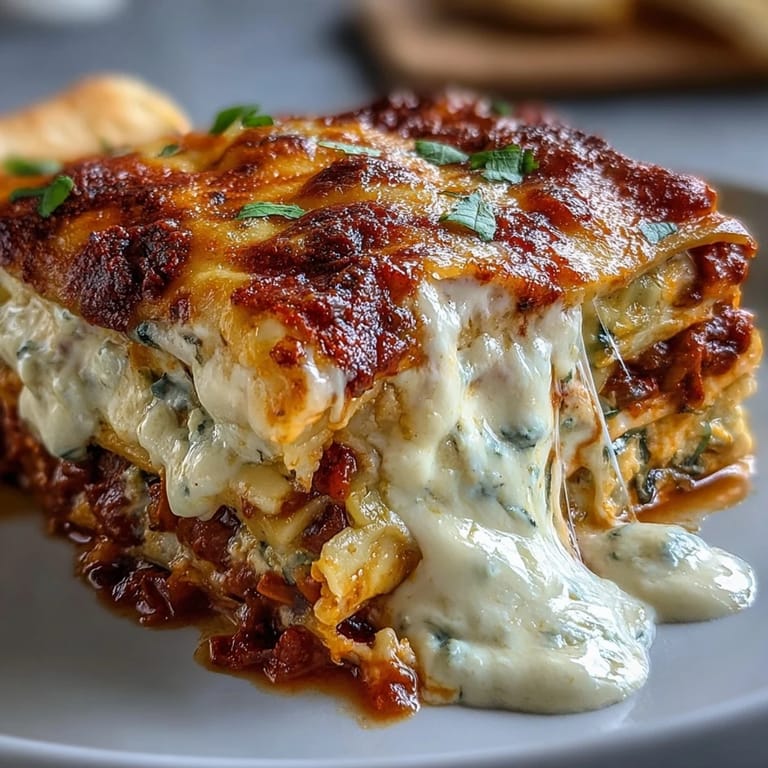
- Remove the foil and bake for another ten to fifteen minutes until the top is golden and bubbling at the edges, which usually means the pasta is perfectly cooked underneath.
- Rest before serving:
- This step is essential: let the lasagne stand for ten minutes before cutting, as it allows the layers to set and makes serving infinitely neater. Garnish with fresh basil if you have it on hand.
 Pin It
 I remember my neighbor smelling it through our shared wall and knocking to ask if everything was alright, which led to her sitting at our table with a fork before I'd even finished explaining it was vegetarian. That moment—when someone expects one thing and discovers something better—is when I know a recipe has real weight to it.
Why Smoked Paprika Changes Everything
The first time I made this without smoked paprika, using regular paprika instead because I thought I was being resourceful, the entire dish fell flat in a way I couldn't quite articulate. The smoked version creates this subtle backbone of depth that makes you lean in for another bite, wondering what makes it taste so complete. It's the difference between a good dinner and one you think about for days afterward.
Making It Your Own
This recipe is genuinely forgiving about substitutions, which is part of why I keep coming back to it. Spinach works beautifully alongside or instead of the courgettes, and I've made brilliant versions with roasted aubergine when I had it sitting in the vegetable drawer looking accusatory. A splash of red wine added with the tomatoes deepens everything without making it taste different, just more intentional.
The One-Pan Philosophy
Choosing an ovenproof skillet for this dish isn't just about convenience—it's about creating fewer surfaces for sauce to splatter across and fewer things demanding attention while you're trying to enjoy cooking. The first time I made this, I used a regular baking dish and made a mental note that I'd wasted a perfectly good saucepan. There's something meditative about building an entire lasagne in a single vessel, watching it come together in layers without the usual kitchen chaos.
- If your skillet doesn't have an ovenproof handle, wrap the handle tightly with foil before baking to prevent melting.
- A deeper skillet (at least five centimeters) prevents sauce from spilling over when you add layers and liquid.
- Let the lasagne rest on a trivet or wooden board after removing it from the oven, as the pan stays scorching hot for longer than you'd expect.
 Pin It
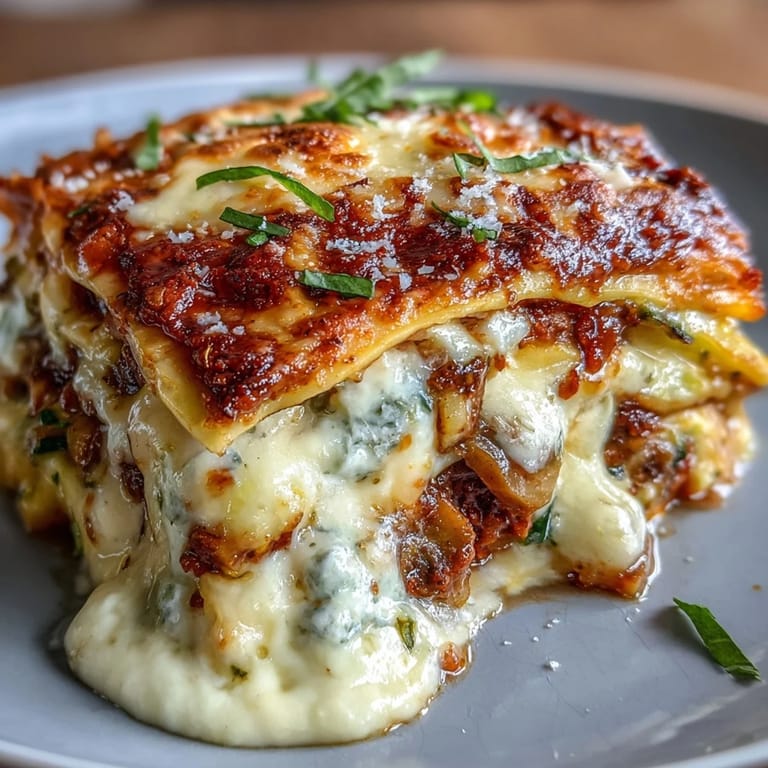
 This lasagne became my go-to dish for the moments when I want to feed people something that tastes like genuine care without requiring hours of labor or advanced techniques. It's the kind of food that makes everyone feel looked after.
Your Questions Answered
- → Can I make this ahead of time?
Yes, assemble the complete dish up to 24 hours in advance and refrigerate. Add 10-15 minutes to the baking time if cooking from chilled.
- → What can I use instead of lasagne sheets?
Try fresh pasta sheets or cook regular dried lasagne sheets before layering. Gluten-free alternatives work well too.
- → How do I store leftovers?
Keep refrigerated in an airtight container for up to 3 days. Reheat individual portions in the microwave or the whole dish covered in the oven at 180°C.
- → Can I freeze this lasagne?
Freeze assembled but unbaked for up to 3 months. Thaw overnight in the refrigerator before baking as directed.
- → What vegetables work best in this?
Mushrooms, courgettes, peppers, and carrots provide excellent texture and flavour. Spinach, aubergine, or butternut squash also work beautifully.
- → Is this suitable for vegans?
Yes, simply use dairy-free butter, plant milk, and vegan cheese. The lentils provide plenty of protein making it a satisfying main.