 Pin It
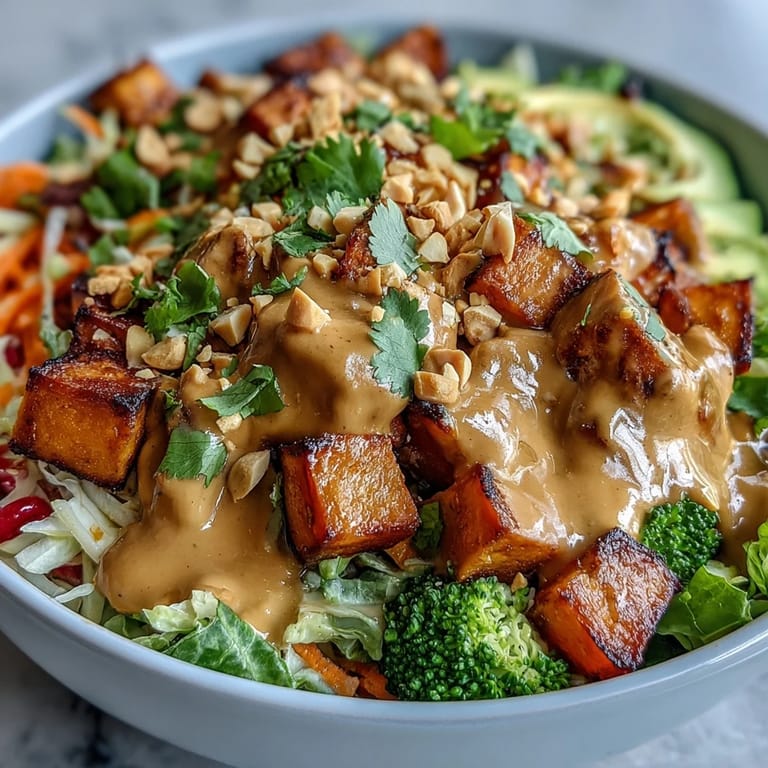
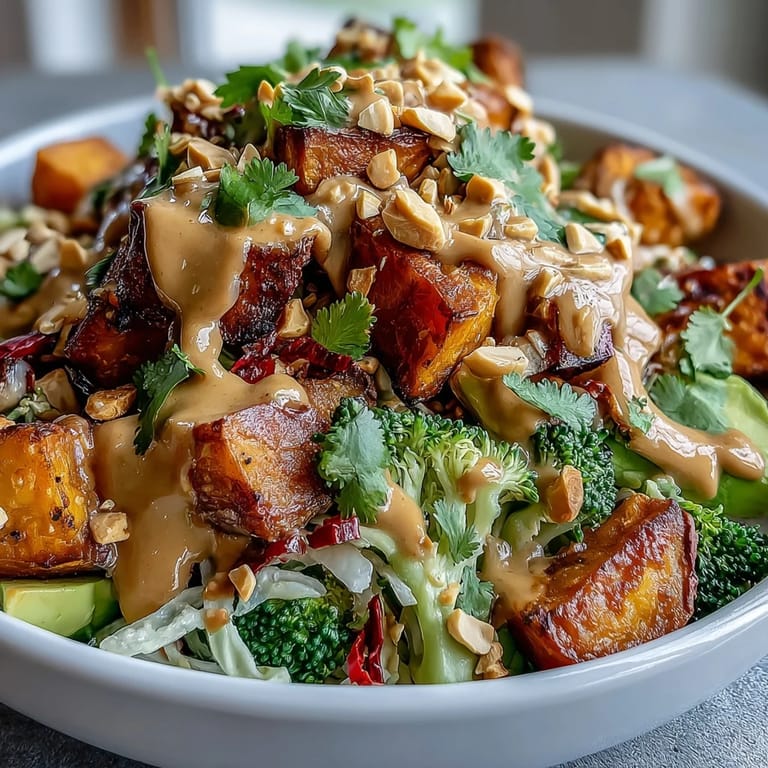
 There's something about assembling a Buddha bowl that feels less like cooking and more like creating art on a plate. I discovered this Thai peanut sweet potato version on a Tuesday afternoon when I was staring into my nearly empty fridge, armed only with a bag of sweet potatoes and a jar of peanut butter that had been sitting there longer than I'd like to admit. The first time I made it, the kitchen smelled like caramelized sweet potato and toasted sesame, and I realized I'd accidentally stumbled onto something that felt both indulgent and genuinely good for me. Now it's become my go-to when I need a meal that looks impressive but doesn't demand much fussing around.
I made this for my sister last month when she was going through one of those phases where she was rethinking how she ate, and watching her face light up when she tasted that peanut sauce was worth every second of roasting. She came back the next day asking if I'd teach her, and we ended up making four bowls together while standing in her tiny kitchen, laughing about how neither of us had ever considered that avocado and sweet potato were basically made for each other.
Ingredients
- Sweet potatoes: Medium-sized ones roast more evenly than large chunks, and the dicing should be fairly uniform so everything finishes at the same time—aim for half-inch pieces.
- Olive oil: Two tablespoons might seem light, but it's enough to get them golden and slightly crispy; use a good quality oil since the flavor really comes through.
- Broccoli florets: Raw broccoli adds a fresh crunch that balances the warm roasted sweetness, but if you prefer it softer, toss it on the baking sheet with the potatoes for the last ten minutes.
- Shredded cabbage: The acid in the peanut sauce wilts it ever so slightly, which I actually love, but prep it fresh right before assembling if you prefer maximum crunch.
- Grated carrots: They add natural sweetness and a pop of color that makes the bowl practically glow on the plate.
- Avocado: A ripe but still-firm avocado is key—overripe ones get mushy under the weight of the sauce, so check the day before if you're planning ahead.
- Peanut butter: Natural, creamy peanut butter works best here because the oil in it helps create a smooth sauce without needing much thinning.
- Soy sauce or tamari: Start with a smaller amount and taste as you go; some brands are saltier than others, and you can always add more but you can't take it out.
- Maple syrup: This balances the salt and umami beautifully, but agave or honey work just as well if that's what you have.
- Lime juice: Fresh squeezed makes a real difference here—bottled tastes a bit flat by comparison and the sauce loses some of its brightness.
- Sesame oil: A little goes a long way; too much and it tastes medicinal, so don't be tempted to pour.
- Cilantro and peanuts: These are finishing touches that anchor everything together, adding texture and freshness that make you want another bite.
Tired of Takeout? 🥡
Get 10 meals you can make faster than delivery arrives. Seriously.
One email. No spam. Unsubscribe anytime.
Instructions
- Heat your oven and prep the sweet potatoes:
- Get that oven to 400°F and while it's warming, dice your sweet potatoes into roughly half-inch pieces—consistency matters here because uneven pieces will roast at different rates. Toss them with olive oil, salt, and pepper until everything's lightly coated.
- Roast until golden:
- Spread them out on a baking sheet in a single layer and slide them in for 25 to 30 minutes, stirring about halfway through so the edges get nice and caramelized. You're looking for that moment when some pieces are slightly crispy on the edges but still creamy inside.
- Prepare your vegetables while they roast:
- Use this time to arrange your raw vegetables—broccoli, cabbage, carrots, and avocado—so everything's ready to go when the potatoes come out. There's something satisfying about having everything prepped and waiting.
- Make the peanut sauce:
- In a mixing bowl, combine peanut butter, soy sauce, maple syrup, lime juice, and sesame oil, whisking until smooth and creamy. If it seems too thick, add warm water a tablespoon at a time until it reaches a drizzle consistency—it should coat the back of a spoon but still pour gently.
- Assemble your bowls:
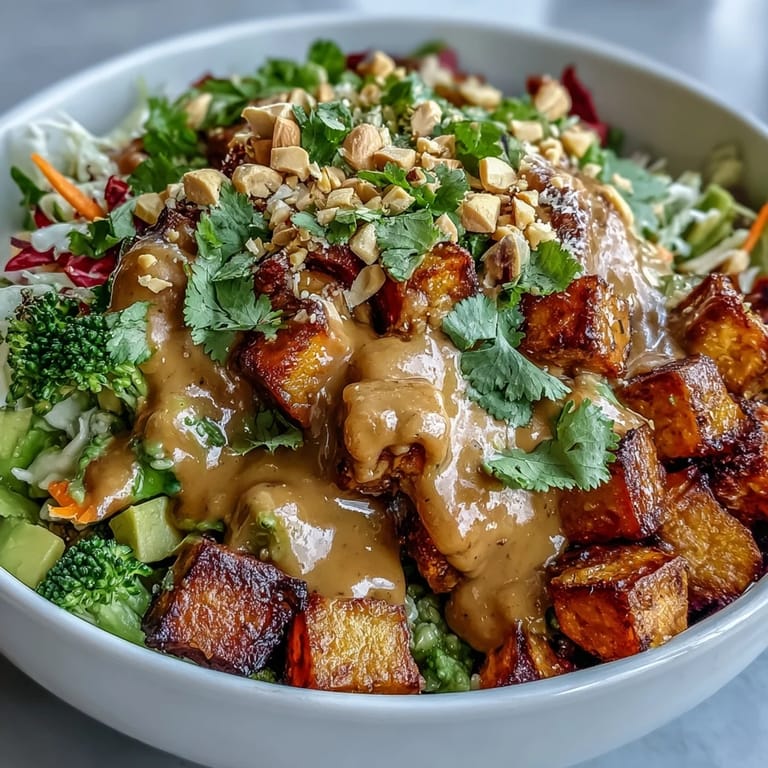
- Divide the roasted sweet potatoes among four bowls, then arrange the raw vegetables around them in whatever pattern speaks to you. Drizzle generously with that peanut sauce.
- Finish and serve:
- Top each bowl with fresh cilantro and a scatter of chopped peanuts, then serve right away while the potatoes still have warmth and the vegetables still have their crunch.
 Pin It
 There was this one moment when a friend bit into her bowl and immediately closed her eyes, then asked if I'd quit my job to start a restaurant. I told her it was just sweet potatoes and peanut butter, but she wouldn't believe me—she kept asking what my secret was, convinced I was leaving something out.
Building Your Perfect Bowl
The magic of a Buddha bowl is that it's as much about the visual as it is the taste—those colors are actually doing something nutritionally too. I've learned that arranging everything thoughtfully, rather than just tossing it all together, makes the eating experience feel intentional and a little bit luxurious. Even on rushed mornings, taking thirty seconds to arrange the vegetables in some semblance of order makes the meal feel like something worth savoring.
Making It Your Own
This bowl is genuinely flexible, which is why it's become such a staple in my rotation. I've added crispy chickpeas for extra protein on days when I'm feeling hungry, swapped the sweet potatoes for roasted cauliflower when I want something lighter, and even tried it with almond butter when a friend with a peanut allergy came over. The framework stays the same—something roasted, something fresh, something creamy—but you can absolutely make it reflect what you have on hand or what sounds good that day.
Timing and Storage Tips
The sweet potatoes are actually best served warm or at room temperature, so you can roast them in the morning and assemble bowls throughout the day without much fussing. If you're thinking about next-day eating, store everything separately and combine just before you eat—the sauce will keep for about four days in the fridge, and the roasted potatoes stay good for three days when stored in an airtight container. The fresh vegetables are best used the same day, but you can certainly prep them ahead if you're planning efficiently.
- Roast the sweet potatoes on Sunday and you've got bowls ready to go all week.
- Make a double batch of the sauce and drizzle it over grain bowls, roasted vegetables, or even use it as a sandwich spread.
- If you're meal prepping for a crowd, assemble everything in mason jars with layers for a grab-and-go lunch that actually tastes fresh.
 Pin It
 This bowl has quietly become the meal I make when I want to feel nourished without overthinking it, and that's become its own kind of magic. It's the kind of food that makes you feel like you're taking care of yourself, even on the days when nothing else feels particularly organized.
Your Questions Answered
- → Can I make this bowl nut-free?
Yes, substitute peanut butter with sunflower seed butter, omit sesame oil, and use sunflower seeds instead of peanuts for garnish.
- → What can I add for extra protein?
Adding baked tofu or chickpeas boosts the protein content while keeping the dish plant-based and hearty.
- → Is this bowl suitable for gluten-free diets?
Use tamari instead of soy sauce to make the sauce gluten-free without compromising the flavor.
- → Can the sweet potatoes be roasted ahead of time?
Yes, roast the sweet potatoes in advance and store separately to maintain freshness, assembling the bowl just before eating.
- → What variations can I try with the vegetables?
Broccoli can be swapped with cauliflower, and carrots with radishes. Avocado can be replaced by tahini or sunflower seeds for different textures.