 Pin It
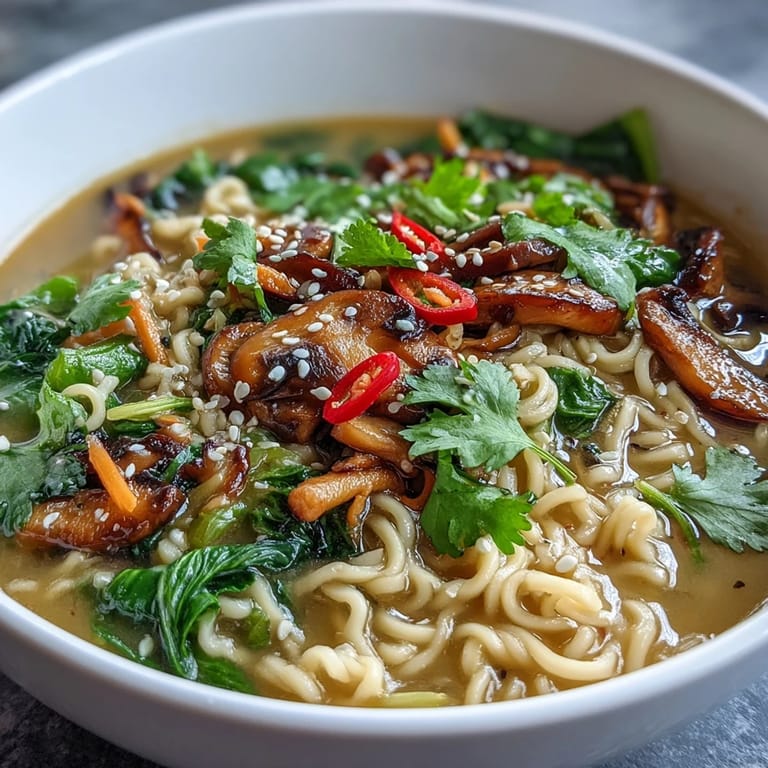
 There's something about the smell of coconut milk hitting hot curry paste that makes a Tuesday night feel like a small celebration. I discovered this ramen on a rainy afternoon when I was craving something both comforting and alive with flavor, and I didn't want to compromise on keeping it plant-based. The first bowl I made wasn't perfect—I oversalted it slightly and the bok choy got a touch too soft—but those mistakes taught me exactly how to balance the creamy broth with the bright, crisp vegetables. Now it's become my go-to when I want something that feels fancy but takes less than an hour from start to finish.
I made this for my friend Sam on a night when they mentioned feeling worn out by the usual rotation of dinners. Watching them close their eyes on that first spoonful and take a deep breath of the aromatic steam—that's when I knew this recipe had become something special to me. They've since texted me for it twice, and I've started keeping extra ramen noodles on hand just in case.
Ingredients
- Coconut oil: Use virgin or refined depending on whether you want a hint of coconut flavor or prefer it neutral; it creates the perfect base for blooming the aromatics.
- Yellow onion: Finely chopped onions will soften completely and become part of the broth's backbone, adding natural sweetness without grittiness.
- Garlic and ginger: Fresh is non-negotiable here; the ginger especially should be grated rather than minced so it releases more of its bright, warming oils.
- Red curry paste: Check the label carefully to ensure it's vegan, as some brands sneak in fish sauce—Thai Kitchen and other Asian brands often have explicitly vegan options.
- Ground turmeric: This adds earthiness and a beautiful golden hue; don't skip it even though the curry paste already brings color.
- Vegetable broth: Use a good quality broth you'd actually drink on its own, since it's the foundation of the whole dish.
- Full-fat coconut milk: Never use light coconut milk for this recipe; the richness is what makes it feel special and balanced.
- Soy sauce or tamari: The umami hit here is essential, but tamari is your answer if you're avoiding gluten or want a slightly smoother flavor.
- Maple syrup: A touch of sweetness rounds out the spices and mellows the heat just enough to let all flavors shine.
- Sesame oil: Use the toasted kind and add it at the end so the heat doesn't cook away its nutty aroma.
- Cremini or shiitake mushrooms: Shiitakes will give you more of that meaty, umami texture that makes this feel substantial even without meat.
- Baby bok choy: The smaller heads are more tender and cook faster; quarter them lengthwise so they stay intact and elegant in the bowl.
- Ramen noodles: Fresh noodles cook in 2–3 minutes while dried take longer, so choose based on what you have time for and always verify the vegan status.
- Carrot: Julienne it thin so it cooks quickly and adds a delicate, sweet crunch to each bite.
- Scallions, sesame seeds, and cilantro: These are your flavor finishers; they add brightness and texture that transforms the bowl from good to unforgettable.
Tired of Takeout? 🥡
Get 10 meals you can make faster than delivery arrives. Seriously.
One email. No spam. Unsubscribe anytime.
Instructions
- Warm your oil and build the aromatics:
- Heat the coconut oil in a large pot over medium heat, then add the finely chopped onion. Listen for that gentle sizzle and watch it turn translucent over 3–4 minutes; you're not looking for color here, just softness. Once it's yielding to a gentle press of your spoon, add the minced garlic and grated ginger, stirring constantly for about a minute until the kitchen fills with that unmistakable warm, peppery fragrance.
- Toast the spices:
- Stir in the red curry paste and turmeric, letting them coat everything in the pot and cook for roughly a minute. You'll notice the paste will deepen slightly in color and smell even more complex; this is the toasting happening, which rounds out the spices' raw edge.
- Build the broth:
- Pour in the vegetable broth and coconut milk slowly, stirring as you go so nothing sticks to the bottom of the pot. Add the soy sauce, maple syrup, and sesame oil, then bring the whole thing to a gentle simmer where you see occasional lazy bubbles breaking the surface.
- Cook the mushrooms first:
- Slice your mushrooms and add them to the simmering broth, letting them cook for 8–10 minutes until they've softened and begun to release their earthy flavor into the liquid. The broth will deepen in color as they cook, which is exactly what you want.
- Cook noodles separately:
- While the mushrooms simmer, bring a separate pot of water to a boil and cook your ramen noodles according to the package instructions. Drain them and set aside; this keeps them from absorbing too much broth and getting mushy.
- Add greens at the last moment:
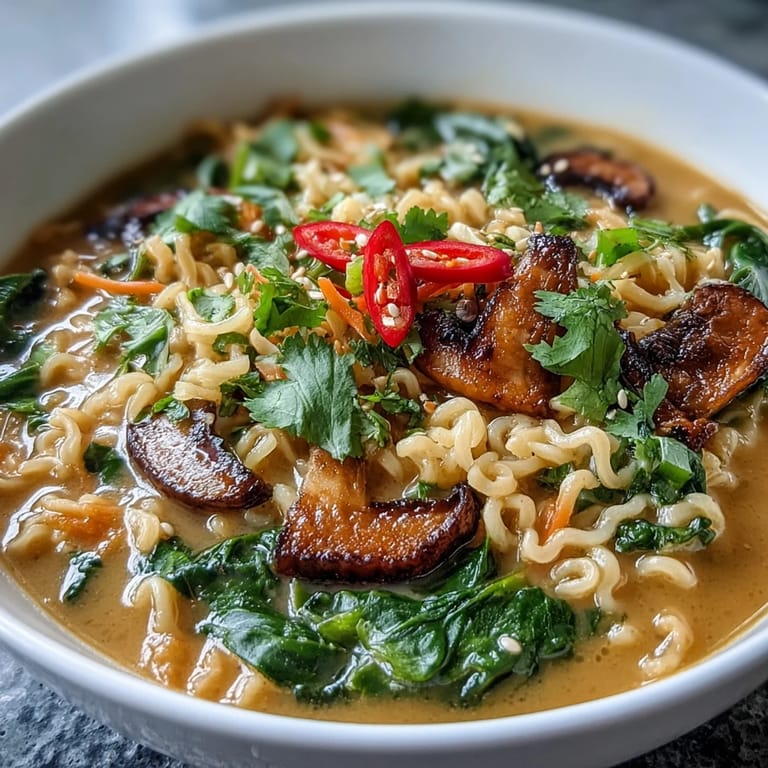
- When you're ready to serve, stir the bok choy and julienned carrot into the simmering broth and cook for only 2–3 minutes. You want the bok choy to be just wilted but still bright green and slightly crisp when you bite it; overcooked bok choy loses its appeal.
- Taste and adjust:
- Season the broth generously with salt and black pepper, tasting as you go. The coconut milk can sometimes mask saltiness, so you'll likely need more than you expect.
- Assemble and serve:
- Divide the cooked noodles among four bowls, then ladle the hot broth and vegetables over the top. The noodles will warm through from the heat of the broth, and you want everything served immediately so the heat stays in the bowl.
- Finish with garnish:
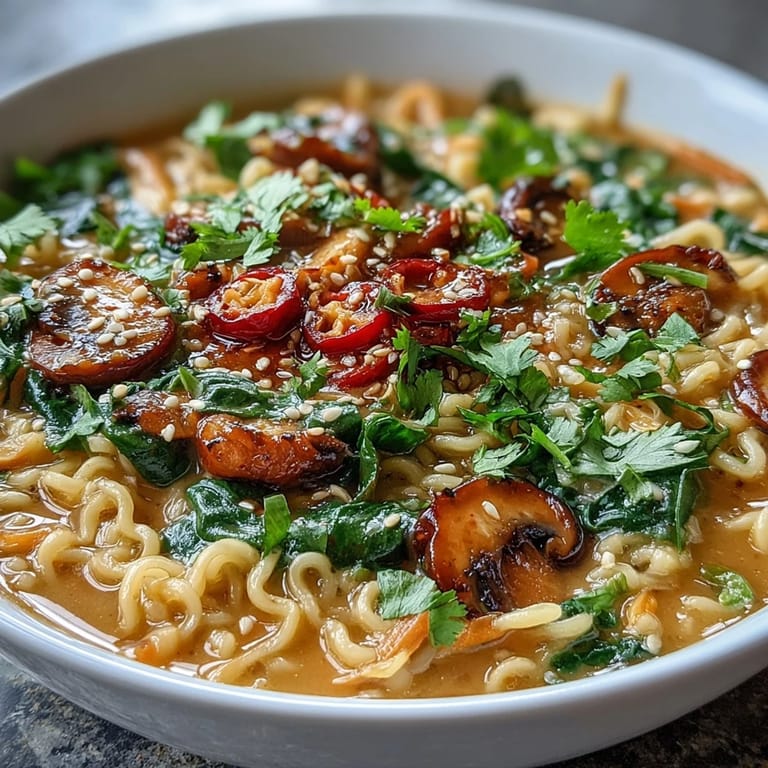
- Top each bowl with sliced scallions, toasted sesame seeds, fresh cilantro, and a few slices of red chili if you like heat. A squeeze of fresh lime juice over everything ties all the flavors together in one bright, final note.
 Pin It
 I remember sitting across from my sister as she took her first real bite, and she looked up and said, 'This tastes like a restaurant.' It was one of those moments where I realized that the simplest ingredients, treated with care and respect, become something that feels like it took hours. Now whenever she's had a hard week, she texts me asking if I'm making 'that ramen,' and somehow the answer is always yes.
The Magic of Coconut Milk in Savory Dishes
Coconut milk has this quiet power in cooking that a lot of people underestimate. It doesn't make food taste sweet or tropical unless you let it; instead, it adds this silky texture and rounds out harsh edges while bringing its own subtle depth. In this curry, the coconut milk isn't a substitute for cream—it's actually more complex, richer in a different way, and it plays beautifully with the earthiness of mushrooms and the slight bitterness of curry spices.
Why Fresh Ginger Changes Everything
I used to buy pre-minced ginger in a jar and wonder why my curries tasted a bit flat, until I realized that jarred ginger had already given up most of its volatile oils to the air. Fresh ginger, grated right before it goes into the pot, releases its bright, peppery warmth in real time, and that difference is audible in how people react to the first spoonful. Now I keep fresh ginger on hand constantly, and I grate it over everything from curries to smoothies to stir-fries.
Timing and Texture: The Final Layer of the Dish
The real trick to this ramen is understanding that every component needs to hit the bowl at its own perfect moment. The noodles should be al dente but not crunchy, the bok choy should be wilted but still have a whisper of resistance, the mushrooms should be completely tender, and the carrots should have a light sweetness from the broth without being soft throughout. This balance is what separates a bowl you enjoy from one you remember.
- Cook noodles separately so they stay silky rather than becoming a starchy, broken mess in the broth.
- Add vegetables in stages based on how long they take, not all at once, so everything finishes at the same time.
- Taste the broth before serving and don't be shy with salt, since the richness of coconut milk sometimes needs a stronger seasoning hand than you'd expect.
 Pin It
 This ramen has become my answer to so many dinner dilemmas—when I want something nourishing but not heavy, when I'm cooking for someone with dietary restrictions, when I need to feel like I've done something special with my evening. It reminds me that the best meals aren't the most complicated ones, they're the ones where every element serves a purpose and you can taste the care in each spoonful.